Everything you need to know about charging an electric vehicle
Published on
Article summary
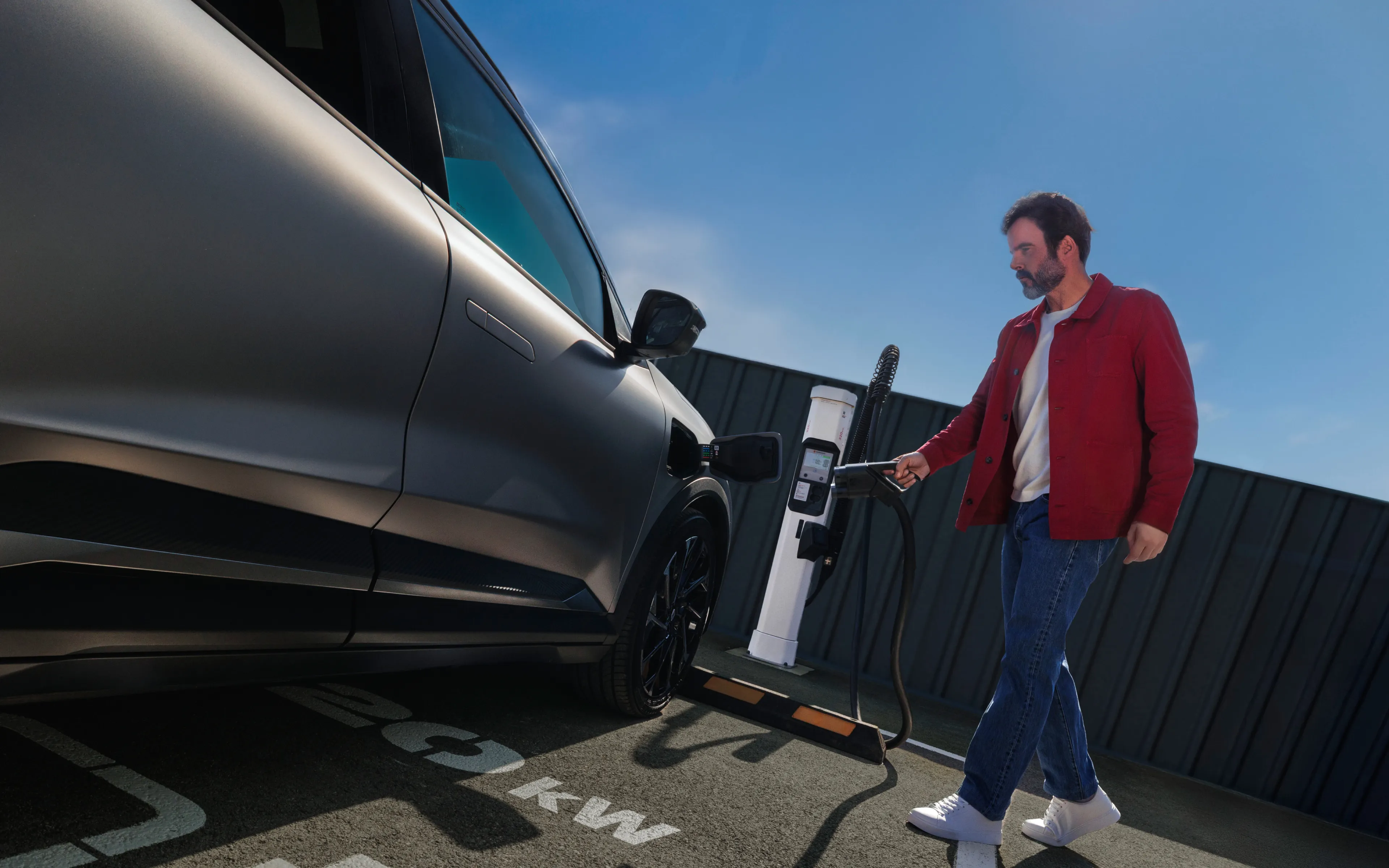
No more greasy fuel pumps, slippery forecourts, or the lingering smell of petrol on your fingers. EV charging relegates these issues firmly to the past. If you’re a new or future owner of an electric vehicle, here’s how to charge your EV on the road. Just follow the guide!
Key points
- On the road, electric vehicles are charged from a charging point at a dedicated charging station or at a petrol station.
- Charging points can be geolocated using dedicated smartphone apps or your onboard GPS.
- Renault Group has its own network of charging stations, Plug Inn Fast Charge, open to all electric vehicles regardless of make.
- Payment for charging is made with a bank card or a pass issued by the charge point operator.
Where can I find a charging station?
1 million. In Europe, the number of charging stations passed this symbolic milestone in late 2025. Driven primarily by the rapid expansion in motorway installations, the number of charging points is rising steadily across Europe every year.
The three countries with the largest EV charging networks include France(1) with over 174,000 charging points, and Germany(2) with over 198,000. The number one spot is held by the Netherlands, with more than 210,000 charging points.
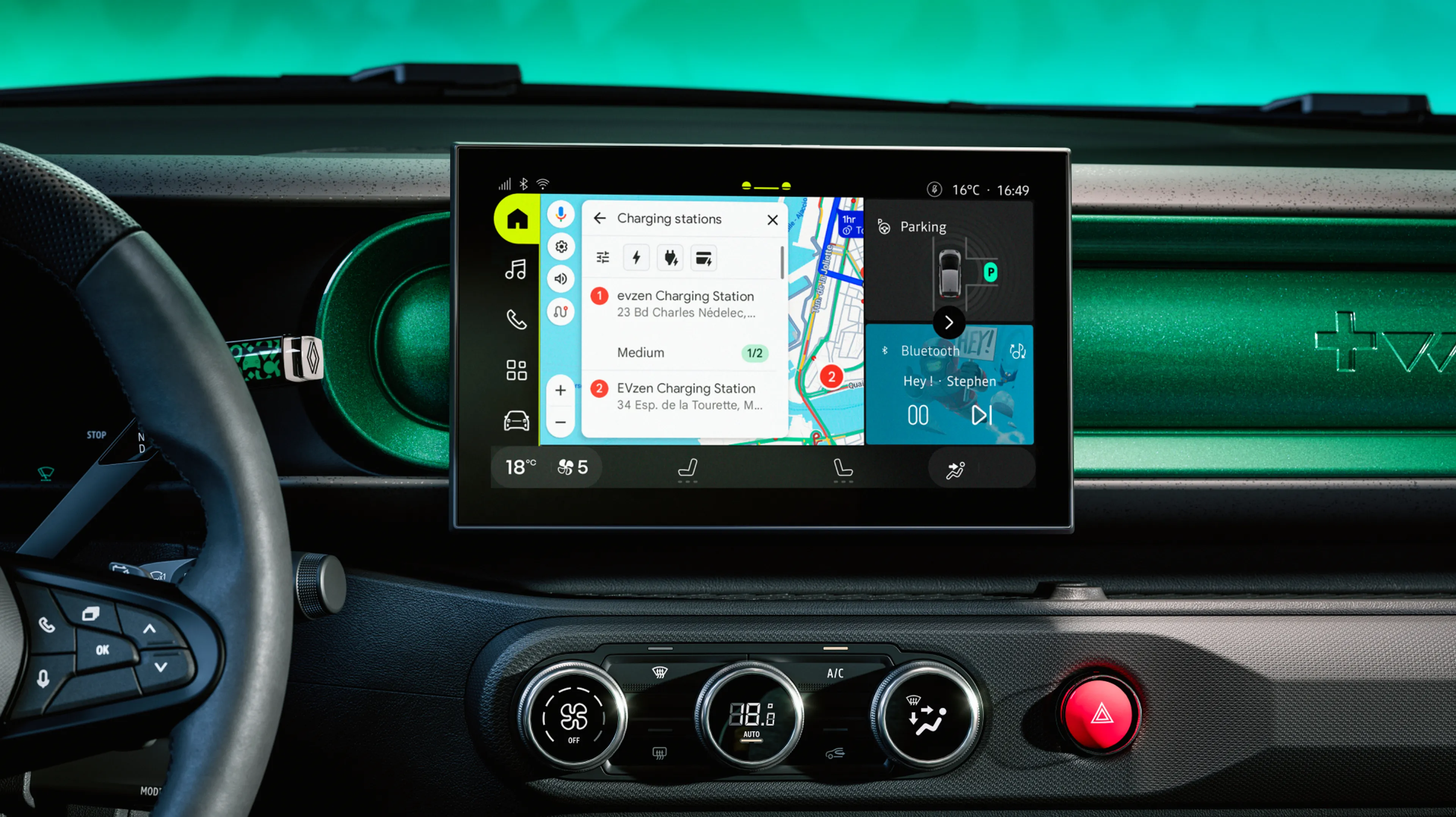
EV charging stations are easy to locate using a dedicated app or GPS connected to your smartphone or in-car multimedia system.
And it’s easier still with Renault Group electric vehicles. The Google Maps route planner in openR Link lets you plan charging stops and times before you set out. With this onboard technology, available with Renault 5 E-Tech electric, car of the year 2025, you can take to the road with confidence.
EV charging points are now increasingly found in conventional petrol stations. Others can be found in charging stations managed by specialists known as “charge point operators” or CPOs. Leaders include US firm Tesla Superchargers, Dutch operators Fastned and Allego, and Germany’s Ionity.
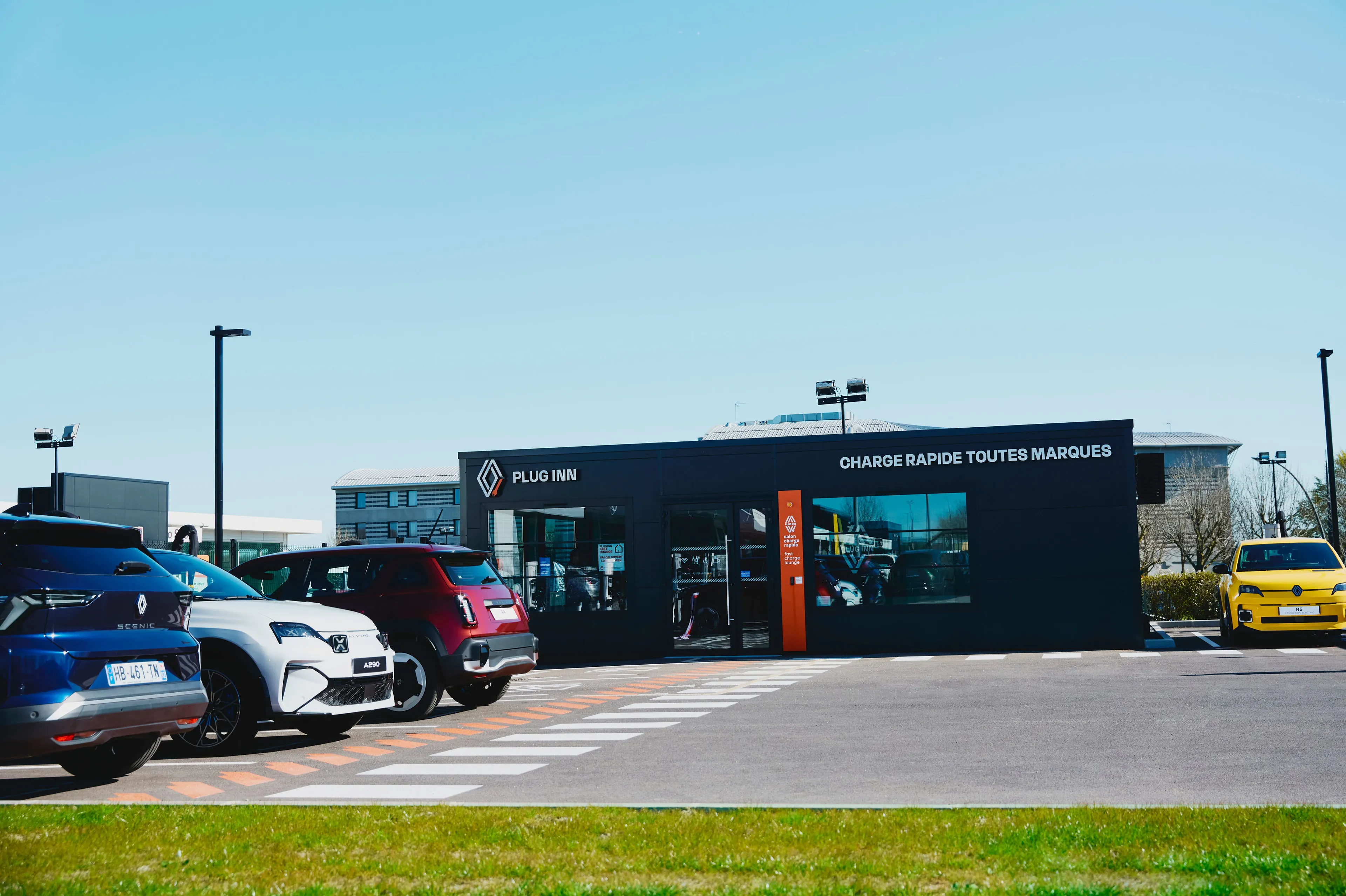
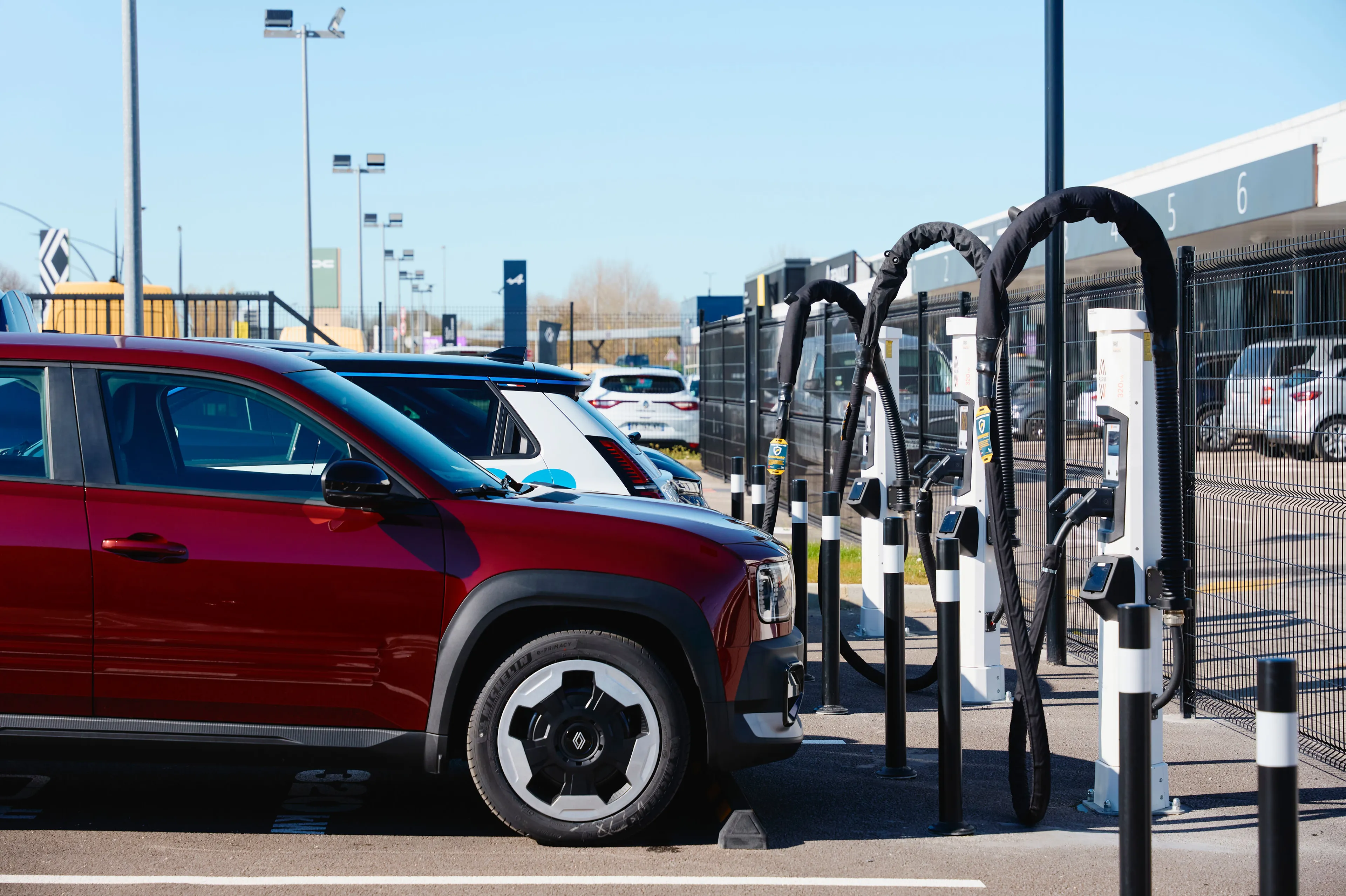
In France, Renault Group is making its mark with its Plug Inn Fast Charge network, including a cosy and comfortable lounge area on some sites.
Plug Inn Fast Charge: a network of ultra-fast charging points by Renault Group
Fitted with standard CCS2 connectors, Plug Inn Fast Charge stations are open to all EV drivers, regardless of the make of vehicle.
Featuring high-power stations with a capacity of up to 320 kW, the network also offers a secure premium lounge area at selected sites, open 24/7 with WiFi, toilets, drinks, a workspace and a relaxation area.
Plug Inn Fast Charge stations are mainly located in Renault dealerships, close to major roads. To further expand and establish the network across France, Renault Group is aiming to open 93 stations by the end of 2026.
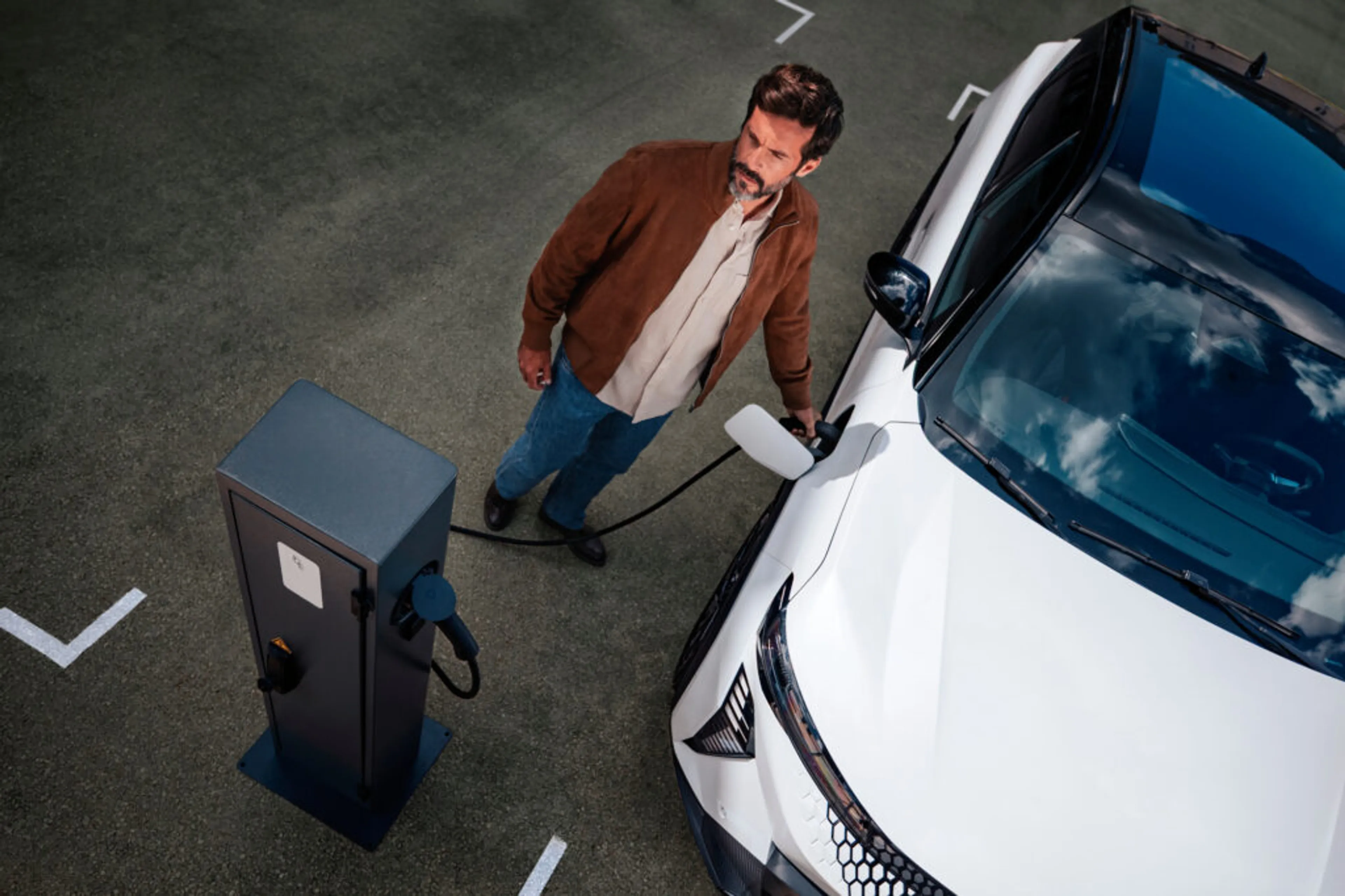
How do I charge my electric vehicle at the charging point?
After locating and, if necessary, unlocking the charging socket flap on your vehicle, just plug in the charging cable. On fast chargers, the cable is attached to the charging point.
Two types of standardised connectors are used across Europe:
- Type 2 (AC alternating current) connectors delivering maximum power of 43 kW
- CCS (Combined Charging System) connectors, also known as Combo 2 or CCS2 (AC alternating current or DC direct current) connectors, compatible with charging power of over 350 kW.
You do not need to stay inside or close to the vehicle during the charging process. The charging cable locks automatically when plugged into the vehicle socket to prevent accidental disconnection before the end of the charging process.âble de recharge se verrouille automatique à la prise du véhicule jusqu’à l’arrêt de la charge afin d’éviter tout débranchement accidentel.
How much does it cost to charge an electric vehicle?
At home, the cost of charging depends solely on the price per kWh set out in your electricity contract and the average consumption of your vehicle.
On the road, the cost of charging at a charging point depends on:
Charging time per minute. For example, it takes just 30 minutes to charge the battery of a Megane E-Tech electric, Renault 4 E-Tech electric or Renault 5 E-Tech electric from 15% to 80% at a fast charging point.
Any fixed charges (registration or subscription, roaming, time-based penalties, etc.) applied by the operator;
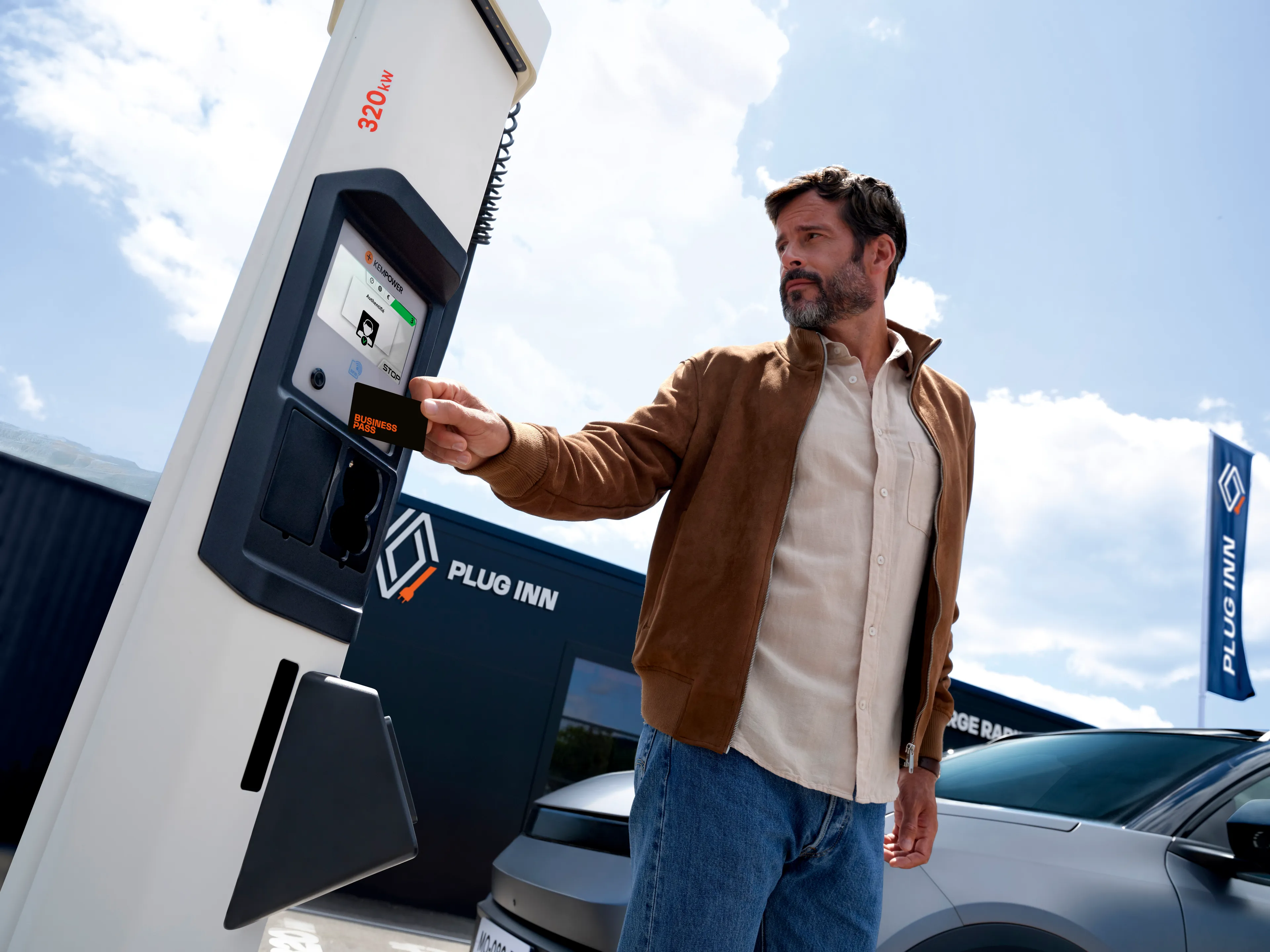
The price per kilowatt-hour of electricity, which depends on the output of the charging point. At Plug Inn Fast Charge points, the rate is €0.39/kWh with a pass and a no-commitment subscription (Intense package), €0.46/kWh with a pass and no subscription, and €0.59/kWh when paying by credit card;
Paying for EV charging
Although you can use a credit card, payment is usually made with a “charge pass” or through the CPO app. These require you to sign up or to buy a subscription to gain access to a cheaper rate.
Examples include the Plug Inn charge pass, ChargeMap Pass, Fulli (formerly KiWhiPass), Ulys, Freshmile, Izivia, Plugsurfing and the Total Charge pass.
On Renault vehicles and at charging points compatible with the Plug & Charge function, charging is surprisingly easy. The smart charging point recognises the vehicle and initiates charging and payment automatically without further action by the user.
At Plug Inn Fast Charge points, a QR code generated by the charging point or the My Renault app lets drivers monitor the charging process remotely and in real time from their smartphones.
While Renault, Dacia and Alpine EVs all deliver a substantial range, drivers should not forget an important safety recommendation: take a break every two hours on the road! The perfect opportunity to relax while your car is charging. Drive safely!
How can I keep everybody entertained while my Renault EV is charging?
Renault’s openR link multimedia system offers a wide range of interactive content for electric vehicles. While the battery is charging, passengers can catch up on the latest news or enjoy some in-car entertainment with a range of apps:
- Songpop for Renault: a free musical blind test that is fun to play while the car is moving or stationary. All the passengers can get involved, using their mobile devices.
- Incollables® for Renault: rediscover this iconic French game in a version exclusive to Renault, with quizzes, riddles and challenges for the whole family.
- Kabriol: a travel guide featuring Q&A games for children.
- Karacal for Renault: a library of geolocated audio guides and podcasts to discover places of interest to visit along the way.
- Amazon Music Unlimited, with a free 6-month subscription for Renault owners.
- Sybel, including Sybel Kids, with a free 6-month subscription to audiobooks and podcasts for Renault owners.
- L’Equipe for Renault: to access sports content – including some exclusives – and listen to free podcasts.
- The Vivaldi browser for an optimised and exclusive in-car internet experience.
- Radioplayer: live access to your favourite radio stations, anywhere and anytime.
(1) Source: French Ministry of Ecology, July 2025
(2) Source: Bundesnetzagentur, November 2025
FAQ
01
What are the different types of charging station?
02
What are the different power ratings for chargers?
03
What about compatibility between electric vehicles and charging stations?
Two types of charging station are available, depending on the type of installation: wall-mounted points known as “wall boxes” and free-standing points.
Home charging points supply alternating current (AC) with power ratings of 3.7 kW, 7.4 kW, 11 kW or 22 kW.
On the road, fast-charging stations deliver direct current (DC), with output of between 43 and 400 kW.
Not all electric vehicles are compatible with all charging points, and vice versa. Alongside the issue of connector compatibility (although standardisation is in progress across Europe), the output of the charging point may not be compatible with a particular vehicle. It is essential to follow the manufacturer’s instructions. If in doubt, the CPO’s customer service team will be able to advise you.


