Hybrid powertrain, LPG and 4×4,two world-first innovations for Dacia
Published on
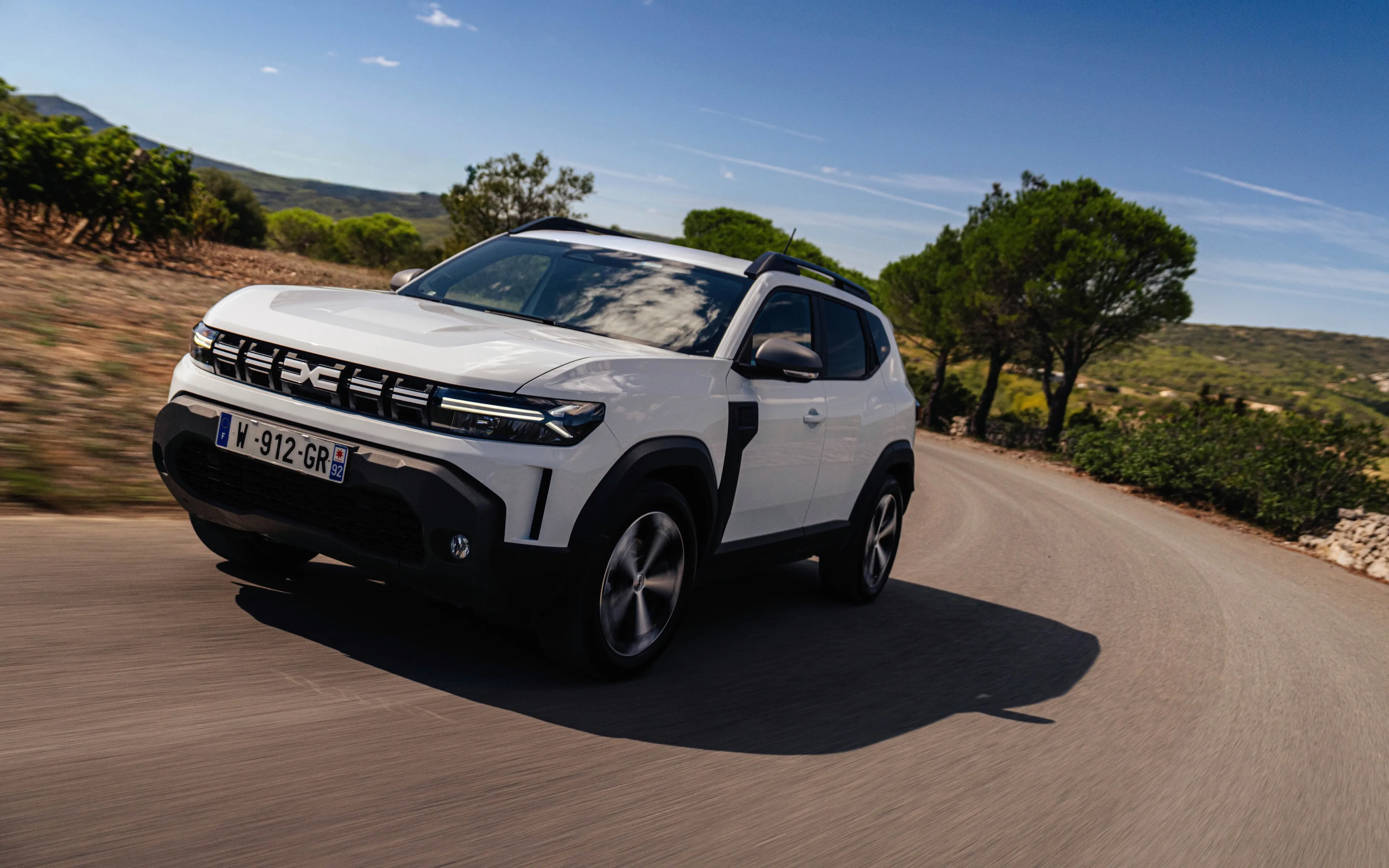
LPG/petrol flex-fuel technology is good for customers and good for the planet. And contrary to widely held belief, LPG is more ecological and more economical than petrol while being equally safe. For all these reasons, Dacia has been a firm believer in LPG (liquefied petroleum gas) since 2010. Today, it is innovating with a world-first: an LPG / 4×4 hybrid powertrain with an automatic gearbox on Bigster and Duster. Discover the latest ingenious idea developed by Dacia in response to prices at the pump and European carbon reduction goals (CAFE regulations).
A world-first flex-fuel petrol/LPG 4X4 hybrid powertrain
True to its DNA as a bold automotive brand, Dacia unveiled a new hybrid powertrain packed with technology in October 2025: the G 150 4X4. Dacia is the first brand to combine hybrid and flex-fuel petrol/ LPG technology on a four-wheel-drive vehicle.
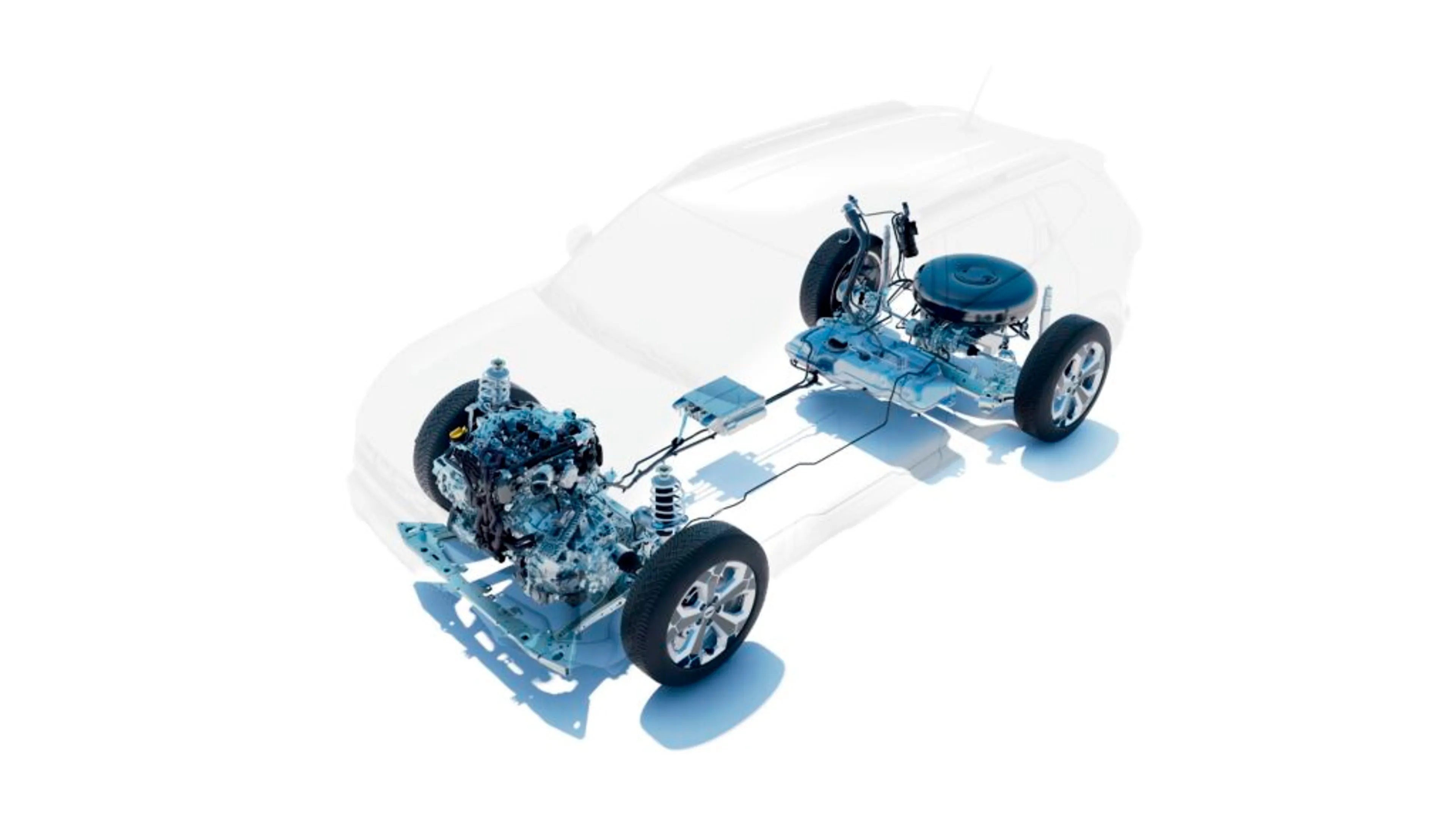
This completely new powertrain comprises:
- A 1,199 cm3 (1.2L) mild-hybrid 48V combustion engine producing 103 kW (140 hp) and 230 Nm of torque to drive the front wheels
- An electric motor on the rear axle delivering up to 23 Kw (31 hp peak) with maximum torque of 87 Nm to drive the rear wheels.
The ICE and electric motor have a combined output of 113 kW (153 hp). They are unique in that they are not mechanically linked. Four-wheel drive operation is controlled electronically by the ECUs of the engine and braking module, with no transmission.
An electric motor coupled to a 2-speed gearbox in a world first
Technically, the automatic gearbox associated with the powertrain is a “twinned”:
- The internal combustion engine is mated to a wet dual-clutch 6-speed gearbox with steering wheel gear selection.
- The electric motor on the rear axle is mated to a 2-speed gearbox with a neutral mode.
This latest technology is a world first for a 48V flex-fuel LPG hybrid powertrain.
The first gear on the rear gearbox delivers a maximum 1,800 Nm of torque to both rear wheels. The second gear activates the electric motor at low speed to deliver maximum traction to the rear wheels at speeds of up to 140 km/h.
Finally, the neutral gear reduces fuel consumption. By decoupling the rear axle, it cancels electrical losses and reduces friction losses at the rear in 2-wheel drive mode.
The gear shift technology is based on Renault Group's full hybrid E-Tech powertrain. Operation of this “super” automatic gearbox is totally transparent to the driver.
The driver can choose from several settings to optimise the off-road capabilities of Duster and Bigster: Eco (optimised fuel consumption), Auto, Snow (for slippery roads), Mud/Sand (for loose ground) and Lock (offroading).now (très adapté pour les routes glissantes) et Mud/Sand (très adapté pour les sols meubles) et Lock (mode « franchisseur »).
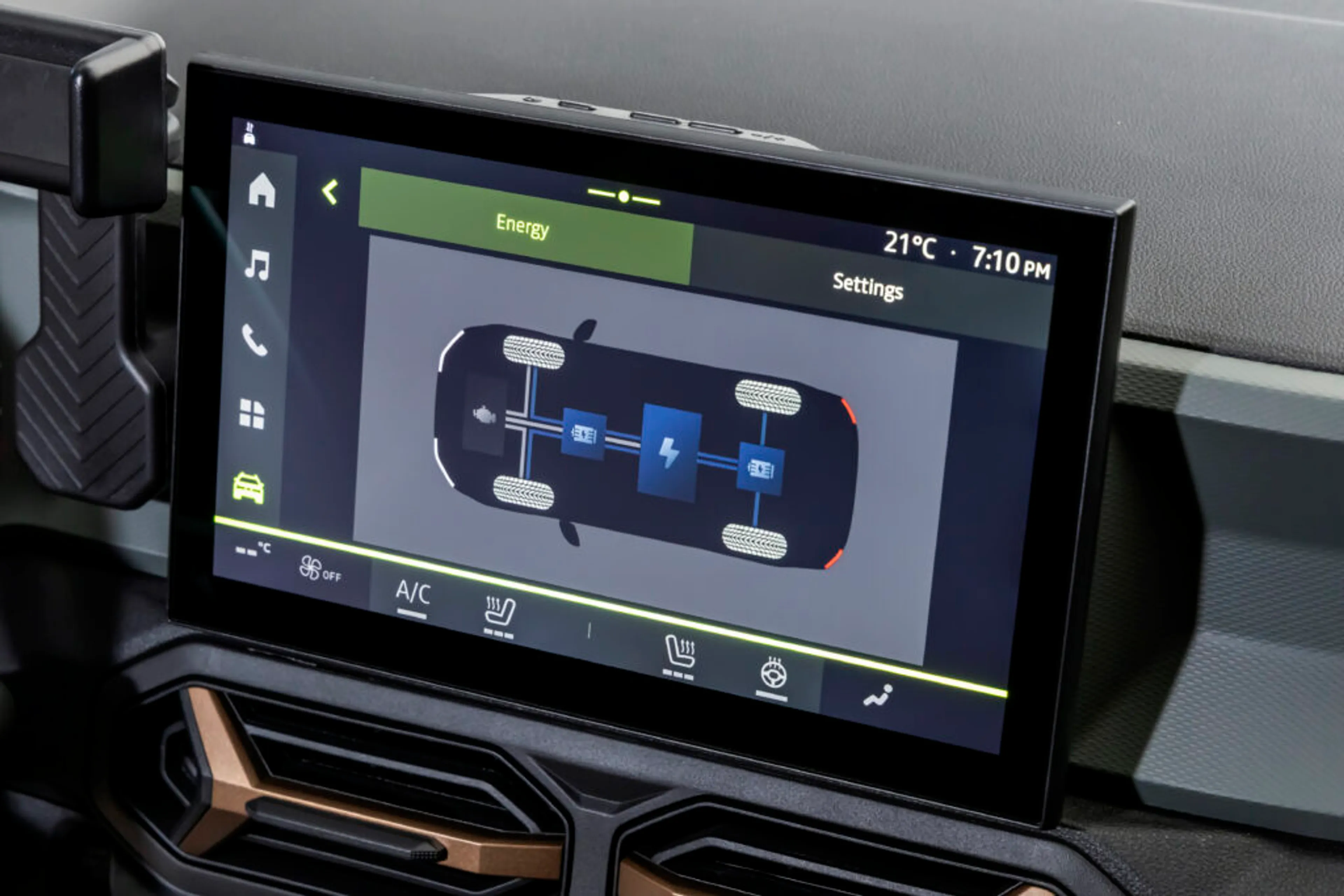
With its flex-fuel and hybrid systems, Dacia is combining performance and fuel efficiency for unequalled versatility
The G 150 4x4 hybrid powertrain is a real overachiever. It gives Dacia Duster and Bigster a range of up to 1,500 km (with two 50-litre fuel tanks), while cutting running costs by 30% and CO2 emissions by 20 g/km compared with the previous generation.
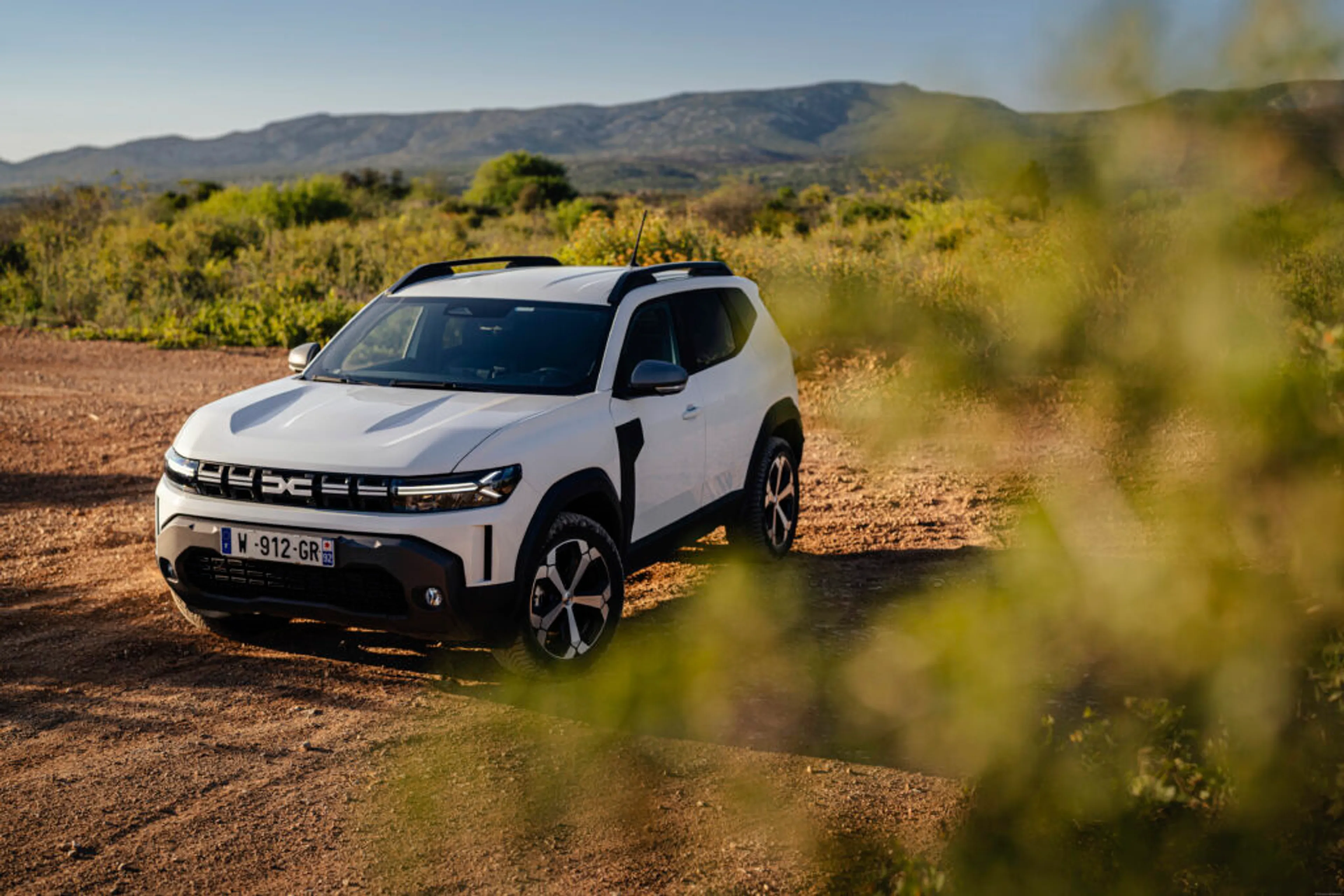
With its 48V 0.84 kWh lithium-Ion battery, the car is very much at ease in all-electric mode, allowing Duster and Bigster hybrid-G 150 4x4 to remain in all-electric mode for up to 60% of driving time in the city. Fuel consumption and CO₂ emissions remain moderate:
- for Duster: from 7.3 l/100 km (LPG) and 6 l/100 km (petrol), with CO₂ emissions from 117g CO₂ /km (LPG) and 135g CO₂ /km (petrol)
- for Bigster: from 7.2 l/100 km (LPG) and 5.9 l/100 km (petrol), with CO₂ emissions from 115g CO₂ /km (LPG) and 133g CO₂ /km (petrol).
Dacia Duster hybrid-G 150 4X4 and Dacia Bigster hybrid-G 150 4X4 are already available to order. The first deliveries will take place in spring 2026. The hybrid 150 4x4 (non-flex-fuel) powertrains will be available at a later date, depending on the country.
Drive smart, drive your Dacia with LPG
LPG, or liquefied petroleum gas, is considered as a clean fuel in many countries. As it emits less CO2 and fewer fine exhaust particles, taxes are lower and it is cheaper at the pump. These qualities make it hard to resist, particularly as Dacia models are shipped LPG-ready. A guarantee of safety, reliability and interior space, since the LPG tank takes the place of the spare wheel.
The duration of the manufacturer’s warranty (3 years/100,000 kilometres), the frequency and cost of maintenance operations, and the boot capacity of Dacia LPG models are identical to those of a “conventional” petrol version.
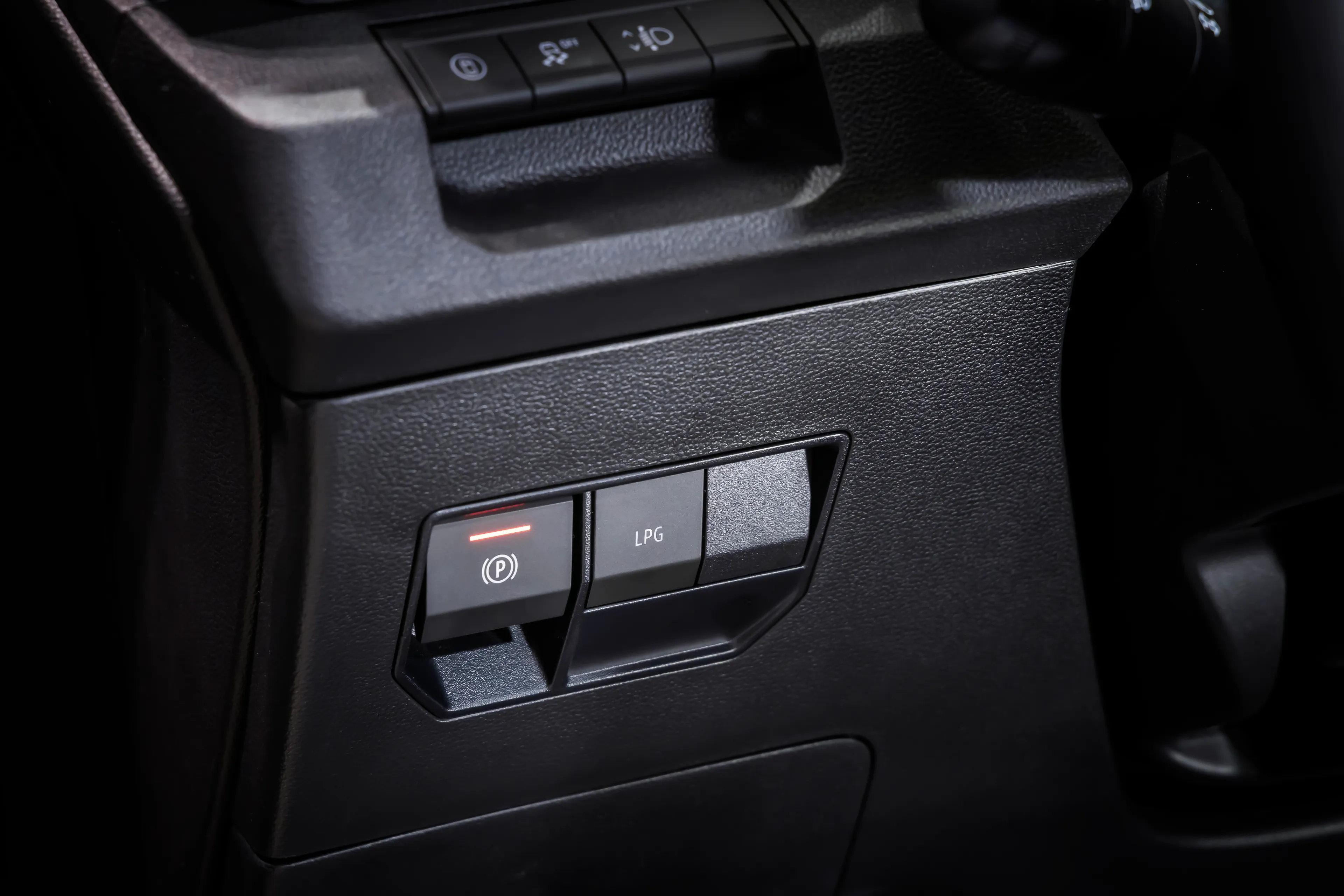
LPG operation is activated and deactivated manually from the onboard console. Each fuel tank has its own filler hole behind a single hatch with a dedicated gauge on the dashboard.
FAQ
01
What is LPG?
02
Is LPG dangerous and does it pollute more?
03
What does flex-fuel petrol – LPG mean?
LPG (Liquefied Petroleum Gas) is a combination of light hydrocarbons, mainly butane (domestic gas) and propane.
LPG is non-toxic. When burned, it emits virtually no fine particles. It also cuts emissions of NOx (responsible for respiratory diseases) and CO2 by up to 30%. It is over 60% extracted from natural gas.
In a flex-fuel vehicle, the engine runs on either petrol or LPG, from two separate tanks. Motorists are free to choose. On average, LPG emits 10% less CO2 than petrol. In Europe, it is distributed by 32,000 service stations, i.e. one-quarter of the network.