Sliding rear bench seat: Twingo rediscovers an iconic innovation
Published on
Thirty-three years on from its original launch, Twingo has brought back one of its most iconic features: sliding rear seats. An innovation that is perfectly aligned with the modular DNA of this ultra-functional city car.
Car interior: “Small outside, big inside”
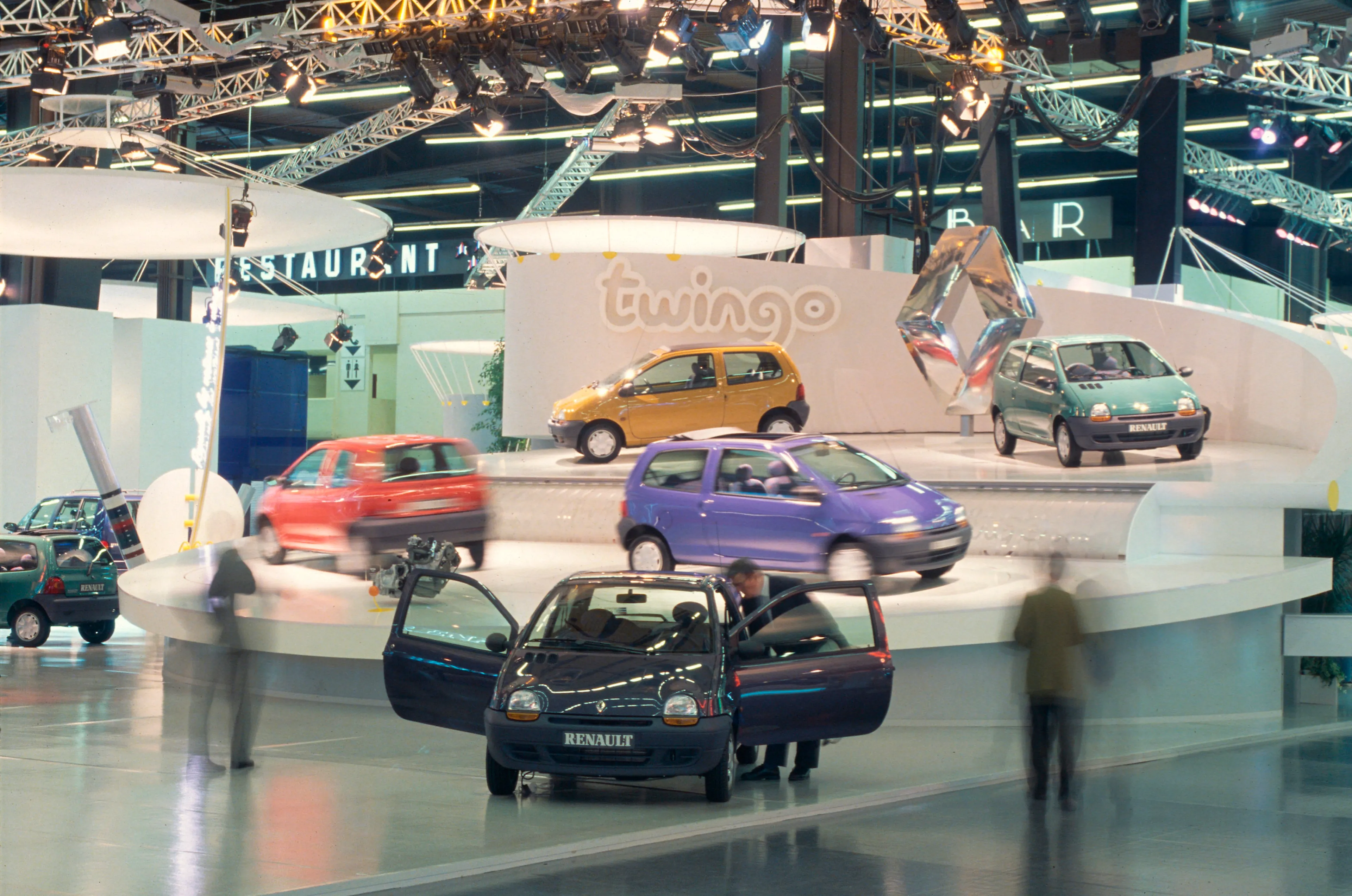
1992 Paris Motor Show. A small, round car with a smiley face makes its debut. Journalists are sceptical. Too small? Too weird? Not a real car?
Then they get in. What a surprise.
With the bench seat pushed all the way back, the legroom is more generous than in a saloon. Wow! And pushing the bench seat forwards increases boot capacity. Magic! The backrests are separate and recline independently. They even feature a 'relax' position. The front seats are easily released from the rear with a simple gesture. As compact as it is, its interior is a real strong point.
“Small outside, big inside”, to quote the press.
Mounted on rails and designed to slide by 17 cm, the rear bench is a first for a car in this category. The idea is brilliant in its simplicity: giving customers the option to switch, with one simple movement, between extensive legroom or a spacious trunk. An idea that reflects the spirit of Twingo: practical and ingenious.
“We wanted the car to adapt to the way people live, not the other way round,” says Jacques Cheinisse, Product Director at the time.
Modular design: spacious from the start
It was not a new concept, however. The company archives include a patent from1926, signed by Louis Renault, on variability of space at the rear!
In the 1980s, the Product Advance department (responsible for future Group vehicles) set out to explore new solutions in interior layout, addressing a need for modularity that they believed to be under-estimated. Their studies had already paved the way for the transformation of Matra's 'P23' prototype into Espace. And other innovations were quietly maturing. Among them, the sliding rear bench.
But the idea remained on hold. It required the right car, the right vision and the right team to bring it to life. And the future Twingo created the opportunity.
‘Design to cost’: targeted investment
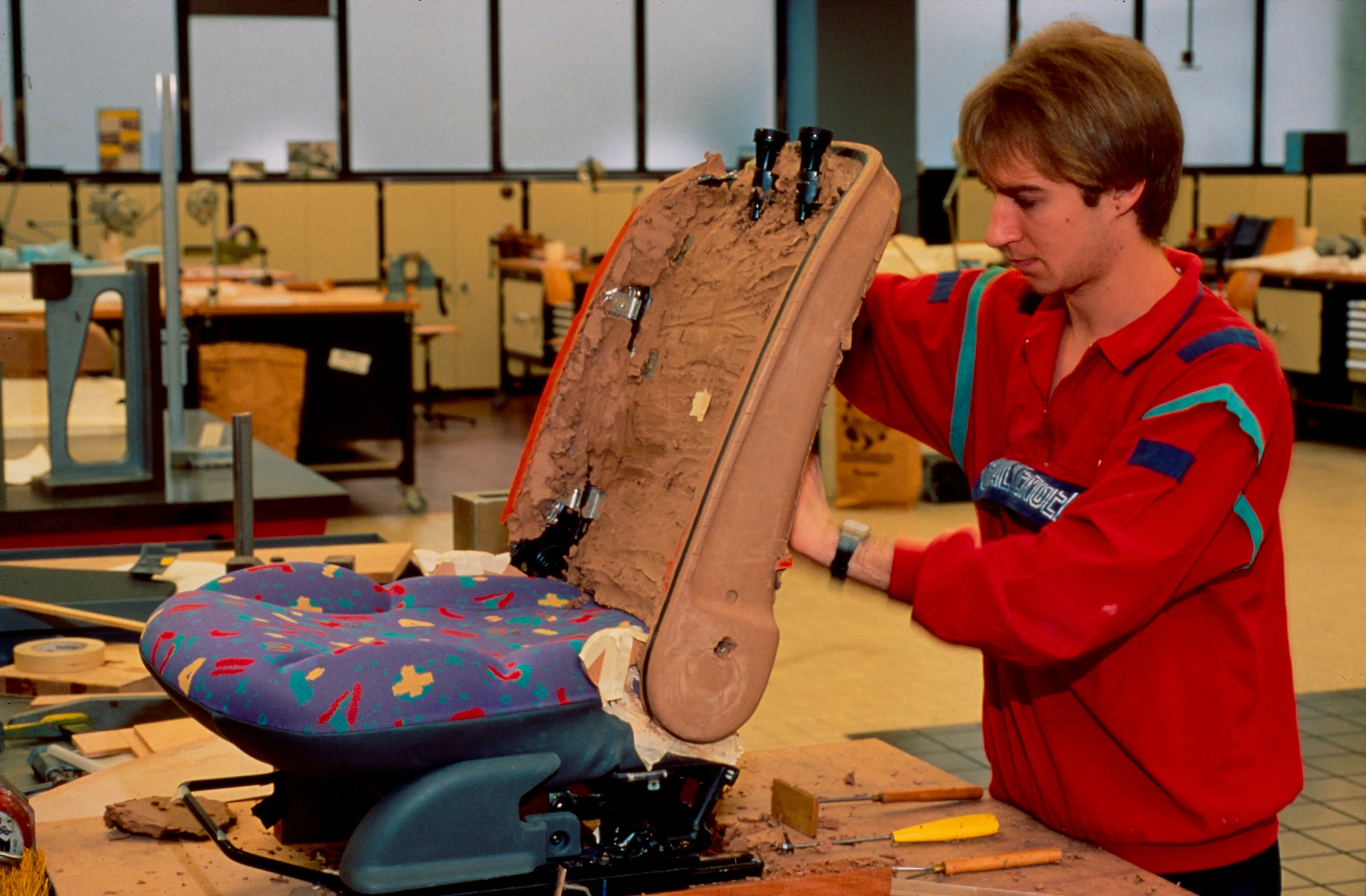
This sliding bench seat was part of the global approach for the Twingo project. At the time, Chairman and CEO Raymond Lévy described the project as “clever and original, but not profitable". The team had three months to prove him wrong. It is in this high-pressure context that they applied a new way of designing an automobile: 'design to cost'.
Instead of developing a product and then calculating its cost, they began by setting a target price and then asked the experts to come up with the best technical solutions to achieve it, even if this involved reviewing working habits and organization.
However, all this had to be achieved without sacrificing “the features essential for users". As Yves Dubreil, Project Director, explains: “We only wanted what was useful... but the useful that made a difference".
The modular rear bench was a perfect illustration of this approach. For the team, Twingo had to be a ‘voiture à vivre’, a car for living, and not just a means of getting from A to B. A car designed for real life adapts to daily situations: the sliding bench seat was non-negotiable.
Jacques Cheinisse explains: “When the Product department asked us for a sliding rear bench to make the cabin more versatile, offering the comfort of a saloon for going out on the town with friends in the evening, or increased boot capacity to help a friend move house, we decided to trust their idea and to find the best cost-to-features solution.”
An approach based on trust and the quest for the best solution Two simple principles that have guided the Twingo adventure right up to the present day.
An optimisation process continuing to the last minute
To finance these essential features, the project team made a radical choice: to make Twingo available in just one version. This radical simplification generated savings that were reinvested in equipment. As a result, a number of features available as options with the competition became standard on Twingo, including the celebrated sliding rear bench!
However, putting the idea into practice was not easy. The first prototypes ran into a number of problems. For example, the seat frame with the belt anchors was difficult to manoeuvre. It was creaky and lacked the required stiffness. So the team persevered, tweaked, fine-tuned and started again as necessary.
Underlining this design choice, the car was designed as a strict four-seater, rather than a five-seater, to allow the rear bench seat to slide between the wheel arches.
The overall design was finalised a few weeks before launch. Just in time!


A sliding rear bench that became part of Twingo's DNA
Launched in 2007, Twingo 2 replaced the sliding bench seat with two individual sliding seats with reclining backrests, except on the entry-level versions which had a fixed bench seat. Nevertheless, it maintains a modular approach with a front passenger seat that could be folded to load objects up to 2 metres long.
This innovation was not carried over to Twingo 3, although it was fondly remembered by Twingo 1 owners. They used to tell their friends: “You know, before, you could slide the whole bench seat. It was great.”
The revolutionary design is not the only reason why Twingo left several generations with lasting memories. It is also remembered for its sliding rear bench: a feature so ingenious and functional that it would become one of the most enduring components of its DNA.

Fourth-generation Twingo and the grand return of the sliding rear seats
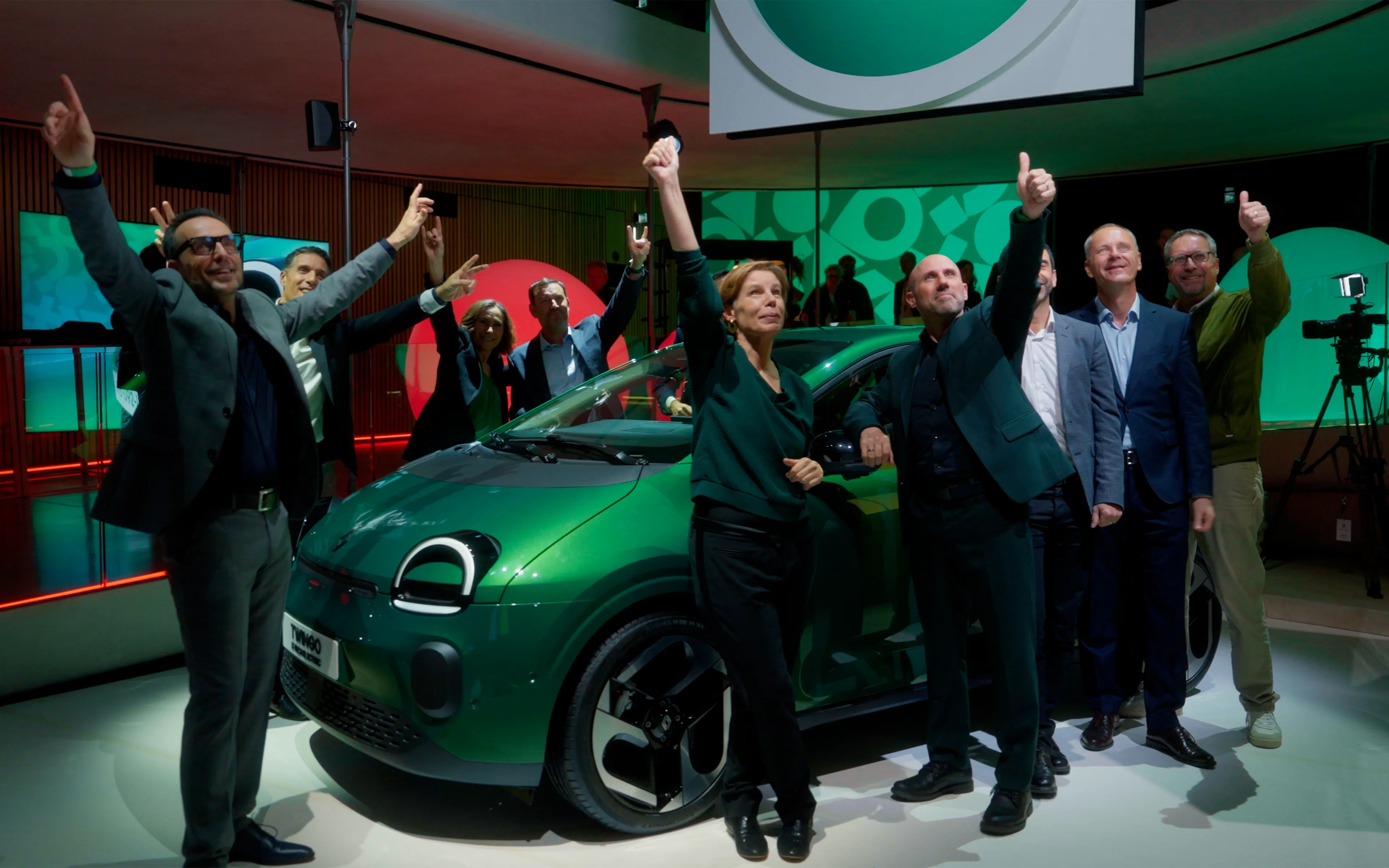
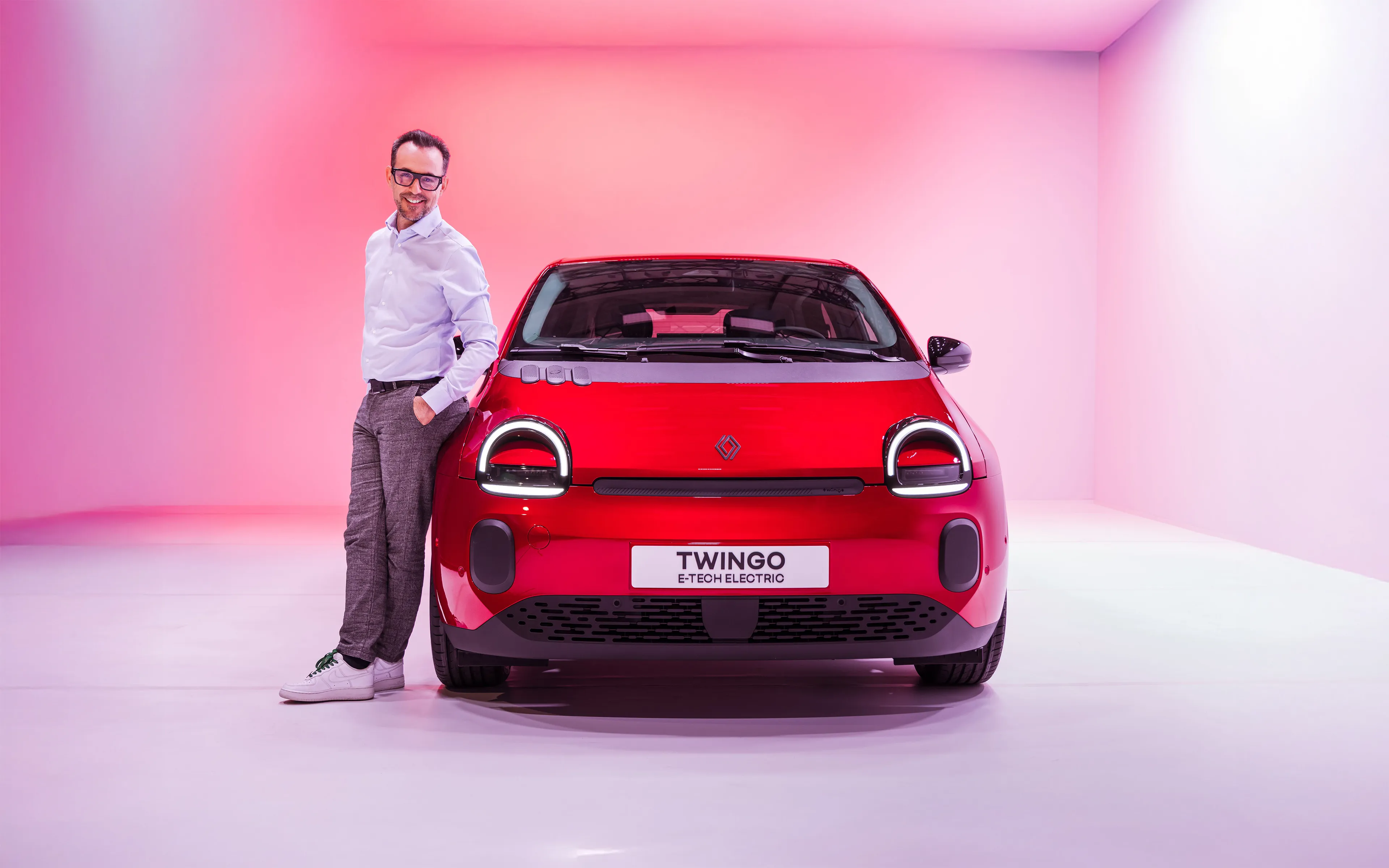
On 6 November 2025, Renault unveiled Twingo E-Tech electric, the new-generation Twingo: compact, mischievous and all-electric. And in the cabin, what a surprise! The return of the sliding bench seat.
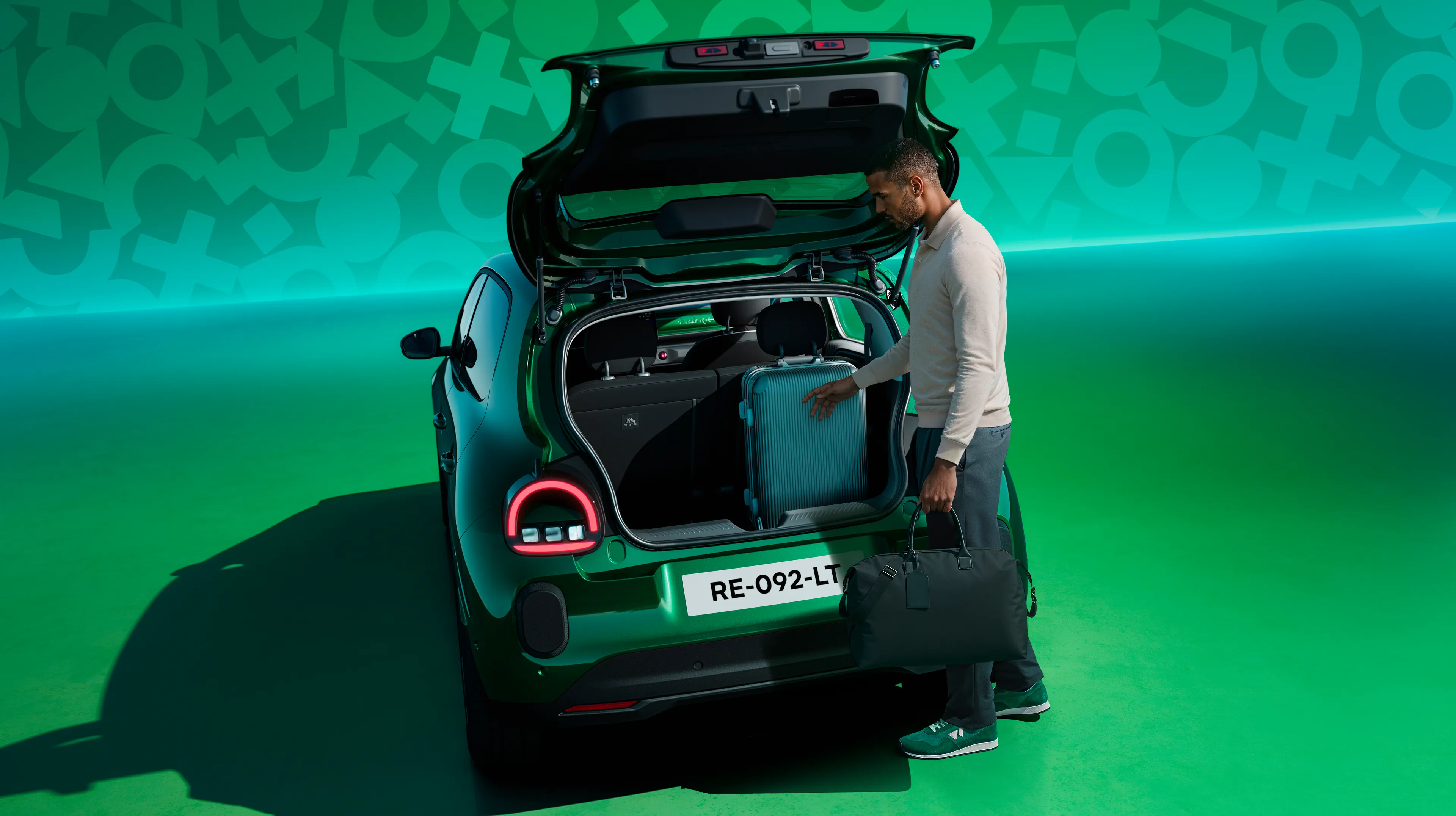
Today, this feature is even better than before. The two seats now slide independently of each other. Are you travelling with a tall passenger on the left and luggage on the right? No problem. Move one seat back and the other one forward. Total freedom.
The design team clearly made the right choice, since feedback from the first customer tests is unanimous. “That's the Twingo spirit. The seats at the back are amazing,” exclaimed one user. "So fast to use. You’ve recaptured the modular layout of the first Twingo,” said another user. “It's an ingenious feature that really adds value to the car.”
A feature summed up by another user: “You’re free to move the seats forward or backward as you want. And you’ve got good boot space”.
The backrests recline in three different positions to optimise postural comfort, while the folding front passenger seat creates a load length of 2 metres and capacity of over 1,000 litres with the backrests folded.
A glance at new Twingo confirms that it has two more doors than the original. Five doors is even better, it's ultra-functional!
Last, Twingo is still compact at 3.79m, but with the interior space of vehicles further up the market.

“When you ask people about Twingo, two points come up all the time: its cheerful, friendly and optimistic design, and the ingenuity of the sliding bench seat. It’s this combination of design and function that we want to recreate today with the sliding rear seats and folding passenger seatback.”
Marion Joly
Product Manager, Renault Twingo E-Tech electric


An electric city car for under €20,000
The strategic question comes to mind immediately: why not revive the original Twingo? Thirty-three years on from Raymond Lévy's challenge, Renault Group was facing a similar problem: how to propose a modern electric city car for under €20,000, with all the technologies expected today in terms of connectivity and driving aids.
The answer can be summed up in three words: design to cost. The method that underpinned the success of the first generation is once again the central thread of the project.
The first step was to establish a rigorous framework. The team had to make decisions on what’s essential and what isn't. One of the first decisions was self-evident: to maintain the DNA of Twingo, the modular design that makes all the difference. Once again, the sliding bench seat of Twingo 1 became non-negotiable. At the same time, the team decided to take the concept one step further by switching from a one-piece bench seat to two independent, sliding and folding rear seats. A change that transformed heritage into innovation.
In the same way as in 1990, the drive to reduce the number of parts and limit investments is not an end in itself. The aim is to free up the resources to add more functions and features to the vehicle wherever relevant: upmarket technologies (Google connectivity, ADAS), practical features (an ingenious boot with a reinforced two-piece carpet), and an affordable entry-level price.

“We had a clear goal: to propose a Twingo at under €20,000. To achieve this, and ultimately to recapture the simplicity of Twingo 1 as well, we opted for a condensed product offering, with a range that is both clear and simple: one motor and two levels of trim, no more.”
Grégoire Ginet
Revenue Leader Renault Twingo E-Tech electric
An innovation that’s useful every day
Twingo's ability to adapt easily to everyday needs is part of its DNA. And in the same way as in 1992, sliding rear seats are standard on all trim levels. Intuitive to use, they also contribute to the advanced versatility of this vehicle, an everyday companion.
This is indeed the strength of this proposal: to serve a function first and foremost. For the Twingo E-Tech electric project team, it was particularly surprising to note that this feature was never perceived as a technical marvel or a gimmick: it was adopted immediately.
It is a perfect fit with the spirit of Renault Group: useful and ingenious innovation, always with users in mind.
Thirty-three years on, this iconic innovation is proving its continued relevance. In an urban environment where functional and versatile design is essential, the sliding seats of Twingo E-Tech electric show that good ideas are timeless.
This concept is more than just a mechanical system. It's a way of thinking: a car that adapts to the user’s lifestyle, not the other way round. A way that encompasses the concept of 'design to cost': targeting investing where it is meaningful for customers. Innovations for everyday life.
A heritage reflecting a specific approach to vehicle design
The sliding seat is one of those details that makes all the difference. In 1992, it turned a small city car into an 'intelligent' car. In 2025, the idea is making a comeback, updated, perfected and tailored to the electric world, making Twingo E-Tech electric one of the most modular city car on the market.
*Thanks to Renault Histoire for its contribution to this article
FAQ
01
What is one of the major innovations of the original Twingo that has made a comeback in the new generation?
02
How does the sliding rear bench seat contribute to the Twingo's interior space?
03
What is the ‘design to cost’ philosophy and how did it influence the return of the sliding bench seat?
04
What are the initial customer feedbacks regarding the new sliding rear bench seat of the Twingo E-Tech electric?
It’s the sliding rear bench seat. Introduced on the first Twingo in 1992, it allowed the interior space to be adjusted between ample legroom and a generous boot. This iconic feature is back on the Twingo E-Tech electric, but with an evolution: the two rear seats now slide independently of each other.
Whether it’s a single-piece bench or composed of two independent seats, the rear seats allow for adapting the interior space to needs. By moving it back, it offers more legroom for passengers, and by moving it forward, it increases the trunk volume. On the new Twingo E-Tech electric, the seatbacks recline to three positions, and the front passenger seat can be folded down, allowing for a loading length of 2 meters and a volume of over 1,000 liters, thus offering the interior space of a higher segment, despite its compactness.
‘Design to cost’ is a design method where a target price is set at the outset and teams then work to find the best technical solution to achieve it, optimising costs without sacrificing what is essential for the user. This philosophy was crucial for the first Twingo and has been reapplied for the Twingo E-Tech electric. It has enabled savings to be reinvested in equipment deemed essential, such as sliding seats, which are offered as standard to ensure the vehicle’s versatility and adaptability.
The feedback from initial customer tests is unanimous and very positive. Users praise the return of the « Twingo spirit » and find the rear seats « stunning » and « super fast. » They appreciate the rediscovered modularity, which brings both « ingenuity » and « value » to the car. The freedom to move each seat forward and backward independently, as well as the optimization of trunk space, are also highly appreciated.