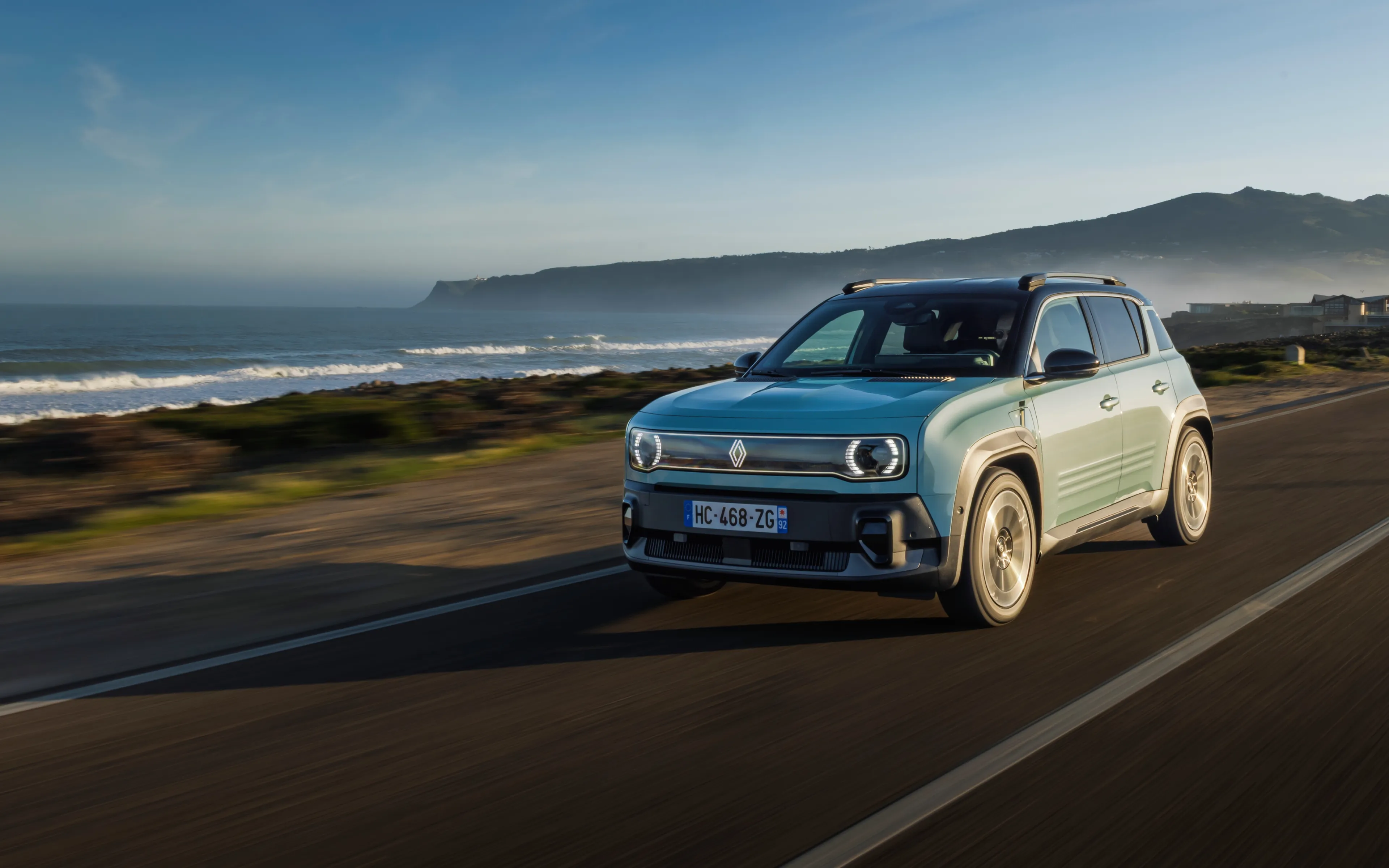
Renault Group’s industrial anchoring in France: a rigorous, responsible and rational model
Article summary
In the face of increasingly aggressive international competition, the European automotive industry is in a state of strategic urgency. For Renault Group, placing France at the heart of its global strategy, both industrially and technologically, is a bold choice for sovereignty, driven by an imperative of economic performance and industrial excellence.
Key takeaways
Renault Group is launching a major industrial offensive to counter Chinese competition on production costs and vehicle pricing;
Renault Group is leveraging a strategic roadmap built around ultra-localized hubs, such as ElectriCity and other key sites in Normandy and the Île-de-France region. This geographical footprint drastically reduces logistical costs;
This transformation is backed by a massive investment plan of €13 billion between 2021 and 2025, with an additional €13 billion to be invested by 2030 to modernize the country’s industrial infrastructure.
The competitiveness challenge and France’s industrial response
Rising to the Chinese manufacturing challenge
The European automotive industry is navigating unprecedented turbulence, amid a particularly challenging macroeconomic climate. The primary challenge lies in a major structural imbalance: a significant competitiveness gap now separates the European Union from China, in both development times and production costs. This asymmetry, driven by lower labor costs and the aggressive vertical integration of battery technologies in Asia, is forcing legacy automakers to rethink their industrial models.
An industrial response driven by France’s automotive flagship
In response, Renault Group’s counteroffensive is not just planned but already fully operational, restoring France to a pivotal role in its global footprint. The country now sits at the heart of the Group’s strategy, accounting for more than 20% of its worldwide production.
This domestic anchoring strategy is bearing fruit and driving a virtuous cycle. Local industrial activity is showing strong momentum, reflected in a nearly 5% growth rate in 2025, an upward trend that has been further confirmed throughout 2026. These tangible results prove that despite macroeconomic pressures, manufacturing vehicles in Europe and France is both structurally possible and economically viable, all while remaining highly competitive.
Light commercial vehicles: key assets for the Group’s French operations
Renault Group’s French anchoring also draws strength from its leadership in light commercial vehicles, capturing a 30.2% share of the French market in the first half of 2026. Domestic plants are on the front lines of driving the energy transition for professional customers. This is notably true for the industrial production of the Master E-Tech, a vehicle with all body types assembled in France on the very same production line in Batilly.
Major strategic developments surrounding the Trafic E-Tech, manufactured at the Sandouville plant, further demonstrate this. By localizing the production of these electric flagships in France, the Group is securing the future of its Normandy and Moselle sites while ensuring its long-term viability in a fiercely competitive market.
Production ecosystems and footprint
Renault Group’s geographical organization in France, focused around major operational hubs, optimizes production flows and standardizes industrial processes. This approach is essential to making electric vehicle manufacturing economically viable on French soil.
The Group’s regional footprint is thus built around several strategic regional hubs in the Hauts-de-France, Normandy, Île-de-France, Grand Est, and Sarthe regions, each with a specific industrial mandate.
Engineering and R&D: the technological heart of France’s industrial footprint
Manufacturing domestically only makes sense if we also secure the future of tomorrow's automotive engineering here. Consequently, Renault Group’s French anchoring is as deeply technological as it is industrial. Demonstrating this commitment, the Group has made the definitive strategic choice to keep 60% of its research and development (R&D) in France.
French plants collaborate closely with cutting-edge engineering hubs established locally. This homegrown brainpower designs the modular platforms, software innovations, and breakthrough powertrains before deploying them on a global scale.
2030 outlook: the product offensive and the wall of investments
A doubled financial roadmap
To ensure the long-term viability of its French model, Renault Group has already invested an initial €13 billion from 2021 to the present day to kickstart the transition, with an additional €13 billion scheduled by 2030 to modernize the country’s industrial infrastructure.
An industrial and social acceleration
The strategic focus on electric vehicle value chains in France is starting to pay off. Indeed, the momentum built across all industrial sites, combined with the commercial success of the Group’s models, points to a projected 50% increase in French plant activity by 2030 (compared to 2021). The domestic footprint will host the production of 13 new models: 9 for Renault Group brands and 4 for its partners. To support this ramp-up, the Group expects a major direct social impact, with the creation of nearly 4,500 direct jobs in France.
Technological sovereignty and circular economy: a responsible model
Championing technology over simple assembly
Renault Group’s French anchoring strategy is built on the drive to capture and retain added value domestically, both upstream and downstream of production. This is the essence of its 'Born in France' tech: major innovations and cutting-edge engineering are designed locally before being rolled out on a global scale.
This technological sovereignty goes hand in hand with maximum industrial flexibility on production lines, allowing for real-time adaptation to market fluctuations, particularly at the Douai electric hub.
“At Douai, flexibility is our strength. Our modular platforms and agile production lines are designed to adapt and evolve, ensuring we always maintain peak performance.”
The closed loop: the ultimate circular economy asset
The Future is NEUTRAL collects and dismantles end-of-life vehicles to reuse, repair, or recycle parts and materials, reintroducing them directly into the automotive life cycle. By reducing reliance on imported raw materials and limiting the industrial carbon footprint, this virtuous model serves as the cornerstone of the Group’s strategy to achieve carbon neutrality in Europe by 2040.
FAQ
To meet the competitiveness challenge posed by China, the Group is betting on hyper-proximity. By grouping its plants, subcontractors, and research laboratories into integrated regional hubs, Renault Group eliminates unnecessary transport costs. This localized network optimizes production flows and drives major efficiency gains.