Behind the scenes of automotive supply chain: anticipating crises to deliver on time
Article summary
When ordering a vehicle, customers expect one simple thing: delivery on the date promised. But when an unforeseen event disrupts supplies or transport, Renault Group mobilizes its teams and digital tools to detect risks as early as possible, adapt flows and uphold that commitment. Step inside Renault Group’s Supply Chain organization and discover the behind-the-scenes race against time to deal with the uncertainties of global trade.
Key takeaways
With recurrent crises, supply chain resilience is a major competitive issue: anticipating disruptions helps protect production and meet customer delivery commitments as closely as possible.
Three Control Towers enable Renault Group to anticipate and manage risks: one monitors the supplier ecosystem, while the other two track parts flows to plants and vehicle flows to points of sale.
Data and real-time monitoring enable rapid action: the Business Continuity Control Tower handles around 50 alerts per day and provides an initial analysis in less than 48 hours.
The ultimate objective remains the same: keeping the promise made to the customer, by detecting risks as early as possible and rapidly activating alternative solutions to limit their impact on production and deliveries.
The growing number of climate-related disruptions, geopolitical risks and volatility in critical raw materials are directly affecting global supply chains. In this context, manufacturers that deliver quickly and keep their commitments gain market share, while those affected by supply disruptions lose it. For automotive manufacturers, the supply chain is on the front line. It is a competitive lever and a key pillar of industrial and commercial performance.
Renault Group’s Control Towers: at the heart of operations
At Renault Group, resilience is first and foremost about operational excellence: monitoring early warning signals, assessing their potential impact, making fast decisions and activating alternative plans before production or customer delivery is affected. This approach relies in particular on three “Control Towers”, designed to monitor risks, manage flows and coordinate operational decisions.
The Business Continuity Control Tower monitors in real time the entire ecosystem of 40,000 suppliers across 87 countries. A dedicated team analyzes alerts every day, regardless of their origin or the geographical area concerned. The team relies on correspondents in every country where the Group operates to assess alerts, share decisions and rapidly launch coordinated investigations with suppliers.
Wherever an event occurs, the alert is analyzed in less than 48 hours, its potential impact on operations is assessed and initial decisions are made to protect operations.
Every day, the Business Continuity Control Tower handles around 50 alerts and provides an initial analysis in less than 48 hours. In 2025, this system helped manage 51 major crises, anticipate or avoid 70% of incidents and reduce the impact of each crisis on operations by 30 to 40%.
Tracking logistics flows to and from plants
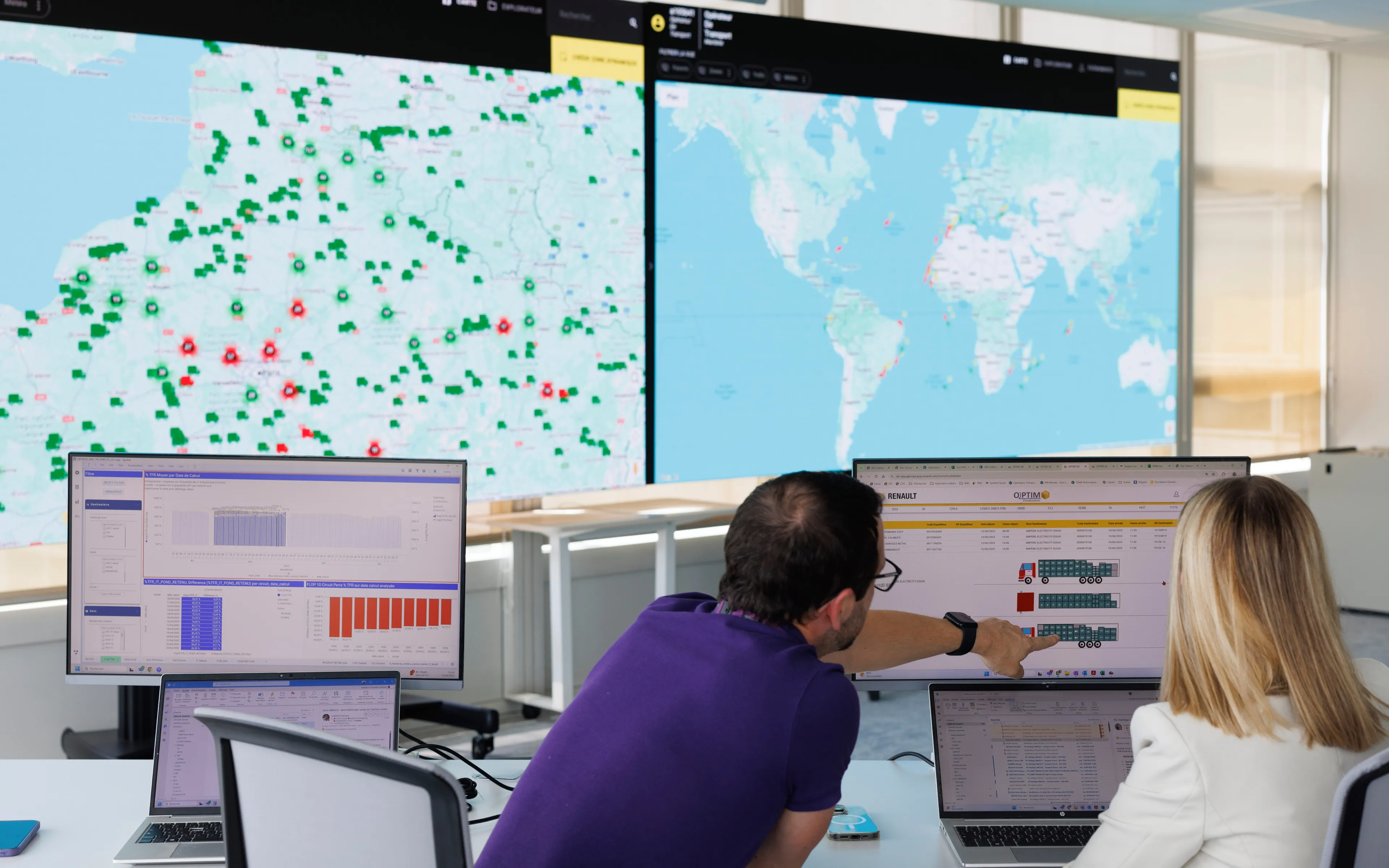
Two other Control Towers complement this system by monitoring logistics flows. One manages incoming parts flows to plants (inbound), while the other manages outgoing vehicle flows to points of sale (outbound). By tracking trucks and ships in real time, using GPS data updated very frequently, teams can anticipate delays, adjust arrival dates and alert plants based on their inventory levels. When the risk of a shortage becomes more likely, different scenarios can be rapidly assessed to identify the most appropriate solutions. The same principle applies to vehicle distribution flows, with the constant objective of delivering vehicles to customers on the date promised when they placed their order.
Focus on the Inbound and Outbound Control Towers
The Inbound Control Tower is a management tool used to track in real time the flows of parts and components transported by truck and ship to plants. It helps anticipate delays and shortage risks by combining transport progress with plant inventory levels.
4,000 supplier sites
300,000 part numbers
20 logistics platforms, where goods are received, sorted and immediately shipped onward, with little or no intermediate storage
3,500 shipments per day to plants
The Outbound Control Tower tracks vehicle flows in real time from plants to dealerships. It helps anticipate delays and adjust distribution flows in order to deliver vehicles to customers on the date promised.
1,200 road shipments per day
1,000 sea transfers
“Today, crises have become a kind of ‘new normal’. What makes the difference is our ability to react quickly, coordinate rapidly and leverage data. But prevention is just as important: identifying alternatives, securing critical supplies and developing dual sourcing, meaning having two supply sources for the same part or component.”
Keeping the promise made to the customer
To meet delivery deadlines, Renault Group combines anticipation, real-time visibility and fast decision-making. Risks are detected as early as possible, parts and vehicle flows are continuously monitored and, when a disruption occurs, teams quickly coordinate alternative solutions: adjusting transport, adapting sourcing or reorganizing flows. This end-to-end mobilization helps limit the impact of crises on production and, as far as possible, meet the delivery date communicated to the customer when the order was placed.
FAQ – New vehicle delivery times
01
What factors affect the delivery time of a new car?
02
Why can a car delivery be delayed?
03
How does Renault Group anticipate these disruptions?
04
Can vehicle shipments be tracked?
05
What happens when a risk of delay is detected?
06
Why is meeting the delivery deadline so important?
Between order and delivery, many stages must be coordinated: parts supply, vehicle production and then transport to the point of sale. Delivery time may also vary depending on the model, its availability, powertrain, trim level or options.
Delays can have many different causes: difficulties sourcing components, production disruptions, transport or customs issues, industrial action or unforeseen events.
The Group relies in particular on three Control Towers to detect risks and monitor flows. The Business Continuity Control Tower monitors the supplier ecosystem, while the Inbound and Outbound Control Towers respectively track the transport of parts to plants and vehicles to points of sale.
From a supply chain perspective, yes: the Outbound Control Tower tracks vehicle flows in real time from plants to dealerships in order to anticipate delays and adjust distribution flows.
Teams seek to react as early as possible and can assess different alternative scenarios: adjusting transport, adapting sourcing or reorganizing flows. The objective is to limit the impact of the disruption on production and delivery.
Beyond logistics, it is an essential part of customer experience. The entire organization described in this article therefore pursues the same objective: as far as possible, honoring the delivery date communicated to the customer when the order was placed.