As innovation accelerates, making the right technological choices is essential to remain competitive and deliver the best vehicles. Electrification and software are already transforming how Renault Group designs its cars and how customers experience them.
Being ready for tomorrow means offering electric and hybrid mobility that is accessible, simple, and reassuring, supported by innovative technologies and services. This is why futuREady focuses on the technologies that truly shape the future of the automotive industry. Platforms, electrification, software, and digital capabilities are key assets to differentiate, improve performance, and secure long‑term success.
This clear strategy, based on mastering core areas of expertise while partnering with the best, ensures essential technological independence and positions Renault Group at the forefront of competitiveness, delivering peace of mind and driving pleasure to customers.
« Our technical strategy is built on mastering technologies by mobilizing the expertise of our R&D centers, that of our partners and our suppliers. Vehicle platforms, electrification, electronic architecture, and software, as well as digital, which includes AI, are the foundations of our technological independence and competitiveness. This strategy is today ‘future-ready’ for the success of our plan. »
Objective 1Vehicle platforms: the foundation of a high-performance global range
In the context of the transition to electrification and Software-Defined Vehicles (SDVs), modern and modular platforms are no longer just an engineering choice, they have become a key lever for differentiation, profitability, and resilience in the face of global competition.
Renault Group fully masters this critical technological building block and is uniquely positioned:
through the strength of its own proprietary platforms,
and through the ability to leverage partner platforms to enhance flexibility, speed, and scale.
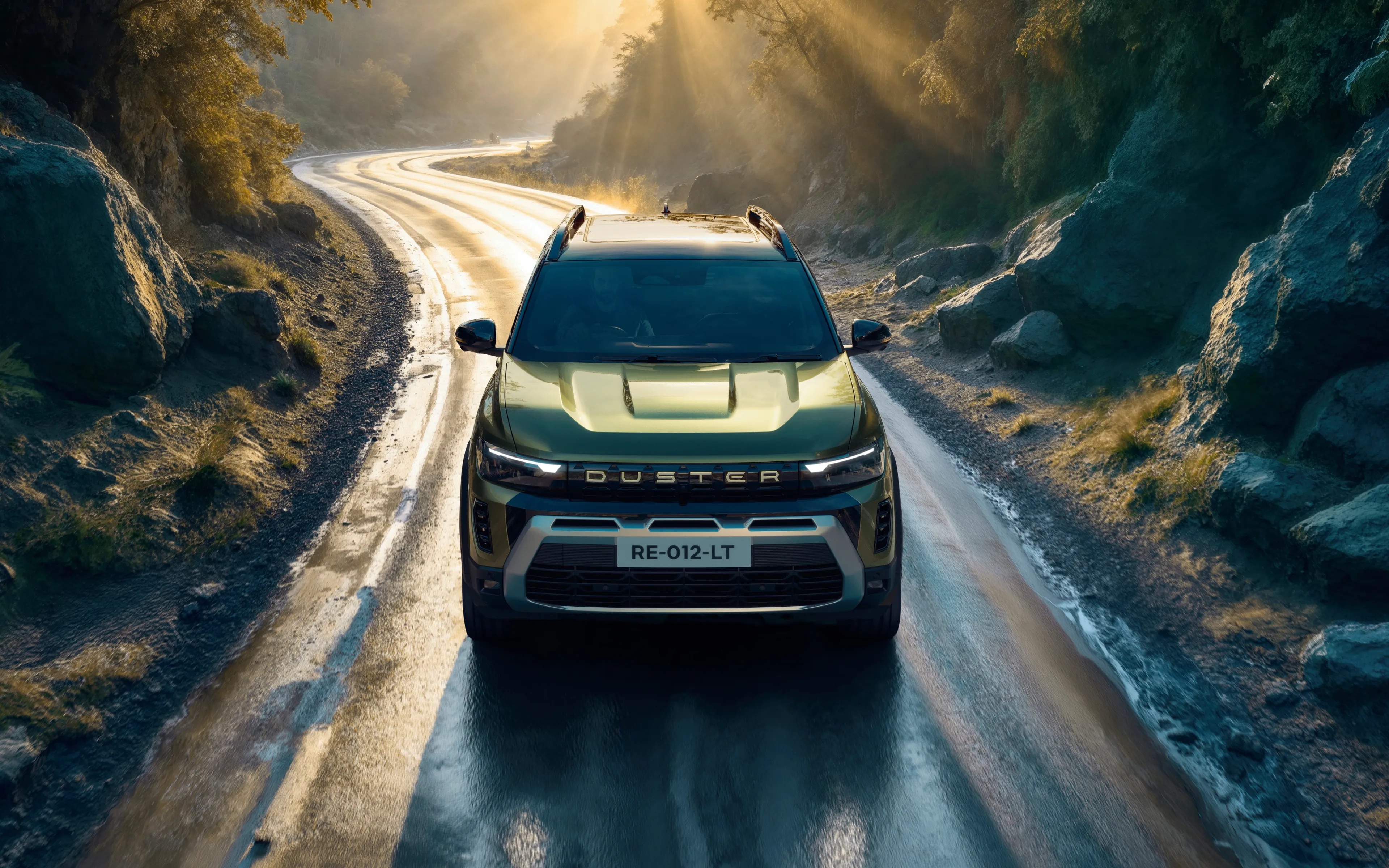
All passenger cars scheduled under the futuREady plan will be developed on four platforms.
RG EV small, the 2025 COTY awarded platform.
RG MP small, a multi-brand and multi-energy platform.
RG EA medium, shared with Geely for the global overseas markets.
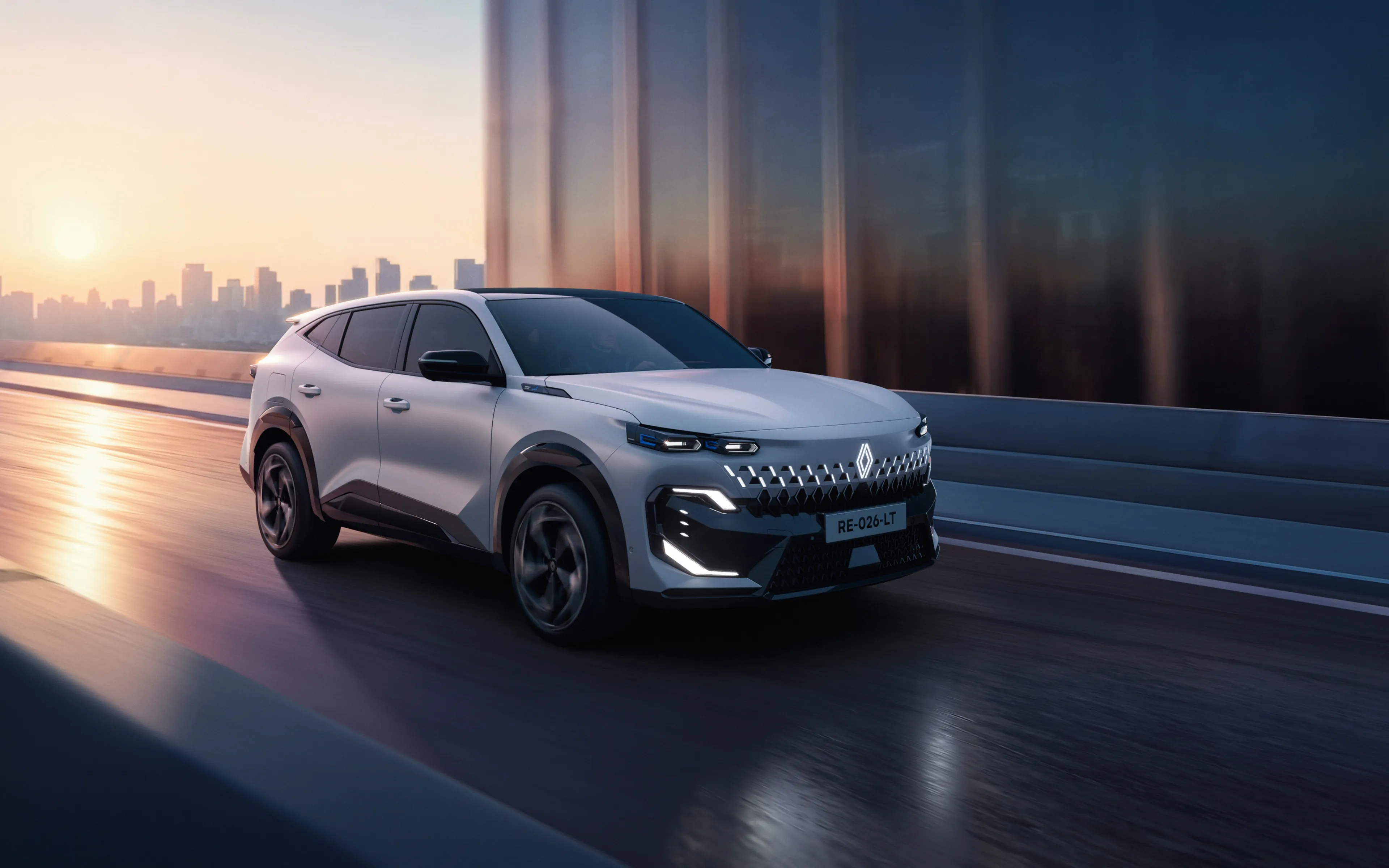
RG EV medium2.0. A new modular EV platform. This new technological gem from Renault Group will cover from B+ up to D vehicle segments, compatible with all low & high drives silhouettes. And above all, it will put an end to range anxiety for electric vehicles by offering up to 750 km WLTP range in EV and, with a range extender, an exceptional 1,400 km WLTP range.
For light commercial vehicles, Renault Group relies on dedicated platforms. These purpose‑built architecture, covering models from the compact Kangoo to the large Master, are key enablers of future electrification and international expansion.
The Trafic E‑Tech, to be launched in 2026, is being developed on a new RG EV medium van platform, while a new half‑ton pick‑up is currently under preparation for South America, further strengthening Renault Group’s LCV offering worldwide.
2030 targets
The new RG EV medium 2.0 platform:
Up to 750 kilometers WLTP all-electric range
Up to 1,400 km WLTP range with a range extender
Objective 2Batteries: improving performance
Electric vehicle customers increasingly expect greater range, faster charging, and higher efficiency. Higher energy density is a critical lever, directly enabling longer range, lighter batteries, and ultimately more efficient and higher‑performing electric vehicles.
As with its entire technology roadmap, firmly guided by customer needs, Renault Group has chosen to focus on two complementary energy‑density paths.
A 'high energy' stream for high-power vehicles, such as Alpine models, or for very long-range versions.
An 'affordable' stream for small cars and standard-range versions.
Across both streams, energy density will increase by 10 to 40%, extending vehicle range without sacrificing charging times.
These advancements are delivered with uncompromising safety standards. All new battery generations will feature guaranteed ‘no thermal propagation’, reinforcing Renault Group’s commitment to safety, reliability, and customer confidence.
2030targets
A-B segment vehicles will remain at 400V with up to 20-minute fast charge.
C-D segment vehicles will switch to 800V by 2028, with fast charging reaching up to 10 minutes in 2030, based on the visible European network at that date.
Objective 3Powertrain: a multi-energy strategy
Renault Group will continue to leverage its dual expertise in electric and hybrid powertrains across all markets.
Electric powertrains
The electric motor strategy is based on two pillars, a balanced vision of mobility needs.
Moderate power motors, intended for city or peri-urban driving.
High-power motors, where range is essential.
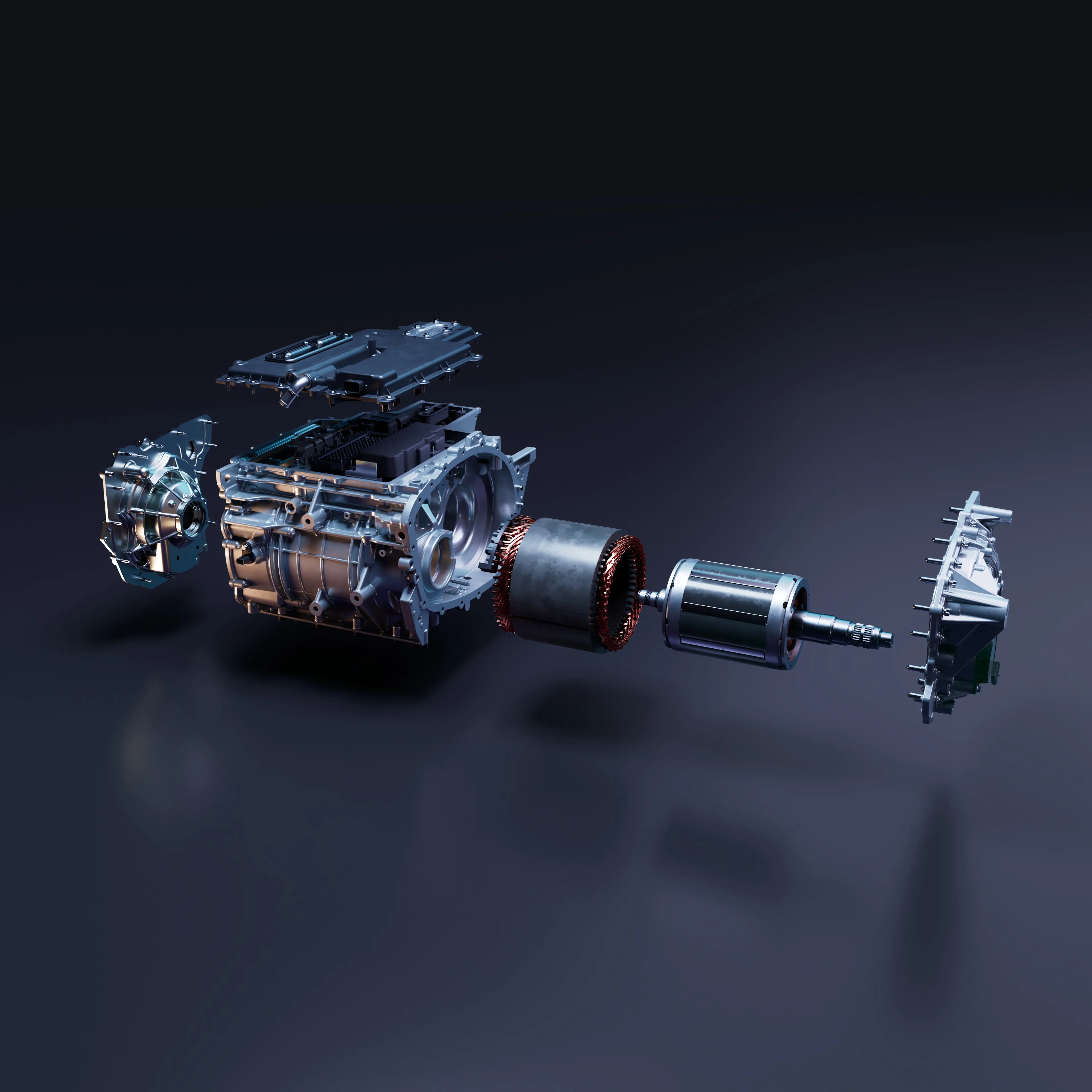
Regarding this second pillar, the group is developing its third generation of wound-rotor, rare-earth-free electric motor (EESM). With efficiency increased to 93% at highway speeds and a 25% increase in power. This 275 horsepower e-motor, with front & rear wheel drive versions, will be equipped with an innovative & scalable 7-in-1 power electronics, based on an 800V architecture.. It will be designed and produced in-house, reinforcing Renault Group’s technological leadership and industrial sovereignty.
3rd generation of EESM motor
Hybrid powertrains
Renault Group stands out for its hybrid powertrain, recognized as the second best on the market for its driving performance and energy efficiency.
The Group is therefore continuing the extension of its E-tech technology beyond 2030, with deployment outside Europe.
Through this multi-energy strategy, Renault Group contributes to decarbonization while managing risks: faced with a slower-than-expected adoption of electric vehicles, hybrid technology is a powerful transition tool: it meets demand and enables investments in electrification, innovation, and software.
2030 targets
Electric vehicles: a third generation 275-horsepower electric motor, with efficiency increased to 93% on the highway and a 25% power increase.
Hybrid vehicles: extension of E-tech technology worldwide and with new versions under 150 hp.
Objective 4Software and electronics: entering the era of smart cars with SDV
With futuREady, Renault Group is committed to a strong drive toward simplification and standardization.
Going forward, the group will rely on two complementary electronic architectures.
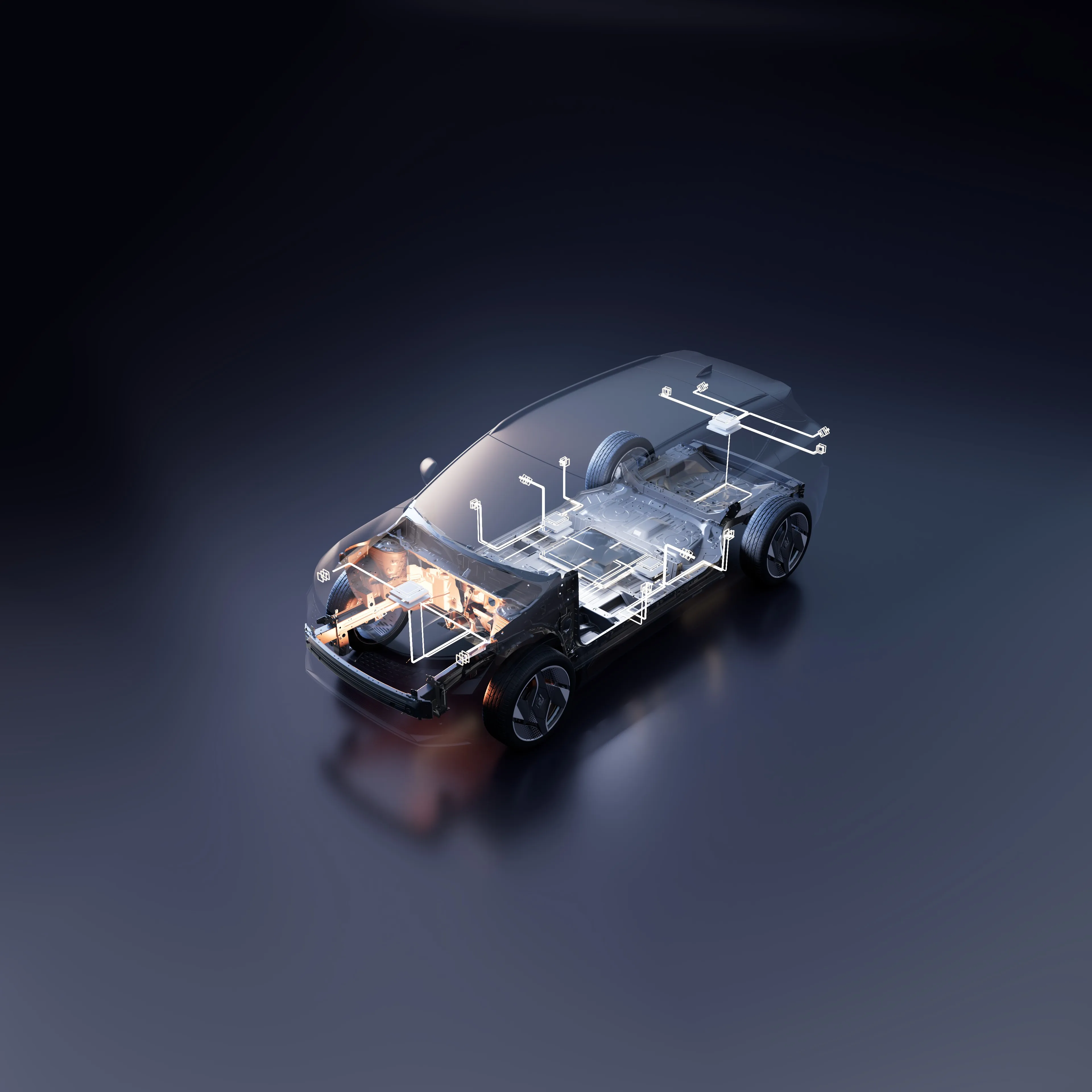
A proven, domain control architecture, extensively validated and further optimized to deliver greater cost competitiveness and robustness. With this architecture, information is sent to several ECUs (Electronic Control Units) distributed by domain as powertrain, chassis, ADAS, body, etc.
An innovative centralized and zonal Software-Defined Vehicle(SDV) architecture, opening a new era of development characterized by faster time to market for features, increased agility, and high scalability. With SDV, the number of ECUs is reduced to only two supercomputers (centralized). Two 'brains', so to speak, that distribute 'work zones' (zonal) such as safety or HMI (Human-Machine Interface). Reducing the number of ECUs means reducing the number of cables, accelerating data exchange, and consuming less energy.
2026 SDV
Renault Group’s Software‑Defined Vehicle (SDV) marks a major step forward for the industry. It will be the first European SDV introduced to the market in 2026 and the first automotive operating system based on Android, developed in partnership with Google.
Thanks to the scalability and agility of the SDV architecture, most updates will be delivered over the air (FOTA), cutting time‑to‑market for new features by half.
And Renault Group is going further, preparing the next frontier: AI‑defined vehicles. The integration of artificial intelligence into its products will be significantly intensified.
At the application level, reducing feature deployment time by an additional three months.
And more broadly, paving the way for the intelligent vehicle, with advanced use cases such as AI‑enhanced ADAS and intelligent chassis systems.
2030 target
With the Software-Defined Vehicle, 90% of updates are done over the air.
Objective 5Futurama: accelerating innovation for the future
To bring its vision of the intelligent car to life, Renault Group is actively developing the technologies of tomorrow. This is, in particular, the mission of the Futurama program, which brings together the Group’s most advanced innovations.
In close connection with the development of AI‑defined vehicles, Renault Group is exploring the next frontiers of automotive technology, including:
steering and braking by wire, without mechanical links,
active suspensions that adapt to the road,
Advanced Driver Assistance Systems (ADAS), targeting level 3 autonomy;
an intelligent cockpit,
safety, fully aligned with Renault Group’s long‑standing “Human First” approach.
Renault Group is also advancing its work on in‑wheel motors, a promising technology that has the potential to fundamentally transform vehicle architecture and packaging, opening new possibilities in design, space, and performance.
Finally, the batteries of the future: cobalt‑free cathodes and lithium‑metal anodes are paving the way for solid‑state batteries. This breakthrough technology will enable electric vehicles with greater range, enhanced safety, and significantly faster charging, setting a new benchmark for electric mobility.
Discover the other pillars of futuREady
Growth-ready: leading with products and customer experience
Excellence-ready: making our operations resilient by design
Trust-ready: engaging stakeholders for long-term trust and value
FAQ
At Renault Group, a vehicle platform is the shared technical foundation used to develop multiple models across brands and segments. It includes the chassis, key structural components, powertrain layout, and increasingly the electrical, electronic, and software architecture. It is the modern base that allows Renault Group to design different vehicles efficiently, at scale.