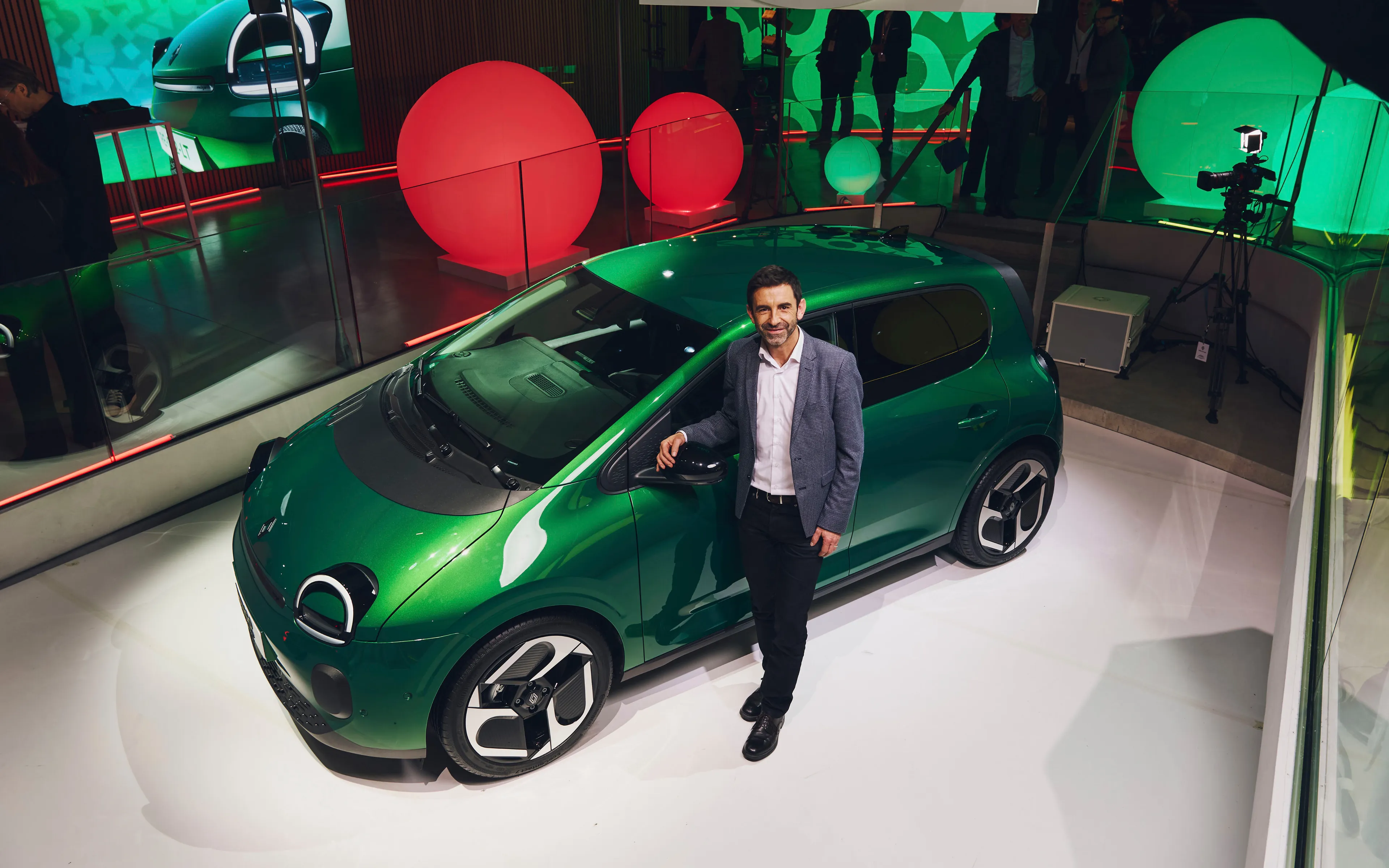
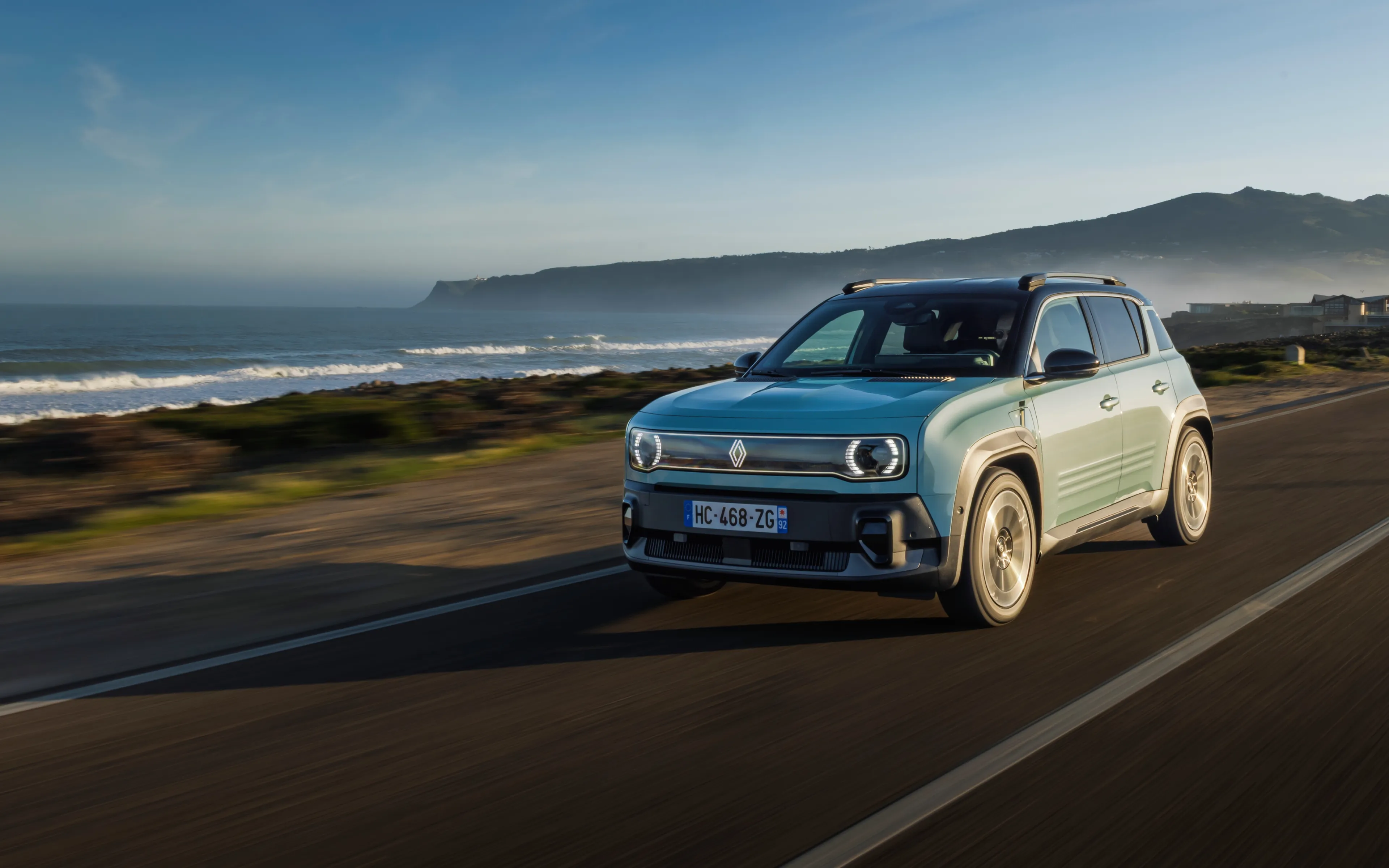
From powertrains and charging solutions to sheer driving pleasure, electric vehicles are redefining automotive standards. Yet this technological shift goes far beyond mere usage: it is reinventing automotive professions and transforming industrial sites by positioning them at the forefront of future technologies. Here is an inside look at a major transition, where France’s independence is now being forged on our roads.
Key takeaways
With lower energy costs[1][2] and maintenance expenses reduced by 30% to 40%*[3], electric vehicles are proving more than ever to be a viable solution for cutting household transport spending;
Driven by hubs of excellence such as ElectriCity, electrification is bringing production back to the heart of our regions, attracting major global automakers and boosting local economies;
The transition to electric mobility is a powerful driver for transforming skills, as demonstrated by the training of over 53,000 Renault Group employees at the ReKnow University;
Having produced over one million electric vehicles on French soil since ZOE, Renault Group is helping to secure France’s energy and technological independence by investing domestically to develop the new electric value chains.
*based on 2025 estimates
A forward-looking choice for drivers: electric vehicles as a purchasing power driver
“Electrification represents a historic opportunity for France, its regions, and its citizens. It paves the way for a new model capable of strengthening our sovereignty, supporting purchasing power, and revitalizing economic activity across our regions.”
Mobility, an absolute necessity turned luxury product
For millions of French people, owning a car is not a mere convenience, but a genuine 'life requirement,' essential to daily life. Yet, this vital mobility is placing an increasingly heavy burden on households, with the average automotive budget reaching €434 per month, accounting for roughly 80% of their transport expenses[4]. The overall cost of vehicles and fluctuating fuel prices are now so high that nearly three out of four French people view owning a car as a luxury[5].
Electric vehicles, a highly acclaimed economic shield
Electric vehicles offer a highly tangible solution for safeguarding purchasing power. 'Refueling' with electricity costs between €3.05 and €10.80 per 100 kilometers, compared to €12.40 in most cases for an equivalent gasoline model. For the average driver, annual savings immediately add up to hundreds of euros. Furthermore, Renault Group’s performance in this market shows that the enthusiasm is very real. The success of social leasing and the 185,000 Renault 5 units produced by mid-2026 prove that demand surges as soon as the offering becomes affordable. Beyond financial savings, it is the overall experience that wins people over. The environmental impact and sheer driving pleasure are so compelling that 92% of European electric vehicle drivers wish to stick with this powertrain[6].
30% to 40% savings (no oil changes or timing belts, reduced brake wear) * *based on 2025 estimates
Frais réguliers et croissants avec l’âge du véhicule
Driving experience
Silent, zero vibrations, smooth and instant acceleration
Engine noise, vibrations, and jerks from gear shifts
Environmental impact in use
Zero tailpipe emissions
Continuous emissions of CO₂ and fine particulate matter
A forward-looking choice for our regions: reindustrialization and the jobs of tomorrow
A renewed network driven by a dense charging station infrastructure
Today, regional planning is no longer thought of solely in terms of the road network, but also through the lens of charging station infrastructure. These facilities have become vital for bringing rural and suburban areas into the electric revolution. The rise of public and private initiatives now guarantees seamless service for drivers nationwide. Station networks such as Plug Inn fast charge, launched by Renault Group, are successfully increasing the density of this regional coverage.
The rise of competitive new local ecosystems
Electrification offers a unique opportunity to rebuild industrial value within our regions. A prime example is the ElectriCity hub, which has become Europe’s leading production center for electric vehicles. This momentum makes it possible to create localized economic loops: for the Renault 5, over 80% of components are sourced from European suppliers, and the battery is produced at the AESC gigafactory in Douai, in immediate proximity to ElectriCity. By investing in this strategic partner, Renault Group is actively supporting the development of a French battery sector.
The efficiency and competitiveness of these new French industrial platforms are even attracting other global automakers, such as Nissan, Mitsubishi Motors, and Ford. These brands have chosen this ecosystem to produce some of their vehicles.
Industrial conversion through upskilling
The technological transition to electric mobility also presents an opportunity to guide employees through the transformation of their skills across the entire automotive sector. Job roles are evolving to integrate the innovations of today and tomorrow, and Renault Group is at the very forefront of this movement. Indeed, through initiatives such as the ReKnow University, over 53,000 employees had already been trained in new key skills by the end of 2025, representing more than half of the workforce!
Meeting this challenge requires supporting a sovereign and protective model. Choosing an electric vehicle made in France means safeguarding a vital sector that supports nearly one million direct and indirect jobs[7]. This commitment to local anchoring is not only possible, but already underway. Over one million electric vehicles have already been produced by Renault Group on French soil since the first ZOE, and massive investments continue to be injected into the country. By combining ecological excellence with strategic independence, France holds all the cards to successfully lead this technological revolution.
Electric vehicles drastically reduce transport expenses thanks to energy costs that are three times lower. In fact, it costs only €3.05 to €10.80 per 100 kilometers, compared to around €12.40 for fuel at the pump. Furthermore, their simplified mechanics and the use of regenerative braking reduce maintenance costs by 30% to 40% over the vehicle’s lifespan.