Holidays in an electric car: what if the drive were already the start of the holiday?
Published on

A quiet cabin, breaks that feel good, charging instead of filling up: long journeys in an electric car are no longer a challenge. It’s simply a different way to drive: more relaxed, more enjoyable, less noisy and less polluting too. A bit of anticipation, some landmarks, and the holiday begins with the very first kilometre.
“And when I get there, where do I even plug it in?” Every summer, the question comes out of the cupboard along with the suitcases. Today, the answer fits in one word: (almost) everywhere. As a sign of how attitudes have shifted, 67% of French people now consider it perfectly possible to go on holiday in an electric car*. If you're still hesitating over battery life or charging, these few pointers are for you: in most cases, those obstacles simply no longer exist.
Here's the key thing to grasp: driving electric isn't about driving a combustion car while nervously watching the battery. It's about adopting a different tempo: planning your route, timing your breaks, charging calmly along the way. And that tempo has real upsides: less noise, genuine breaks, and arriving without the detour via the petrol station. The journey is a foretaste of the holidays!
A well-prepared trip is already a relaxed one
As with any departure, a good trip takes a little preparation. With electric, it all starts with route planning: the step that lets you anticipate your stops and drive with a clear mind.
Planning apps are plentiful, on your phone and on board. Some Renault models[1] have Google Maps' planner built in: it calculates your route, tells you in advance how many charging stops you'll make and how long they'll take, then adjusts in real time based on the car's consumption, traffic and your preferences. You can even set up the route the night before, comfortably from home, and send it straight to the car.
Nothing compulsory or complicated: the idea is simply to have a rough sense of where and when you'll stop. The rest takes care of itself.
[1] Megane E-Tech electric, Scenic E-Tech electric, Renault 5 E-Tech electric, Renault 4 E-Tech electric.


Before you leave: the checklist
- Note, once and for all, your car’s charging capacity (the power it accepts, in kW) and its connectors. Two useful things to know, and it’s done.
- Have a payment method ready: a bank card, and/or a multi-network charging pass. A pass like Renault Group’s Plug Inn charge pass opens access to the major European networks and quickly pays for itself if you drive often.
- Think about charging on arrival. Check the options at your holiday destination: My Renault app, for instance, shows the charging points around your summer address.
- If there were only one rule to remember: you charge at every break, without waiting for the reserve.
What it costs, and how you pay
It's often the real question behind range: how much will I pay? Good news, it's easy to anticipate, and since 2026 every charging point clearly displays its price per kilowatt-hour (kWh) before you even plug in.
The cost depends on where you charge, your payment method and your subscription. At home, overnight, count on roughly €2.50 to €3 per 100 km. At a standard public charger, more like €5 to €9. And at a motorway ultra-fast charger, €8 to €14 per 100 km depending on the operator.

On the payment side, you have choices. Contactless bank cards are now accepted at newer charging points. To drive with peace of mind and pay less, a multi-network pass remains the most convenient option: one card, one bill, negotiated rates. Renault Group's Plug Inn charge pass, for example, opens access to the largest European networks with preferential rates on Plug Inn fast charge, enough to noticeably lighten the bill on long trips. At some Plug Inn fast charge points, ‘plug & charge’ technology goes even further: you plug the cable into a compatible car, and charging and payment both start on their own. One move, and you're set.
The charging break: the new rhythm of the journey
On a long trip, a break every two hours is recommended. In an electric car, it comes at just the right moment: the ideal time to charge. And the opportunities are everywhere.
With more than one million public charging points across Europe, a network that grows denser every year, led by the Netherlands, Germany and France, you can charge just about anywhere: at motorway service areas, hotel and shopping-centre car parks, and specialist operators.
To get back on the road quickly, head for ultra-fast charging: it restores around 80% of range in 15 to 40 minutes on average, the time for a proper break. Renault Group's Plug Inn fast charge network, open to all brands, offers at selected sites a secure lounge, accessible 24/7, with Wi-Fi, restrooms, drinks, a work corner and a relaxation area.


And while the car charges, there's no need to stand beside it. On the Plug Inn fast charge network, a QR code on the charger or My Renault app lets you follow the charge in real time from your smartphone. Enjoy the lounge or the surroundings and come back when it's ready.
A different idea of travel
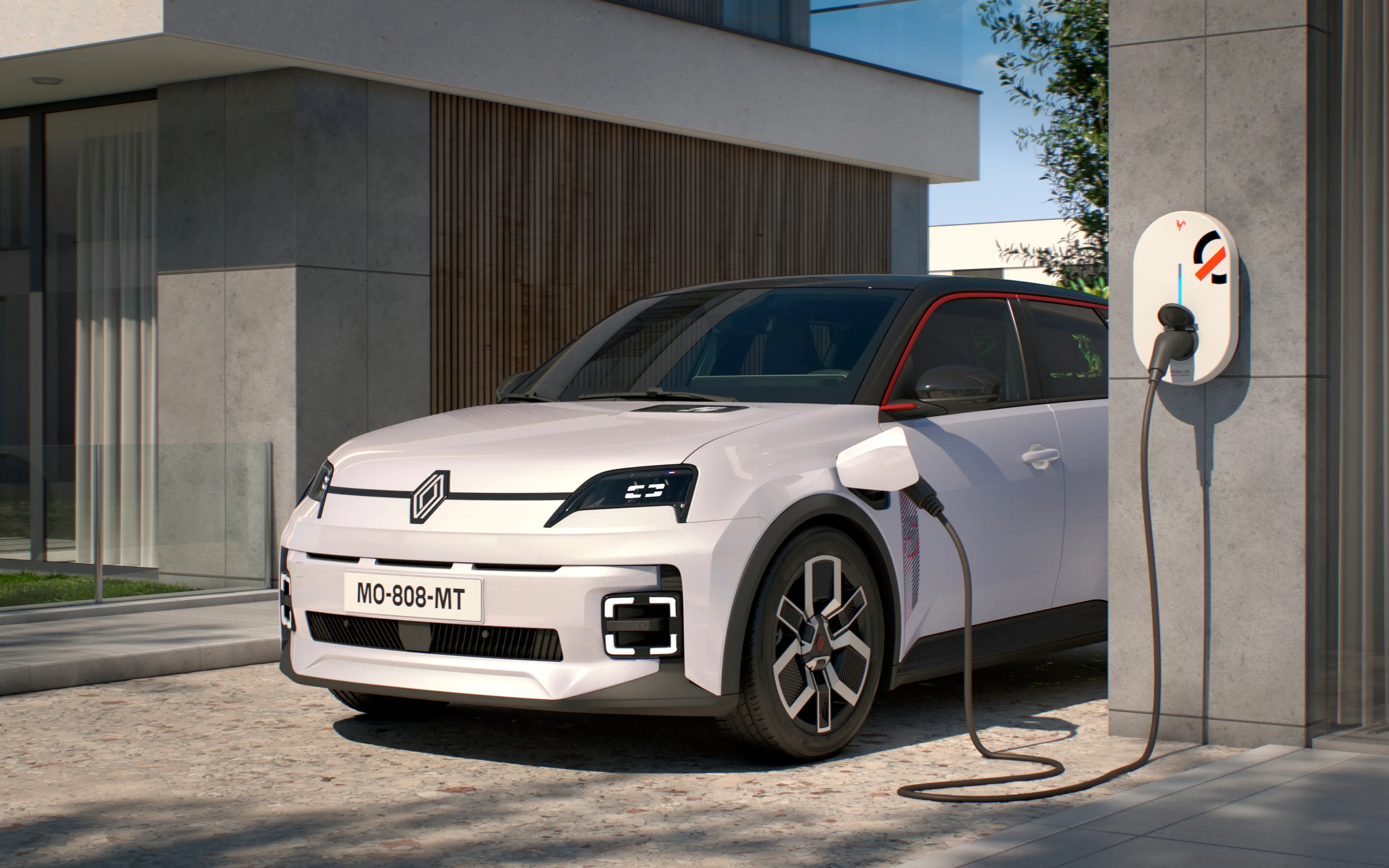
Once you've arrived, it's all simple: charge overnight at your accommodation (standard charging) or during the day on the public network.

Travelling electric means experiencing the road differently. Quieter, the journey gains in comfort and calm. Charging replaces filling up, no fuel smell, no greasy hands. And the breaks, instead of a chore, become a pleasure: a chance to discover a region, stretch your legs, breathe before leaving again.
*Alphabet France x YouGov barometer: annual quantitative survey conducted online from 20 to 21 May 2026 among a sample of 1,002 people, representative of the French national population aged 18 and over.
The essentials
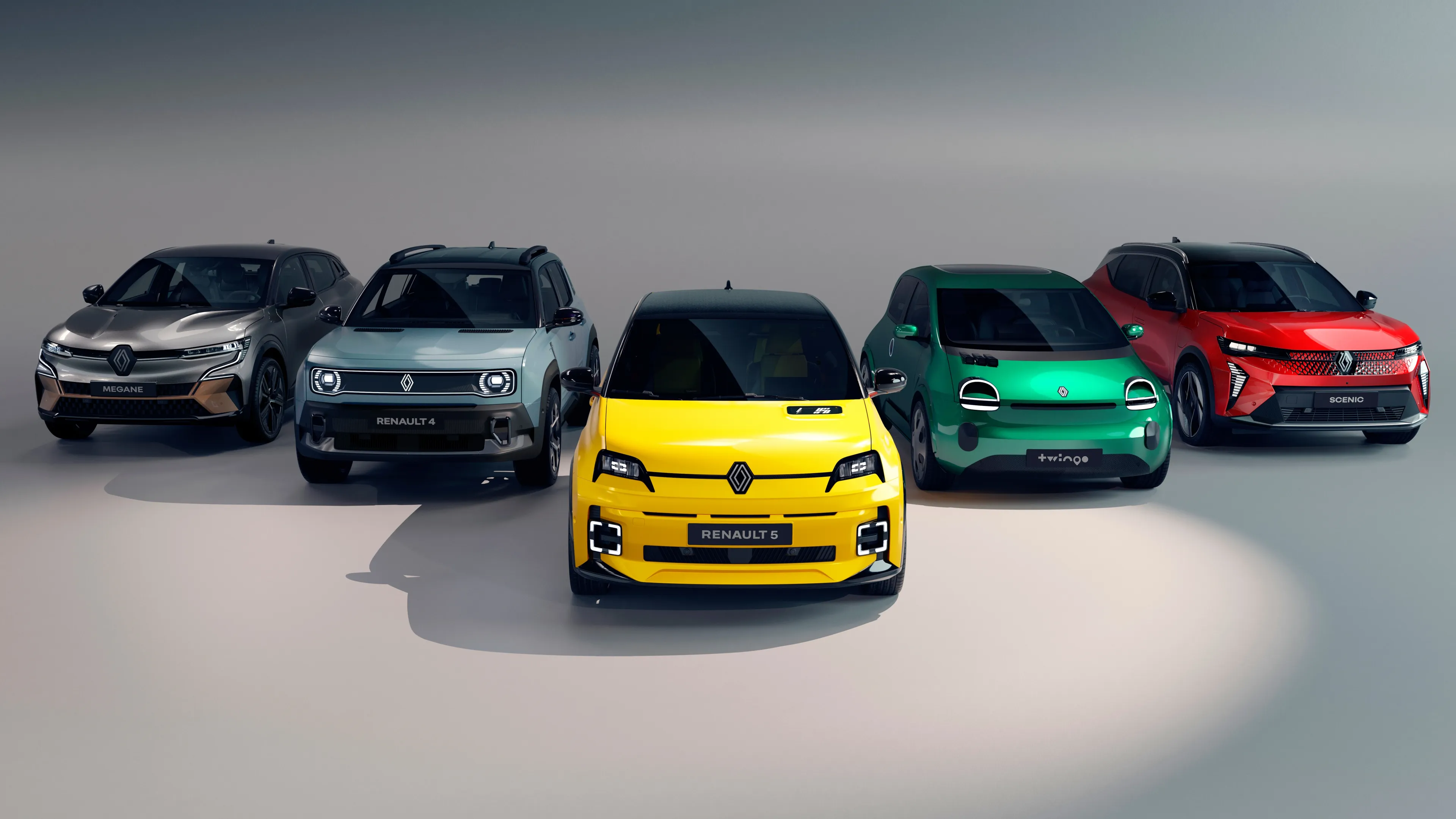
- Long electric journeys have become the norm, not a feat. Recent models cover big distances with ease: up to 625 km for Scenic E-Tech electric, 500 km for the New Megane E-Tech electric and 409 km for Renault 4 E-Tech electric (WLTP).
- The network has changed scale. Over one million public charging points across Europe, including fast and ultra-fast chargers all along the major routes and motorways.
- It’s a different rhythm and a welcome one. You charge in small top-ups during your breaks, without ever watching the gauge and the breaks become a real chance to unwind.
- Three habits are enough: plan your route, charge at every break, have a payment method ready. Solutions like Renault Group’s Plug Inn charge pass make access and payment simple across more than a million points in Europe.
Going further: a short charging glossary
No need to master all of this to hit the road but here are the few words that keep coming up
- Range: the distance you can cover with a full battery. It varies with speed, weather and load.
- Battery capacity: the amount of energy it stores, in kilowatt-hours (kWh). The higher it is, the greater the range.
- Standard, fast and ultra-fast charging: from the everyday socket (ideal overnight) to the chargers on major routes that give back 80% in a few dozen minutes.
- Type 2 and CCS Combo: the two plugs you’ll come across on a trip. Type 2 for normal charging, CCS Combo for fast charging.
FAQ
Plan your route to anticipate charging breaks, check your car’s charging capacity and connectors, keep your cables handy, and have a payment method ready. On the road, you simply charge at each break.