Alexandre Malval: creating the next generation of Renault Icons
Article summary
Appointed Renault Brand Design Director in early 2026, Alexandre Malval shares his vision for Renault design: building a cohesive, instantly recognisable vehicle range while giving each model its own personality. From heritage to new technologies, from the use of artificial intelligence to the development of an international line-up, he outlines the principles that will guide the creation of the next generation of Renault cars.
Key takeaways
A recognisable identity: silhouette, proportions and lines should make a Renault instantly recognisable at first glance.
One family, distinct personalities: the vehicles share common design cues while retaining their own individual character.
Heritage as a source of creativity: Renault’s iconic models are reinterpreted using today’s design language and technologies, without nostalgia. The brand must also imagine new icons that express its DNA without necessarily drawing inspiration from models of the past.
Artificial intelligence as an accelerator: it makes it possible to explore more creative directions, while the designer defines the vision and makes the decisions.
A global identity adapted to each market: Renault develops shared design cues while taking into account local tastes, usage patterns, regulations and automotive cultures.
A Renault recognisable at first glance
For Alexandre Malval, Renault Brand Design Director, recognising a Renault without seeing its logo starts with its silhouette and proportions. These define a car’s stance and make it recognisable from a distance. Details, surfaces and lighting signatures then reinforce this identity.
The challenge is to build a cohesive vehicle range in which every model shares certain common design cues while retaining its own distinctive personality.
“I want to create a family of vehicles that are clearly recognisable as sharing the same DNA, with common defining characteristics, while allowing each model to express its own personality.”
Renault design must express the brand’s DNA: cars designed for everyday life, with expressive, contemporary styling and technology that puts occupants first.
This vision translates into four key design principles: creating desirable, expressive cars; putting technology at the service of people; embracing electrification; and designing interiors as genuine living spaces. For Alexandre Malval, these four pillars must guide every design decision, from exterior styling and interior ambience to interfaces and customer experience. Every project should strike a balance between emotion, sensuality, technology and modernity.
Alexandre Malval in front of Renault E-Space Concept – Paris Motor Show 2026
Reinventing heritage without nostalgia
Renault has an exceptionally rich heritage: the Renault 5, Renault 4, Renault 8 Gordini, Espace, Twingo… These models have made their mark on automotive history and helped forge a strong emotional connection with the brand. For Alexandre Malval, this heritage is a valuable source of creative inspiration. But the aim is not to reproduce the past. Iconic models are reinterpreted using today’s design language, technologies and proportions.
“This emotional value is precious to Renault because it embodies the brand and brings it to life. I have been entrusted with a wonderful heritage, and I take great care of it. It is important to do so without nostalgia. We are not trying to reproduce the cars of the past; the aim is to reinterpret and reinvent them.”
Reinterpreting Renault’s iconic models makes it possible to draw on the brand’s history to inspire new creations that reflect today’s lifestyles and customer expectations.
Future Renault models will not necessarily draw on the brand’s existing heritage. They may also emerge from entirely new concepts, offering original solutions to customer needs through new architectures or technological innovation.
Renault E-Space Concept
Renault E-Space Concept
Renault E-Space Concept
Renault E-Space Concept
Renault E-Space Concept
Renault E-Space Concept
Renault E-Space Concept
Renault E-Space Concept
Electrification opens up new creative possibilities
Electrification is profoundly transforming automotive design. New architectures make different proportions possible and offer greater freedom in the way volumes and interior space are organised. These changes go hand in hand with advances in technology. Connectivity, interfaces and new features are expanding the scope of design: it is no longer just about designing a car, but about creating a cohesive experience, from the exterior to the interior.
For Alexandre Malval, this transformation is an opportunity to push the boundaries of design while remaining true to what defines Renault: cars designed to make everyday life easier and more enjoyable through simplicity, comfort, practicality and innovation.
Renault 8 Gordini Concept
Renault 8 Gordini Concept
Renault 8 Gordini Concept
Renault 8 Gordini Concept
Renault 8 Gordini Concept
Artificial intelligence: a valuable tool for designers
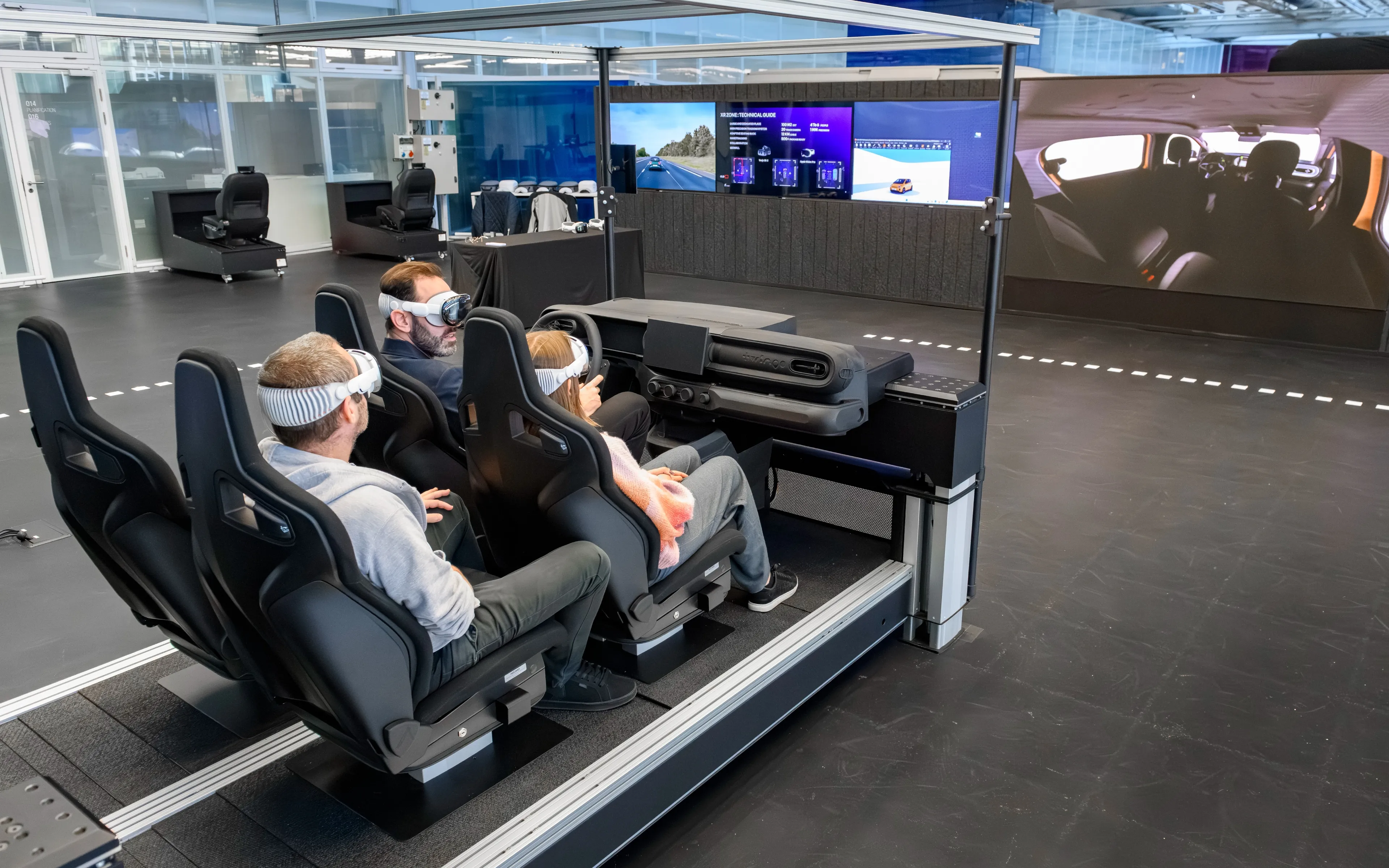
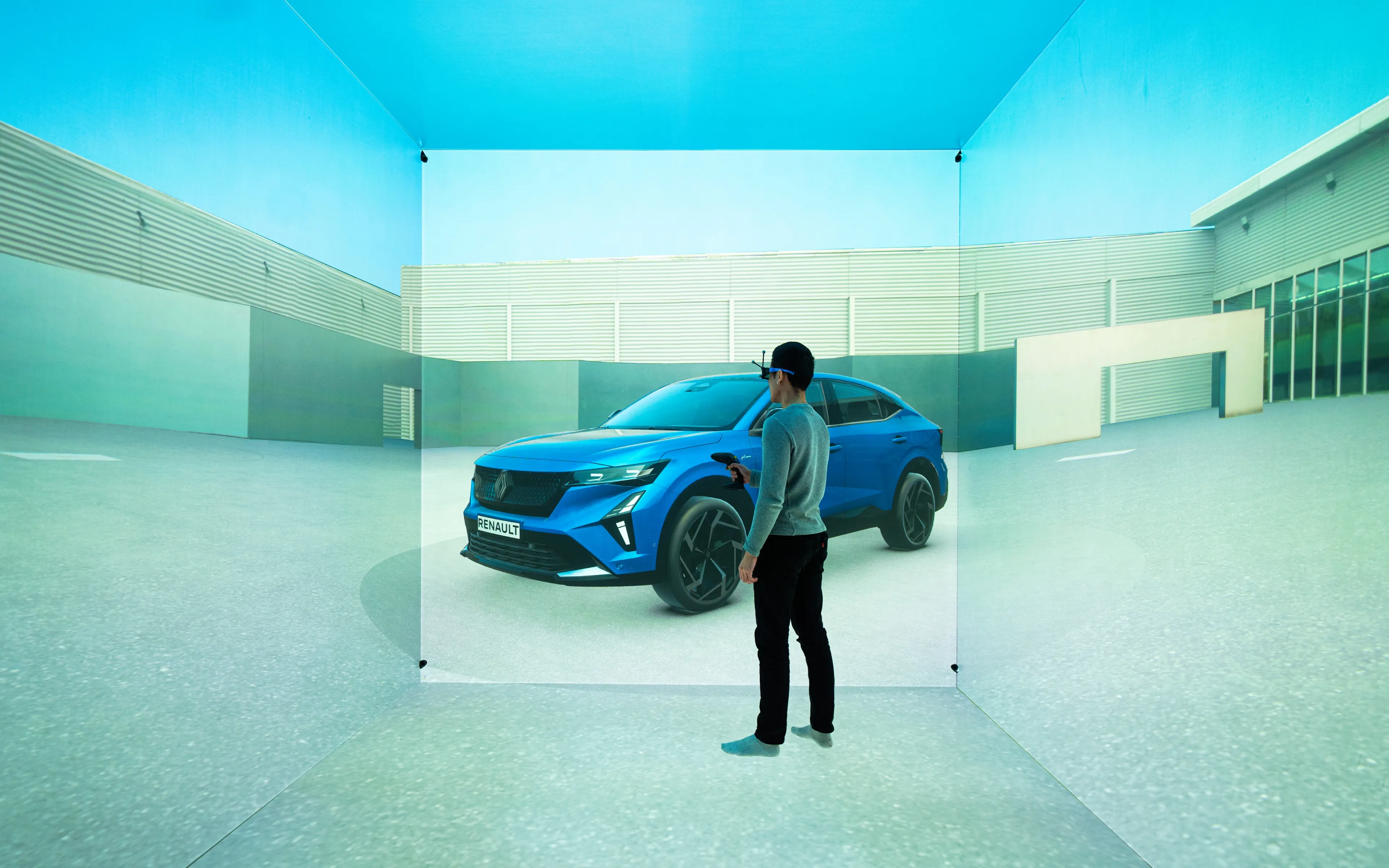
Artificial intelligence (AI) is already transforming designers’ day-to-day work. Starting with a sketch, it allows them to rapidly explore different colours, perspectives and environments, testing more design directions in far less time. For Alexandre Malval, AI is above all an accelerator of creativity and execution. It frees up time and significantly expands the realm of possibilities.
However, it cannot replace human inspiration and creativity, the initial hand-drawn sketch or the designer’s judgement. Faced with the multitude of options generated, it is still the designer who selects, combines and discards ideas, giving the project its direction. They are also responsible for shaping the vehicle’s overall identity, character and consistency with Renault’s brand identity. AI multiplies the possibilities and makes it possible to produce realistic renderings more quickly; the designer retains the vision, intent and final say.
Renault design on the global stage
Renault design must also express itself on an international scale. The design teams in France work closely with Renault design teams in Brazil, India and South Korea to combine brand consistency with local specificities.
Vehicle dimensions, regulations, usage patterns, colours and materials can vary from one market to another. Customer expectations in Korea, India and Latin America are not necessarily the same. Yet these differences must all be expressed within a shared Renault identity.
The ambition, therefore, is to create vehicles that share the same fundamentals while being adapted to the realities of their respective markets. Alexandre Malval sees them as “brothers and sisters”: different, yet instantly recognisable as members of the same family.
Creating the next generation of Renault icons
Alexandre Malval’s vision sets out a five-year ambition: to build a cohesive, international and instantly recognisable vehicle range, in which every model has its own distinctive character. Design must meet customer expectations while creating emotion and desire. The aim is to stand out not only through contemporary styling, but also through the ingenuity of new concepts.
“We want to inspire our customers to buy our vehicles by standing out from the crowd, either through highly contemporary styling that reflects our brand identity, or through the ingenuity of particularly innovative concepts.”
The challenge, therefore, is to evolve Renault design without losing what makes the brand unique, while imagining the models that will shape the decades to come.
FAQ
01
Who is Alexandre Malval?
02
What is his vision for Renault design?
03
What role does Renault’s heritage play in his strategy?
04
What role does artificial intelligence play in Renault design?
05
How can Renault maintain a global identity while meeting local market needs?
Alexandre Malval is an automotive designer who has built his career at Renault, Volkswagen, Citroën, Peugeot and Mercedes-Benz. He returned to Renault in early 2026 as Renault Brand Design Director.
Alexandre Malval aims to build a cohesive vehicle range that is instantly recognisable as Renault, while giving each model its own personality. Silhouette and proportions play a key role in making the brand recognisable.
Renault’s heritage is a major source of inspiration for the brand. The Renault 5 E-Tech electric and Renault 4 E-Tech electric illustrate how iconic models can be reinterpreted with a contemporary perspective. At the same time, concept cars such as E-Space open up new avenues for exploration and help imagine the icons of tomorrow.
For Alexandre Malval, AI is above all an accelerator of creativity and execution. It makes it possible to quickly turn a sketch into a range of different proposals. However, designers retain their creative intuition and ability to envision the future, as well as responsibility for selecting references and defining the direction of each project.
The brand’s design principles have been defined at a global level. Design teams develop vehicles that respond to local usage patterns, regulations and cultural expectations. Renault draws in particular on several international design teams based in Brazil, India and South Korea.