Does improving the driving range of an electric vehicle mean increasing battery size? Not necessarily. Some of the most promising advances lie elsewhere, in components that often go unnoticed by the general public. This is the approach Renault Group and Continental have taken by working together on low rolling resistance tyres. Combining tyre expertise, digital simulation and real-world testing, this collaboration has explored new ways to improve the energy efficiency of electric vehicles.
Key takeaways
Tyres account for around 20% of an electric vehicle’s energy consumption.
Renault Group and Continental worked together to develop ultra-low rolling resistance tyres.
The project combined digital simulation with physical testing.
The ROADS simulator accelerated development and enabled a wider range of solutions to be explored.
The efficiency gains were achieved without compromising safety or vehicle handling.
The project’s findings are already contributing to future developments at Renault Group.
Behind the driving range of an electric vehicle lie a host of challenges
The battery is not the only factor that determines an electric vehicle’s driving range. Tyres alone account for nearly 20% of an electric vehicle’s energy consumption. This often-overlooked figure explains why Renault Group and Continental chose to make them a key area of innovation. Beyond driving range, tyres also represent a significant share of an electric vehicle’s carbon footprint, further highlighting the importance of this work.
With every wheel rotation, the tyre deforms as it comes into contact with the road. This deformation generates energy loss, known as rolling resistance. Reducing rolling resistance is therefore one of the most effective ways to increase driving range without increasing battery size.
This is precisely the challenge that the Renault Group Futurama programme teams set out to address. Their ambition: to push the boundaries of energy efficiency by tackling every source of vehicle energy consumption.
“Today, we can clearly see that the transition to electrification is working for urban vehicles. What is not progressing as quickly is the shift among high-mileage drivers.”
It quickly became clear that developing a low rolling resistance tyre is not simply a matter of reducing friction.
“When car manufacturers and suppliers seek to reduce rolling resistance, they are no longer willing to accept trade-offs. The goal is to lower rolling resistance while maintaining the same level of overall performance.”
Reducing rolling resistance is relatively straightforward. Achieving it without compromising braking performance, comfort or vehicle handling is a completely different challenge. To meet it, Renault Group chose to build on Continental’s expertise.
A strategic partnership beyond the traditional customer–supplier relationship
Renault Group knows the vehicle. Continental knows the tyre. The project's objective was to bring these two areas of expertise together as early as possible to explore new solutions. For Gilles Enjolras, the project above all illustrates a new way of innovating: partnering with the best experts to move faster. At Continental, the targets set by Renault Group went far beyond what is typically seen in the industry. The teams quickly realised they were contributing to a different kind of project, one built on a relationship that gradually evolved beyond the traditional customer-supplier model.
“We genuinely felt the desire to build a partnership, rather than simply a customer–supplier relationship.”
Chassis engineers, tyre specialists, simulation experts and test drivers each contributed their own expertise. Renault Group teams brought their in-depth understanding of the vehicle and customer expectations, while Continental’s experts focused on tyre materials, structure and performance. Every development was assessed from both perspectives before being validated.
This close collaboration also made it possible to test solutions far more quickly than would have been possible in a more conventional relationship. Mutual trust and shared expertise created the ideal environment for innovation.
Digital simulation and physical testing: ROADS helps identify the right solutions
Developing a tyre is about more than measuring its rolling resistance. It also requires understanding how it affects the vehicle’s overall performance. Steering, braking, stability and comfort: even the smallest change to a tyre can influence the entire driving experience.
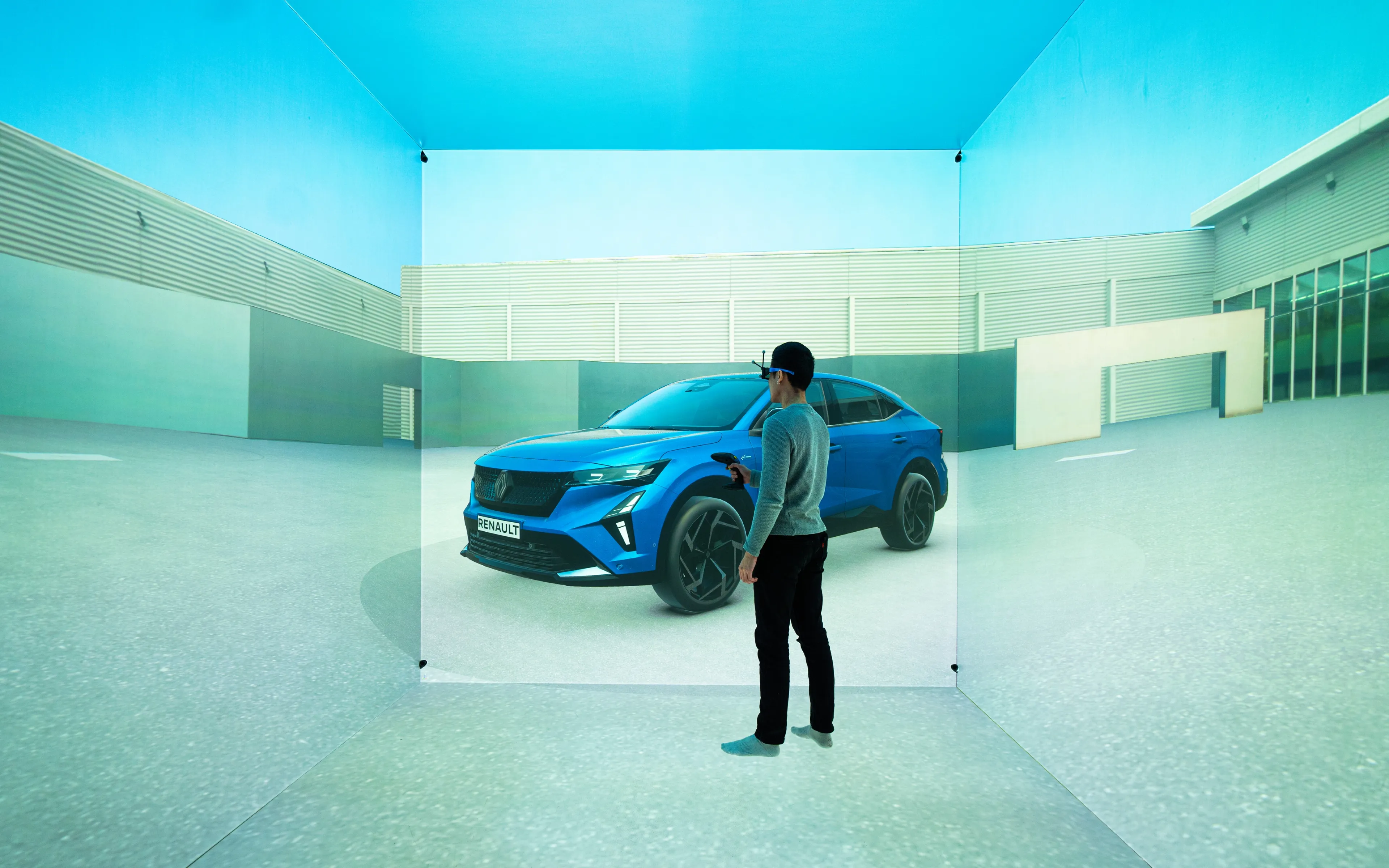
This is where ROADS, Renault Group’s driving simulator, comes into play. It enabled Renault Group and Continental teams to assess the impact of different technical solutions at a very early stage, even before the first prototypes were built. The aim was not to replace physical testing, but to guide development more quickly and efficiently.
“Simulation allows us to explore more solutions, discard the least promising ones much earlier, and reach the testing phase with configurations that are already highly refined.”
The results obtained in the simulator were then validated against real-world tests conducted by Renault Group and Continental teams. This continuous dialogue between the virtual and physical worlds made it possible to progressively refine the technical choices and focus efforts on the solutions that delivered the best balance between driving range, safety and driving pleasure.
Low rolling resistance tyres for greater electric driving range
The results lived up to the project's original ambition. The concepts explored demonstrated the potential to deliver up to 35% better performance than standard tyres already rated A for rolling resistance.
“What we achieved in one year would have taken three years using physical testing alone,” says Gilles Enjolras.
Continental reached the same conclusion. Simulation enabled the teams to develop the first prototypes with a much clearer understanding of which solutions offered the greatest potential.
“The major advantage is that it gives us a clear direction and saves us valuable time,” explains Grégory Fargier.
The project confirmed the value of this approach. The teams demonstrated that rolling resistance could be significantly reduced while maintaining the levels of safety, comfort and vehicle handling expected by Renault Group customers.
The lessons learned from this collaboration extend well beyond the scope of the project itself. The methods developed jointly by Renault Group and Continental, the combination of digital simulation and physical testing, and the knowledge gained on low rolling resistance tyres are already helping to shape the Group’s future vehicle developments.
Because the next breakthroughs in electric mobility will not necessarily come from a single spectacular innovation or technological leap. They will also result from a multitude of targeted, often invisible improvements capable of extending driving range, reducing energy consumption and lowering carbon emissions. This project perfectly illustrates that approach: continuous, pragmatic and collaborative innovation in the service of ever more efficient mobility.
FAQ
Because rolling resistance accounts for around 20% of an electric vehicle’s energy consumption. Reducing this resistance increases driving range without changing the size of the battery.