How Renault Group’s vehicle development merges real life with virtual reality
Published on
The automaker is embracing immersive simulation and virtual twins, but road testing isn’t going away.
When you think of testing a new vehicle, you might think of a driver racing around a test track or a crash test dummy being jolted in a mock collision. But these days, more and more vehicle validation is happening in the digital world, not the physical. Replicating the physical environment by way of digital twins, virtual reality, and immersive simulation in order to fine-tune nearly every aspect of an automobile prior to producing a prototype is helping automakers accelerate development and shorten the time it takes to get new cars to market, which in turn lowers costs for consumers.
This embrace of digitization in the design and testing process is happening across the automotive industry, but Renault Group has been investing in simulation tools for more than 30 years. The maturity of its technology has played a significant role in helping the automaker cut development time for its new cars in half.
That being said, there are still critical parts of designing and engineering a new vehicle that require real-world testing. “At the end, we sell a real product, a real car that is on the road and you need to feel it, you can’t really replace the human in there,” says Guillaume Mercier, Renault Group’s Advanced Driver Assistance Systems (ADAS) expert.
The result is a constant dialog between the real and virtual worlds that feeds digital tools with physical data, uses computing power to accelerate development, and puts the vehicle through a final physical validation in order to cover the full range of scenarios a vehicle will face once it arrives on public roads.
Driving technology with digital
Digital testing during vehicle development offers a level of flexibility and ultra-quick response times that traditional physical prototyping and validation simply can’t match. This makes it possible to push the latest technologies and capabilities into customer hands faster than ever before.
In the current automotive environment, it’s “impossible to forecast everything,” says William Becamel, Renault Group’s expert leader in digital modeling and simulation. “We need to be very agile and flexible to put the right content in the car as fast as possible.”
Digital development tools are able to anticipate how a vehicle will be used, and then rapidly simulate each of these scenarios in just a few days. The team assigned to the vehicle can then hone in on which features match the design brief and focus on their development prior to the concept freeze stage, which confirms the chosen concept and clearly defines its key differentiators. “At this stage, we need to know exactly what we want to put into the car and freeze around 90 percent of the project,” explains Stéphane Régnier, the automaker’s leading expert in immersive simulation and virtual reality.
“You can run a lot of simulation, and you can change your technical definition very easily [in a digital environment],” William Becamel adds. “On the [physical] prototype, it’s not so easy.”
Consider the welcome sequence when a driver opens the door and enters a vehicle. This can involve the infotainment system showing a specific message, distinct lighting, or even an audio clip being played. It’s something seemingly simple that actually involves a complex communications web between various computer systems — which digital testing can be used to verify.
“Today, a car is a combination of several dozen computers, called ECUs*,” Stéphane Régnier says. “These are all exchanging information. We need to check if those systems will communicate together and provide the right customer experience — and this is not an easy task, because vehicles are getting very sophisticated and full of cutting-edge technologies.”
According to Stéphane Régnier, doing this digitally allows for these systems to be validated early on, and quickly, with the ability to improve the experience and then check on each update. “If we had to do it with physical prototypes, it would take weeks,” he says.
Immersive simulation: where digital meets physical
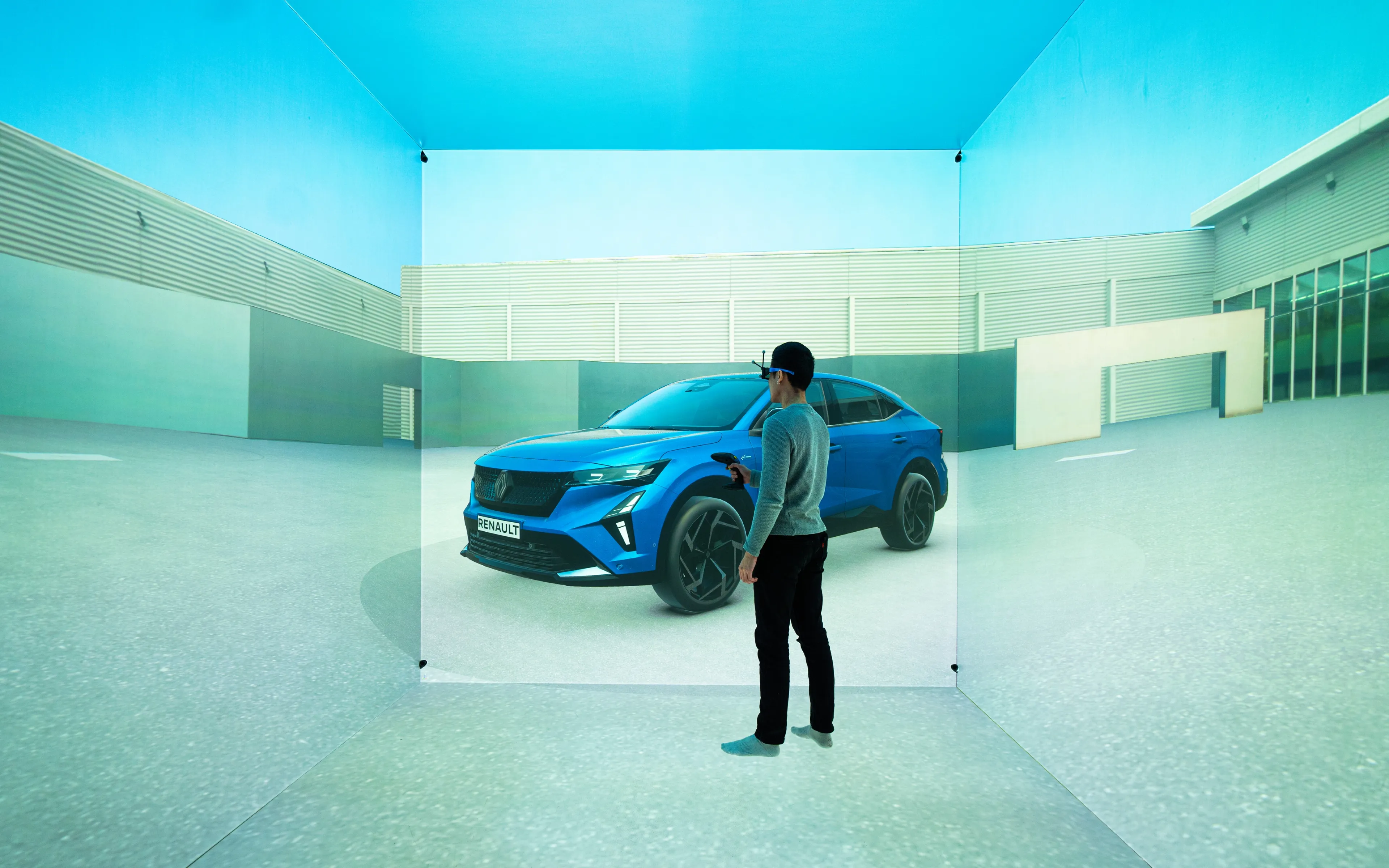
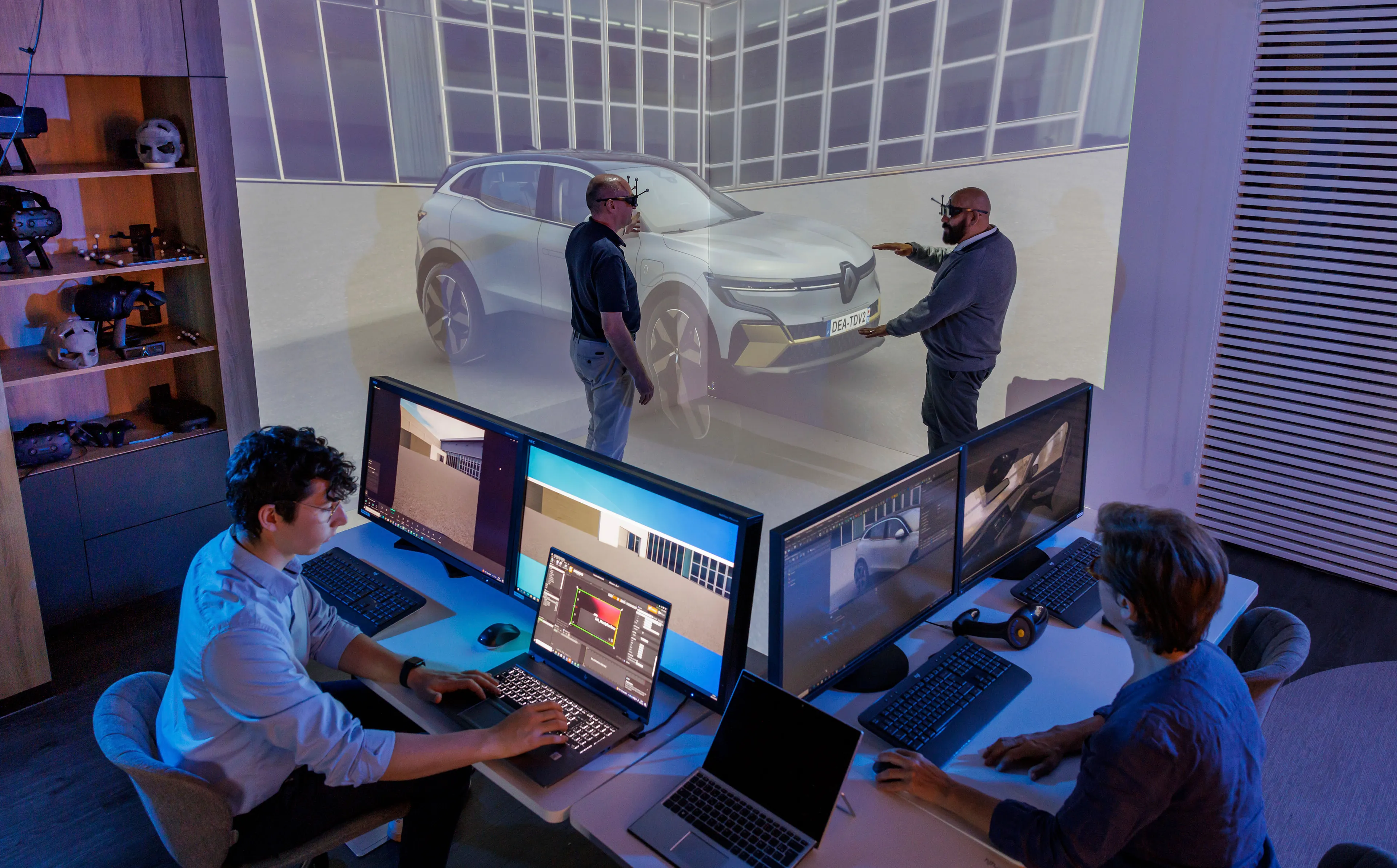
Building a digital twin of the physical vehicle is one way that the development teams at Renault Group make it easily accessible to each group of engineers and designers assigned to it. That twin can then be moved into a simulator to validate how it operates in a hyper-realistic virtual environment.
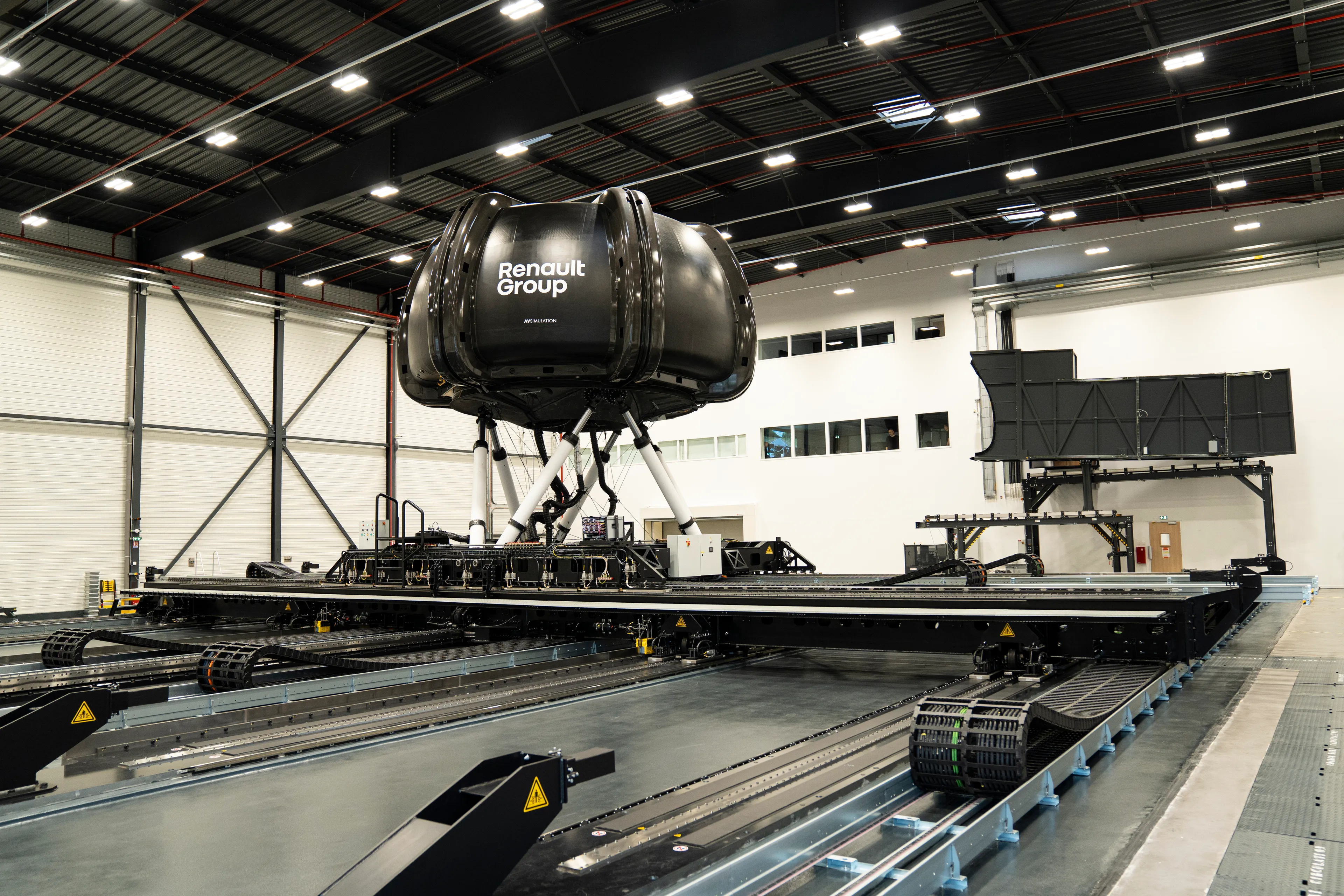
Enter ROADS, Renault Group’s new high-performance driving simulator that opened in 2023 at the Technocentre in Guyancourt, France. The simulator weighs 90 tons including the motion system, and is capable of 1G acceleration on each axis. At its top is a 7-meter-diameter dome, large enough to fit an actual car inside.
“But the car is not being used. It’s not moving,” Stéphane Régnier says. “It’s just a cockpit with a steering wheel, pedals, and display interfaces to reproduce the feeling of being in a real car.”
Immersive simulation doesn’t just shorten development time, it also significantly reduces costs by eliminating the need to build multiple physical prototypes. The simulator itself can be used to test nearly every aspect of how a vehicle operates, with an expert test driver inside the cockpit providing real-time feedback.
As a result, something like choosing the right tire design for a vehicle can happen much more quickly, Stéphane Régnier explains. “You don’t need the actual tires in your hands, you just feed the model into the machine,” he says. “The specialist driving inside the cockpit can say, ‘Okay, the model is consistent with what we expect for the real tires.’” After just one or two loops within the immersive simulator — compared to several months of physical prototyping and testing with the tire manufacturer — the team can land on the right design for an important safety component.
Why real-world testing isn’t going away
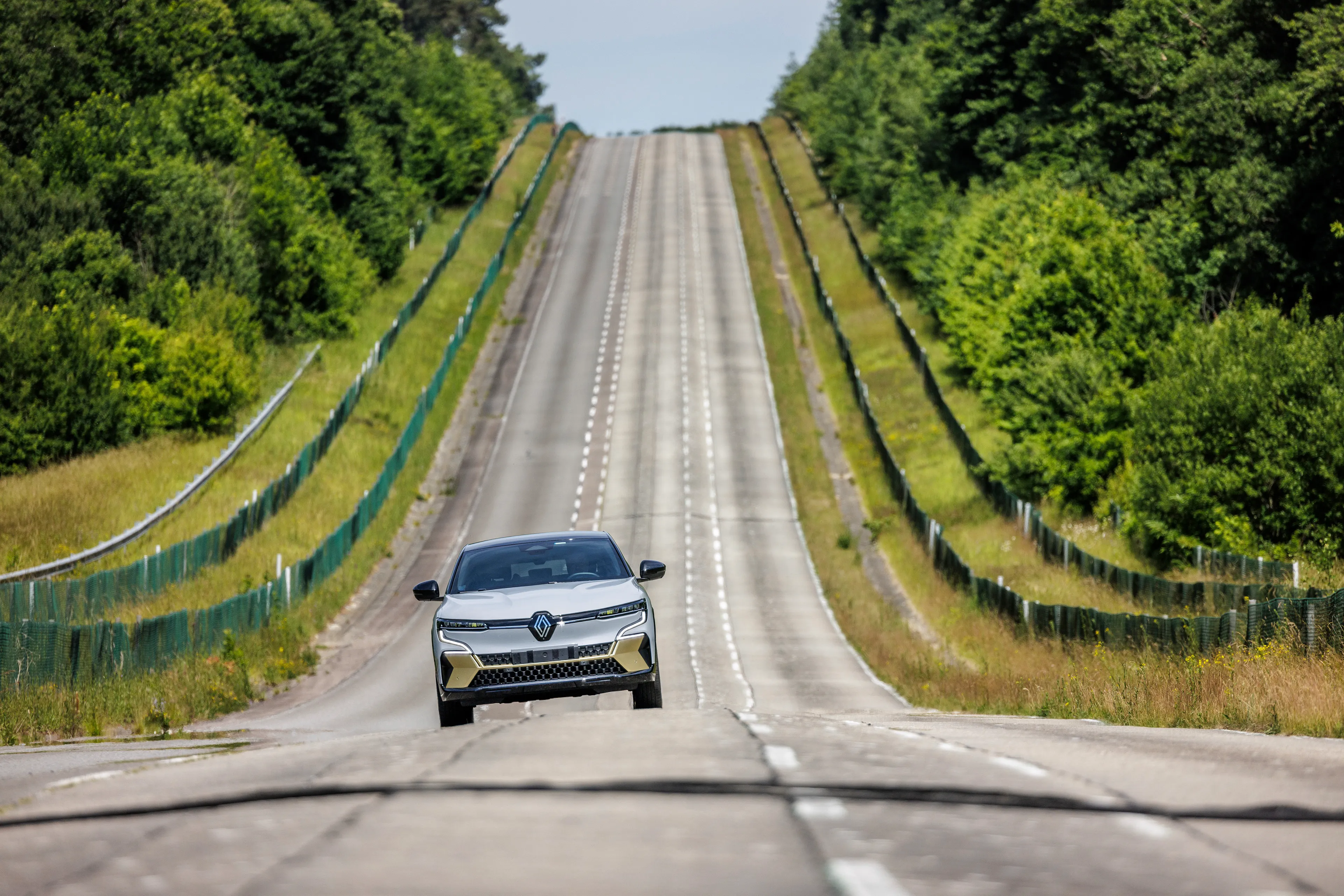
As encompassing as digital testing can be, it does come with limitations. This is true even when validating software-heavy features, like ADAS, the technology that provides systems like parking assistance and emergency braking.
Renault Group’s ADAS is tuned to a specific platform, which means when moving from a Twingo, to a Rafale, to a Clio, to a Megane, it’s all the same software but adapted for each unique customer, Guillaume Mercier explains. “One of the key aspects in our job is to develop a software without bugs before getting a real car,” he says. “You use the car to tune the user experience. You don’t [go to the test track] to look for any bugs. You want the car to be free of bugs before final testing.”
Simulation at the car level is crucial to eliminating any issues with ADAS software, but it’s the performance of a prototype vehicle in the physical world that determines how it will feel on the road. Digital tools can reduce the amount of road testing that is required, but it can’t replace it.
“We can’t completely replace the human perception to finalize the fine-tuning of features such as ADAS that are really based on how the customer reacts to acceleration, to braking,” says Erwan Casalis, the customer performance expert for ADAS and autonomous driving at Renault Group. “There’s a lot of subjective judgment that can’t be completely perceived in all the simulation tools that we see: we always need to drive the cars on open roads. Physical road tests and digital simulations form a continuous feedback loop, with real-world data constantly refining models to accelerate and enhance future car development.”
Physical and digital: an ongoing conversation
The goal within a few years at Renault Group is to seamlessly integrate AI, virtual reality, and all numerical simulations in order to provide a comprehensive, predictive performance overview of the car in a digital customer interface. But at the same time, the philosophy is to remember that advanced technology isn’t the solution to every problem.
“The key is to apply the right tool to the right place within the process,” Stéphane Régnier says. “This requires a clear understanding of customer needs and user experience to ensure that the technology truly meets those needs.”
*ECU: Engine Control Unit