Excellence-ready: making operations resilient by design
In an increasingly unpredictable automotive market, operational excellence is a decisive competitive advantage. This third pillar of Renault Group’s futuREady plan aims to build a true “success system” across all functions, setting new standards in speed, cost efficiency, and quality.
By leveraging artificial intelligence and cutting-edge technologies, next-generation robotics, widespread real-time monitoring, and strict environmental and financial discipline, Renault Group is shortening development cycles to two years, strengthening operational resilience, and reinvesting every euro saved into product innovation, supporting one clear ambition: to become the European automotive reference with global reach.
« Our customers as our daily obsession, and a supply chain and industrial system established as a global benchmark for cost efficiency and resilience: this is what we call operational excellence. »
Objective 1Increasing development speed and agility
Developing cars in two years: the new standard
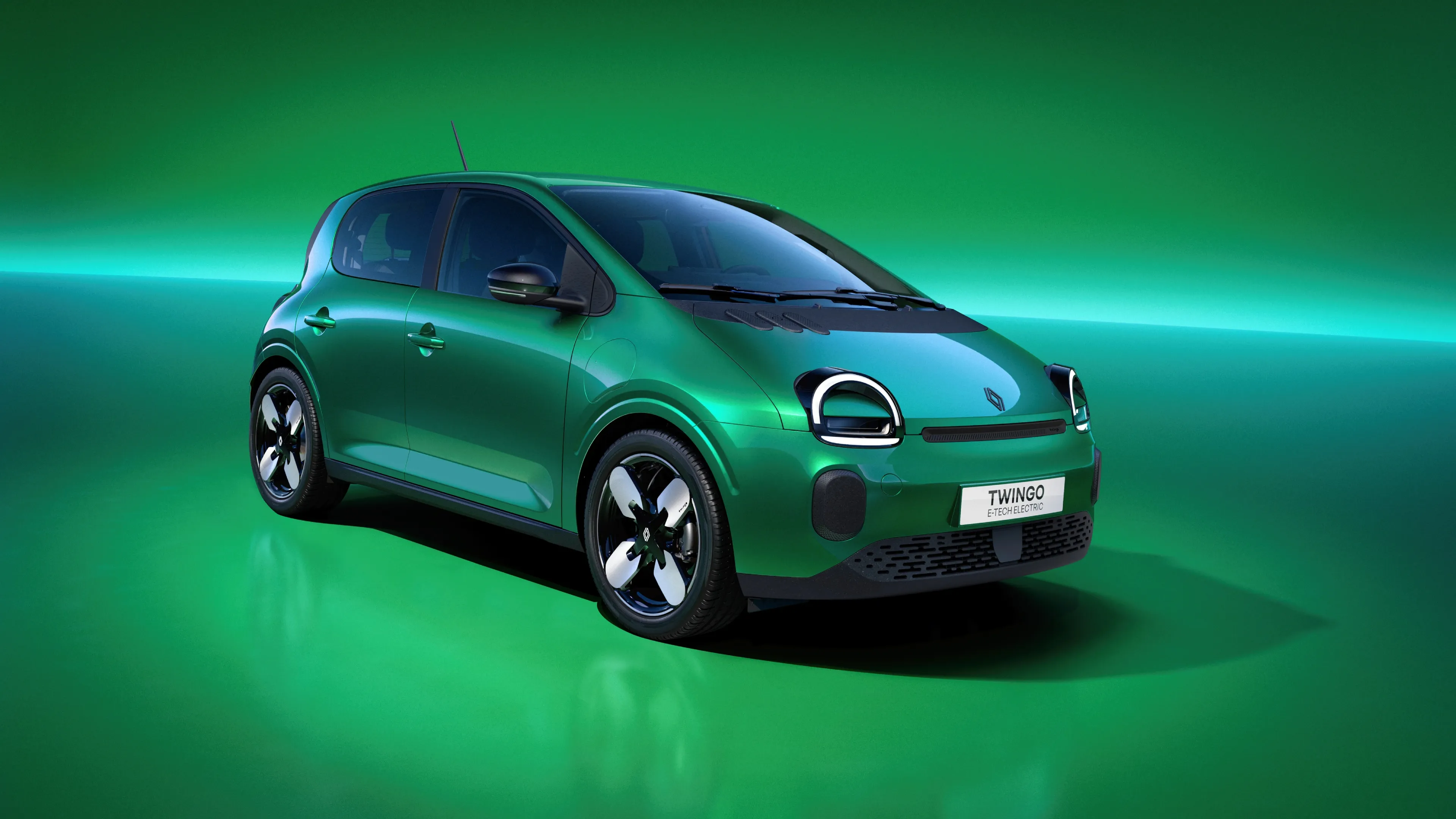
Given the rapid evolution of technologies, customers’ constantly shifting expectations, fierce competition – particularly from Chinese cars manufacturers - reducing vehicle development timelines is key. Renault Group has taken on this challenge with the Renault Twingo E-Tech electric, developed in under two years from concept-freeze to the car’s reveal to the public. This is now becoming the new standard that will apply to all upcoming vehicles of the Group. Let’s see how :
By working much faster thanks to AI technologies and the digital twin, a 100% virtual replica of the car created through the digitalization of models down to the smallest component.
By strengthening the partnership-based relationship with its suppliers
By prioritizing modular, scalable in-house tech blocks, off-the-shelf modules that are ready-to-use.
2030 targets
Time – to – market down to 2 years
Entry tickets on new projects down by 40%
COGS (Cost of goods and services) down from 10 to 30%
Objective 2Excelling in Industry 4.0 with AI and robotics
AI and humanoid robots at the heart of futurREady factories
Why aiming at operational excellence? Ultimately, it is all about ensuring customer satisfaction. This begins first and foremost with the quality and durability of vehicles. Renault Group is committed to deliver best-in-class quality every time customers take the wheel. Doing so, Artificial Intelligence is a key lever:
To achieve zero defects through enhanced detection and prevention with 1,000 AI‑based quality checks for each vehicle in production, cutting incidents by half.
To detect potential remaining defects in under 30 seconds and fix them almost instantly and over-the-air.
Quality is also about durability. Renault Group is committed to ensuring that every vehicle maintains, even after five years, the same level of perceived quality, comfort and performance.
Operational excellence also means excelling in manufacturing. Renault Group’s plants are already among the most advanced in the industry, with Renault 5 E‑Tech electric produced in just 10 hours. By 2030, production time per vehicle will be reduced by a further 30%.
This will be achieved :
through greater automation with the latest generations of robots and, in particular, the deployment of 350 humanoid robots in our plants by 2027
and by leveraging five billion data points generated by the industrial metaverse, a true digital twin supporting the digitalization of the Group’s factories, to strengthen predictive maintenance and cut production downtime by half.
This will bring production cost per vehicle down by 20% and illustrate what Industry 4.0 is all about.
2030targets
Efficiency: -30% production hours per car
Quality: -50% incident reduction thanks to AI within 3 years; remote diagnosis in 30 seconds; -70% incidents within 5 years; 100% AI-based control of key manufacturing steps; 100% traceability of key components
Automation: 350 humanoid robots in operations for 2027
Objective 3Transforming the supply chain for total resilience
A digital Control Tower to secure global flows
As the automotive industry evolves in an increasingly fragmented, competitive, and uncertain world, securing parts and materials supply needed to manufacture vehicles is fundamental for any carmaker.
To reduce risks related to its supplier base, Renault Group is implementing a dual-sourcing strategy, ensuring the company has systematically two suppliers for strategic components such as battery parts or semiconductors.
Powered by real‑time data and AI monitoring, the digital Control Towers deployed across Renault Group’s plants guarantee the resilience of our supply chain, enabling to:
monitor 50,000 suppliers 24 hours a day, seven days a week
respond to any crisis in under 48 hours
To ensure business continuity and mitigate component shortages caused by climate events or heightened competitive pressure, Renault Group will reinforce the agility of its global supply chain. With AI powered monitoring, the Control Towers will sharpen forecasting for upstream flows and:
Adapt to demand swings
Manage supply disruptions
Shorten lead times
Downstream, AI will help:
Reduce emergency transportation costs by 75%
Optimize routing
Deliver vehicles on time… or even ahead of schedule
This will reduce inventory levels by one billion euros.
2030targets
Resilience: 50 000 under active surveillance 24/7
Monitoring: 100% of inbound & outbound flows optimized in real time
Efficiency: €1 billion down inventory size & -75% emergency transport costs
Objective 4Preserving resources and uphold the sustainable development roadmap
Environmental excellence as a competitive driver
Achieving operational excellence must go hand in hand with a responsible environmental strategy. This is why, at Renault Group, the sustainable development lies at the heart of performance management, fully embedded across all operations.
The Group’s environmental commitment translates into concrete actions: reducing greenhouse gas emissions, adopting a more efficient use of resources and energy, and preserving biodiversity. These ambitious commitments are driven by all teams within the company and integrated into every stage of our vehicles’ lifecycle, from design to end of life.
This collective ambition takes shape in products :
The new Renault Clio, a benchmark in circularity, incorporates 33.7% materials sourced from the circular economy and is 85% recyclable*.
Twingo E‑Tech electric achieves a 60% reduction in its carbon footprint compared with the Twingo III equipped with a combustion engine.
Aiming at Net Zero carbon** in Europe by 2040 and worldwide by 2050
Reaching 30% materials sourced from the circular economy per vehicle and a 20% cost reduction per kilo of recycled materials
Reducing energy consumption by 40% and water use per vehicle by 30% by 2030
In terms of circularity, the company will continue to rely on the Refactory, Europe’s first circular‑economy plant dedicated to mobility, and on its entity specializing in automotive circularity, The Future Is NEUTRAL, whose scale will double by 2030.
2030 targets
Net zero carbon: a reduction of at least 62.5% in the Group's carbon footprint for scopes 1 and 2 (compared to 2019) & a reduction of at least 27.5% in the Group's carbon footprint for scope 3 (compared to 2019)
Circularity: 30% materials sourced from circular economy per car in 2030
Preserving resources: -30% water use per car in 2030
*Recyclability and recovery rates (including energy recovery) in accordance with Directive 2005/64/EC.
**Net zero carbon is achieved when the volume of greenhouse gas emissions measured in “CO2 equivalent” or “CO2e” has been reduced by 90% and the remaining 10% of emissions are offset by equivalent capture (natural sinks or industrial processes for carbon capture or reuse) in accordance with Directive 2005/64/EC.
Discover the other pillars of our strategic plan
Growth-ready: leading with products and customer experience
Tech-ready: accelerating innovation to stay ahead
Trust-ready: engaging stakeholders for long-term trust and value
FAQ
Excellence‑Ready is the third pillar of Renault Group’s futuREady strategic plan. It focuses on operational excellence to increase speed, reduce costs, improve quality, and build resilience across all functions of the Group.