The International Game Plan, reinventing Renault on the global stage
Published on
The automotive industry is no longer shaped solely in Europe. It is also being reinvented in India, Brazil, Korea, Morocco and Türkiye, driven by rapidly accelerating markets and increasingly local customer expectations. For Renault, this shift represents a tremendous opportunity. With the Renault International Game Plan 2027 (RIGP), the Group is embracing a clear ambition: think global, act local, and accelerate growth beyond Europe. In this op-ed, Fabrice Cambolive, CEO of Renault and Chief Growth Officer of Renault Group, takes us behind the scenes of this strategy and outlines the first milestones of a Renault that is more international than ever.
Key takeaways
- With the Renault International Game Plan, Renault is accelerating its expansion beyond Europe with a “think global, act local” strategy.
- The plan has been in execution for more than two years, with five models already unveiled and rolled out in key regions.
- The organization is built around five hubs, bringing design, industrialization, and commercialization closer together, both locally and for export markets.
- Already a historic pillar of the plan, India is reaching a new milestone with Chennai as a fully integrated ecosystem and the new Duster as a symbol of this acceleration.
- Partnerships and electrification are supporting the ramp-up across multiple regions.
Beyond Europe: where Renault International Game Plan comes into play
When we launched the RIGP at the end of 2023, the objective was simple to articulate but demanding to deliver: accelerate growth beyond Europe, strengthen our competitiveness, modernize our international offering and provide Renault with a truly global backbone.
To support this ambition, we rely on five major hubs: Latin America, Morocco, Türkiye, India and South Korea. This network enables us to localize production in order to stay close to our customers, while leveraging the strength of a global organization.
Within these hubs, our teams design, develop, and produce our international models, relying on two key platforms:
- a new Renault Group modular multi-energy platform, which allows us to centralize the development of multiple models shared across several regions;
- and the CMA (Compact Modular Architecture) platform, operated in Korea with Geely for the D segment (family sedans) and the E segment (executive sedans).
This organization allows us to move quickly and respond effectively to the specific expectations of each market.
International expansion: thinking global, acting local
Beyond this hub-based organization (regional centers with full autonomy to design, produce, and commercialize vehicles), our success is driven by a simple “recipe”:
- A strong brand DNA, true to the spirit of voitures à vivre, combining bold design, useful technologies and pragmatic electrification;
- A complete local ecosystem, capable of covering the entire value chain, from design and engineering to purchasing, manufacturing and sales;
- A continuous dialogue between our teams in France and across our regions, which enriches and strengthens the system as a whole.
This strong local anchoring allows us to better understand customer expectations, offer vehicles that are truly market-relevant and enhance our competitiveness.
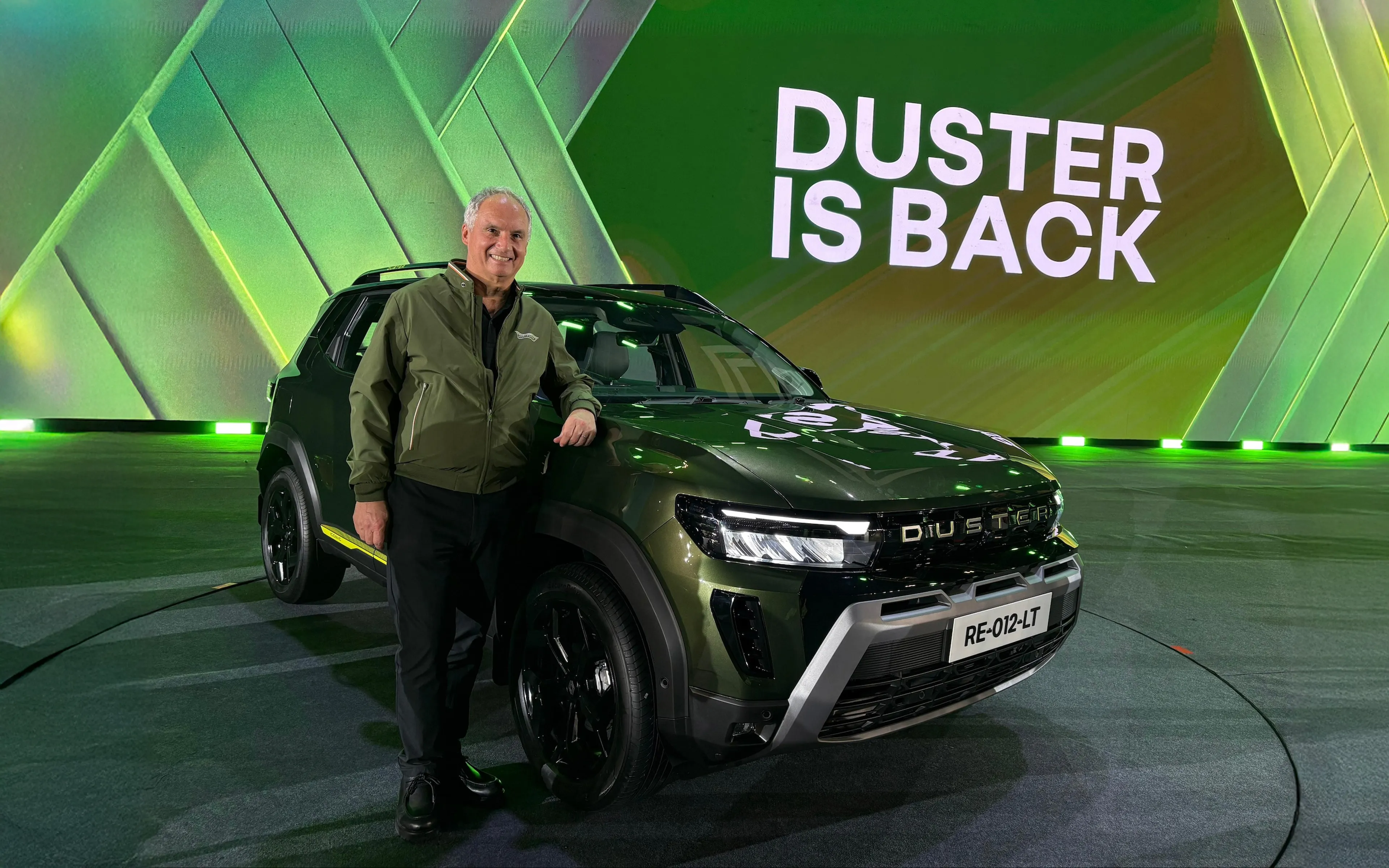
Within this global organization, each hub expresses a distinct facet of our strategy. India is the most recent illustration: a fast-growing automotive market (now the world’s third largest), a fully consolidated ecosystem and therefore an ideal platform for a model such as the new Duster.
RIGP key figures
New Duster in India: the return of an icon, more sophisticated than ever
In India, Duster is a name steeped in history: twelve years ago, it created the compact SUV segment. It became a symbol of adventure, robustness and freedom. With this new generation, we are opening a new chapter, featuring a completely redesigned exterior, useful everyday technologies (including OpenR Link with built-in Google, a first in its segment in India) and the upcoming introduction of E-Tech hybrid powertrains, fully aligned with our ambition to electrify beyond Europe.
We made a clear choice: to preserve what made Duster successful (its driving comfort, robustness and versatility), while bringing it firmly into the present. This new generation reinterprets the Duster DNA to meet the expectations of the Indian market in terms of technology, connectivity and electrification.
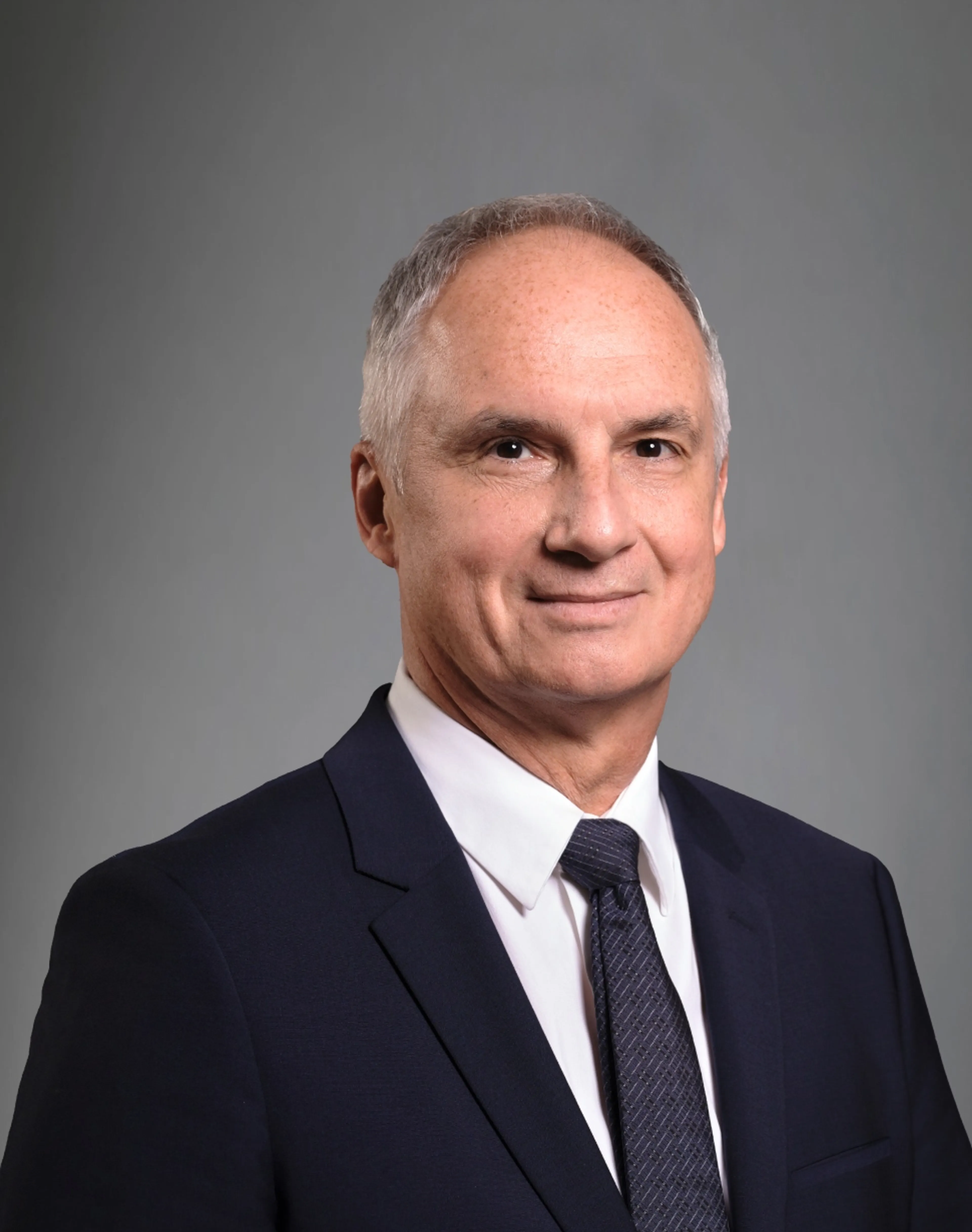
“As part of the RIGP, India is becoming a key pillar of our growth beyond Europe. In Chennai, we have built a fully integrated ecosystem (spanning design, engineering and manufacturing), enabling us to deliver vehicles that are truly tailored to this market. The new Duster marks a first milestone in this renewal.”
Fabrice Cambolive
CEO Renault and Chief Growth Officer Renault Group
Duster therefore embodies our ability to mobilize an entire hub to reinvent an iconic model, with the agility and relevance required by a market as dynamic as India.
It is also part of a broader momentum. Since the announcement of the RIGP, we have already unveiled five models:
- Kardian, modernizing our B-segment offering in Latin America and Morocco;
- Renault Duster, launched in Turkey in 2024 and now complemented by this version specifically designed for India;
- Grand Koleos, a D-segment SUV developed for South Korea, the Gulf countries and several Latin American markets;
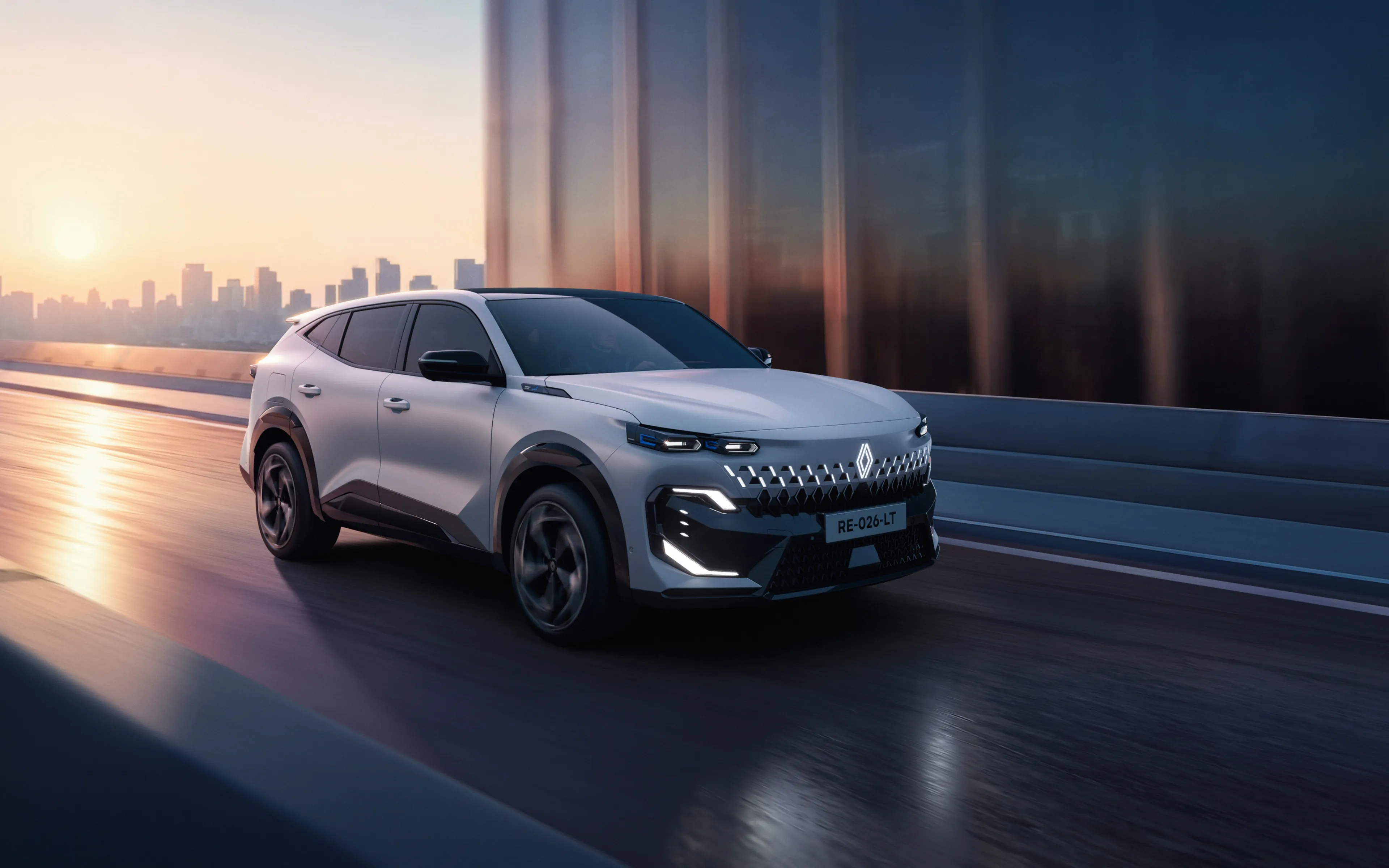
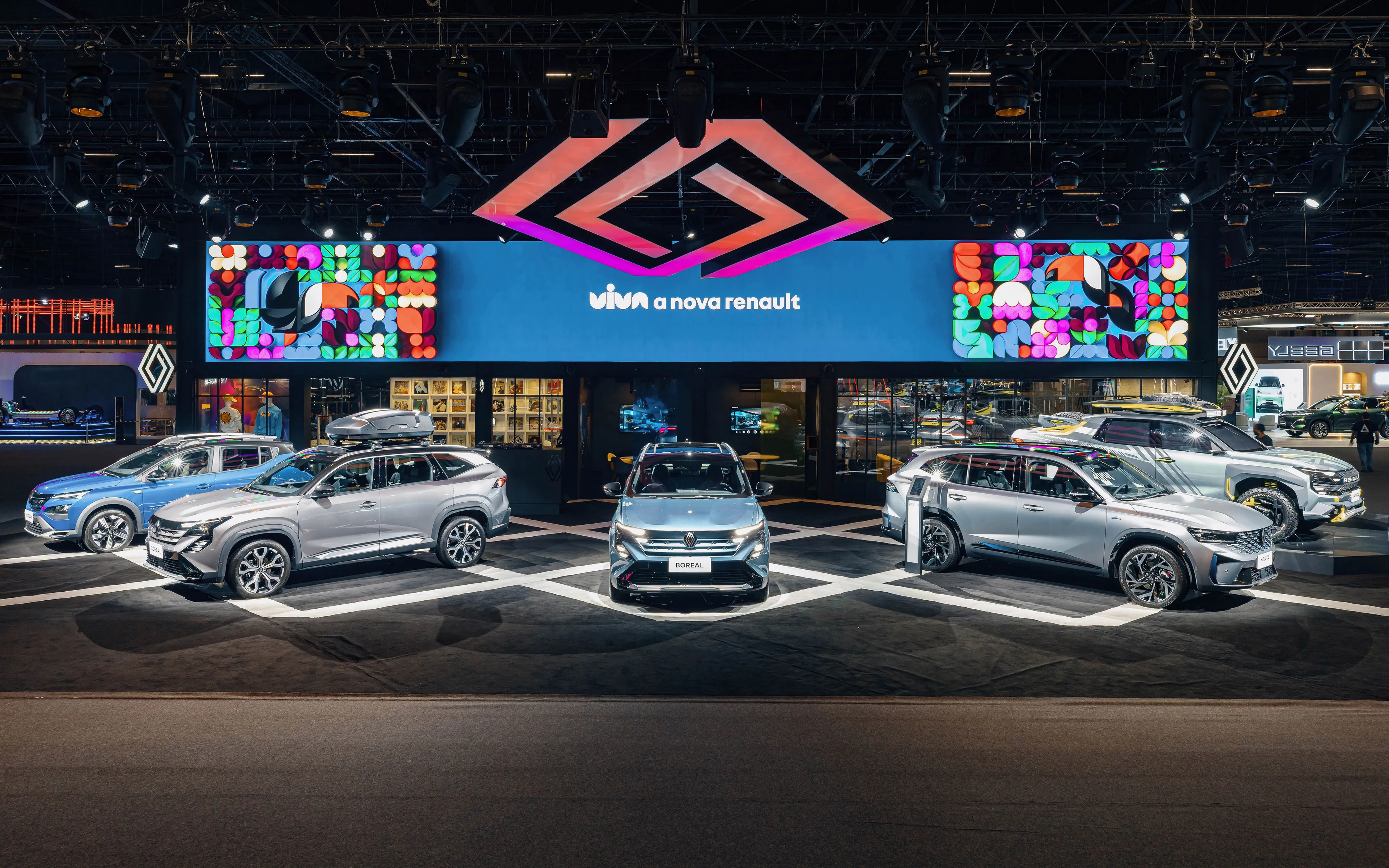
- Boreal, our flagship C-segment SUV, named 2026 Car of the Year in Brazil;
- Filante, an E-segment crossover recently unveiled in South Korea, embodying our ambition to move upmarket beyond Europe.
These launches demonstrate that the plan is being executed, concretely, region by region. In India, this momentum is part of a long-term vision. With a fully integrated ecosystem in Chennai and a structured product roadmap, the launch of the new Duster marks the first milestone of a trajectory designed to unfold over time.
Setting the stage for the next phase
To continue transforming Renault on the international stage, we are activating three key dynamics.
The first focuses on our strategic partnerships.
Our collaboration with Geely in South Korea has been decisive, giving us access to the CMA platform, a critical asset for effectively addressing the D and E segments. Building on this success, we are now extending this partnership to Brazil. By combining our industrial, technological and commercial strengths, we will accelerate the development of Renault and Geely ranges. This will further enhance the competitiveness of our plants in Curitiba and Busan, which stand as key pillars of this next-generation industrial ecosystem.
The second dynamic relates to our global competitiveness.
Our five hubs enable us to remain competitive worldwide, adapt our models rapidly, produce them more efficiently and fully leverage the strength of highly efficient local ecosystems.
Finally, the third dynamic is electrification.
Our ambition is clear: to offer customers the right technologies, tailored to the needs of each market. Filante is hybrid from launch, and we will rely on Geely’s GEA platform to further strengthen our range of zero- and low-emission vehicles in Brazil. Wherever it makes sense, we want to accelerate the electrification of our lineup. In India, the new Duster fully embodies this approach by introducing hybrid powertrains to our local range for the first time.
The Renault International Game Plan provides the structure for our global ambition. It guides our investments, our partnerships, our industrial footprint and our product decisions.
The Renault International Game Plan 2027, in a nutshell
Launched in 2023, the Renault International Game Plan 2027 is Renault’s strategic roadmap to accelerate growth beyond Europe.
Its objective is to develop a range of competitive, electrified vehicles tailored to international markets, while leveraging strong local industrial and commercial ecosystems.
FAQ
01
What is a hub at Renault?
02
What is the new Renault Group modular multi-energy platform?
03
What is the CMA platform?
04
What is the GEA platform?
05
What are the D and E segments?
06
What is the full hybrid E-Tech 160 engine that will power the new Duster in India?
A hub is an autonomous regional center that brings together key capabilities: design, engineering, manufacturing and sales. It enables Renault to adapt its vehicles quickly to local market expectations.
It is a shared base architecture (comparable to an intelligent chassis) on which Renault can develop several different models. It allows the integration of various powertrains (internal combustion or hybrid), while adapting design, size and features to the specific needs of each market.
The CMA (Compact Modular Architecture) platform is an automotive architecture developed with Geely, designed for highly technological D- and E-segment vehicles, for internal combustion or hybrid powertrains.
The GEA (Global Intelligent Electric Architecture) platform is a multi-energy architecture developed by Geely. It enables Renault to accelerate the rollout of smaller vehicles (C segment), tailored to the specific expectations of certain international markets.
Automotive segments classify vehicles by size:
- D segment refers to family sedans, typically between 4.50 and 4.90 meters in length.
- E segment includes executive sedans, generally around 5 meters long.
The full hybrid E-Tech 160 powertrain combines a gasoline engine with two electric motors to deliver both performance and efficiency, without the need for external charging. It allows up to 80% electric driving in urban and suburban conditions, significantly reduces fuel consumption and offers a total driving range of up to 1,000 km.